

In the world of hair care, it's often the grand gestures and advanced products that take centre stage. Yet, the secret to a flawless hairstyle can lie in the simplest of tools: the humble comb. Far from being a one-size-fits-all accessory, the right styling comb is a precision instrument that can detangle, smooth, section, and style with remarkable efficiency. Understanding the different types and their specific uses is fundamental to unlocking your hair's potential and achieving a polished look every day.
Understanding the Basics: Why the Right Comb Matters
Choosing a comb might seem like a trivial decision, but using the correct one for the task at hand can make a significant difference to the health and appearance of your hair. A comb that is ill-suited to your hair type or styling goal can lead to unnecessary pulling, breakage, and frizz. Conversely, the right comb works with your hair's texture, helping to gently detangle, distribute products evenly, and create clean, defined styles. It’s an essential partner in both daily grooming and more elaborate styling endeavours.
A Guide to Comb Tooth Types
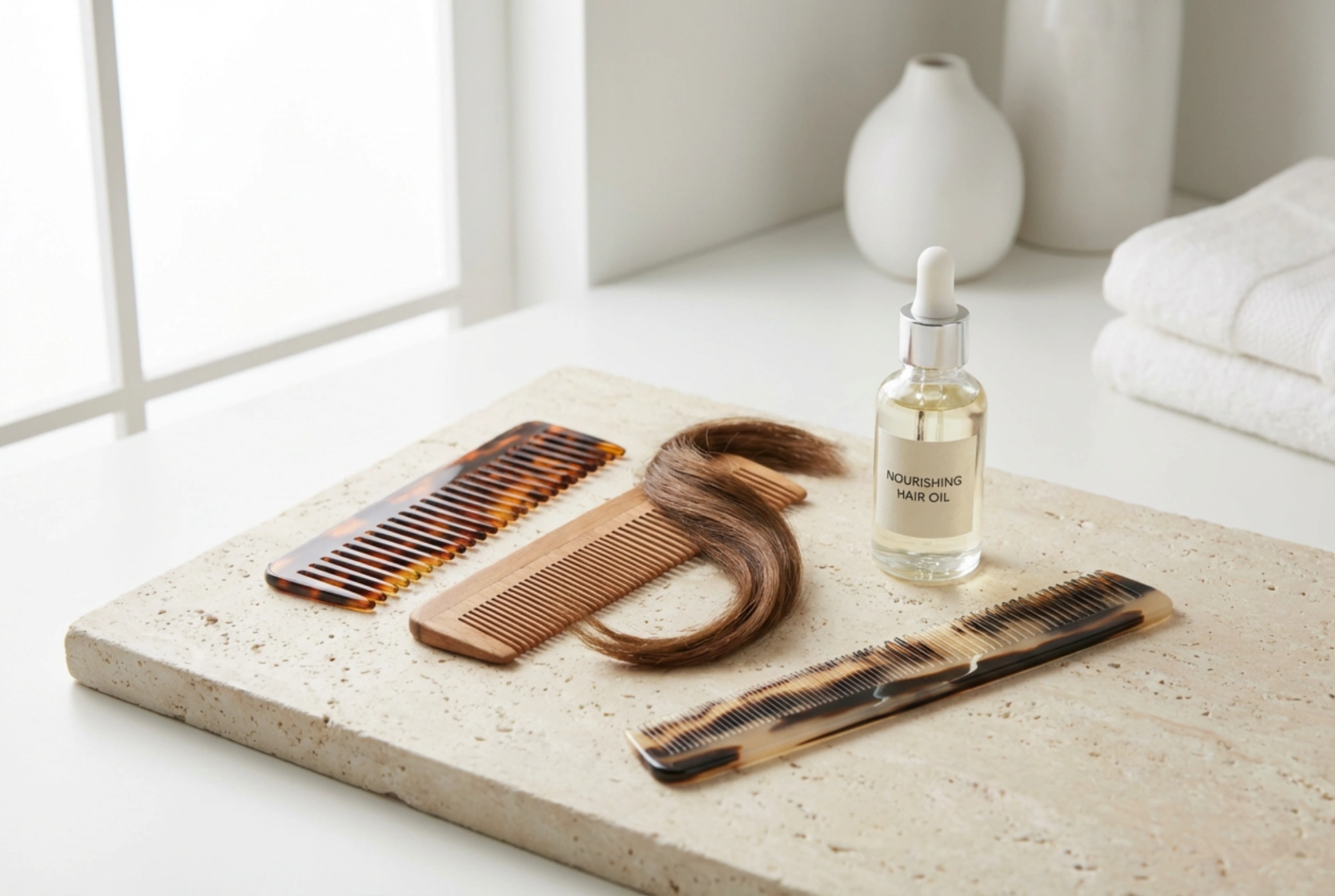
Combs are defined by the spacing and thickness of their teeth. Each design serves a unique purpose, catering to different hair needs and styling techniques. Familiarising yourself with the main categories will help you build a versatile toolkit.
Wide-Tooth Combs
As the name suggests, these combs feature thick teeth with generous space between them. This design is your hair's best friend, especially when it's at its most vulnerable. Their primary function is to gently detangle hair with minimal stress and breakage. They are particularly effective for:
- Detangling wet hair, which is more elastic and prone to snapping.
- Evenly distributing conditioner or hair masks through your strands in the shower.
- Gently working through thick, coarse, or curly hair without disrupting the natural curl pattern.
- Minimising static and frizz compared to finer combs on certain hair types.
Fine-Tooth Combs
At the opposite end of the spectrum are fine-tooth combs, characterised by teeth that are closely set together. These combs are built for precision and smoothness. Their design allows them to handle every strand, making them ideal for creating sleek, polished looks. Use a fine-tooth comb for:
- Creating ultra-smooth, straight styles and taming flyaways for a refined finish.
- Achieving precise and clean partings.
- Backcombing or 'teasing' the hair at the roots to build volume and texture.
- Applying styling products like gels or waxes with controlled, even distribution.
Pintail Combs
The pintail comb is a multi-purpose tool instantly recognisable by its long, thin handle, or 'tail'. It combines the functionality of a fine-tooth comb with a precision sectioning tool. The comb section is typically used for smoothing and backcombing, while the slender tail is perfect for:
- Creating perfectly straight and intricate partings (centre, side, or zigzag).
- Sectioning hair cleanly for colouring, heat styling, or creating updos.
- Lifting and arranging small sections of hair for detailed styling.
How to Use Your Comb for Different Hairstyles
Once you have the right tools, you can master techniques to achieve a variety of looks. The key is to match the comb and the method to your desired outcome.
- For a Sleek, Glossy Finish: After blow-drying your hair straight, mist it lightly with a finishing spray. Then, gently run a fine-tooth comb from root to tip to smooth the hair cuticle and eliminate any remaining flyaways.
- For Defined Curls and Waves: The golden rule for curls is to comb them only when wet and saturated with conditioner. Use a wide-tooth comb to gently detangle and encourage curl clumps to form. Once your hair is dry, avoid combing it to prevent frizz and preserve the curl definition.
- For Creating Lasting Volume: Use a pintail or fine-tooth comb for backcombing. Take a small section of hair, hold it taut and vertically, and gently push the comb down towards the scalp a few times. This creates a cushion of volume at the roots. Smooth over the top layer of hair to hide the teased section.
- For a Perfect Parting: For a razor-sharp part, use the end of a pintail comb. Press the tip to your scalp where you want the part to begin and draw a clean line back. Use the comb's teeth to separate the hair on either side.
Caring for Your Styling Combs
Just like makeup brushes, hair combs need regular cleaning. They accumulate product residue, oils, and dead skin cells from your scalp, which can be transferred back onto your clean hair, making it look dull and greasy. To clean your combs, simply remove any trapped hair and then wash them in a basin of warm, soapy water. Use a small brush to scrub between the teeth if needed. Rinse thoroughly and let them air dry completely. Aim to do this at least once a week to keep your tools and your hair in top condition.