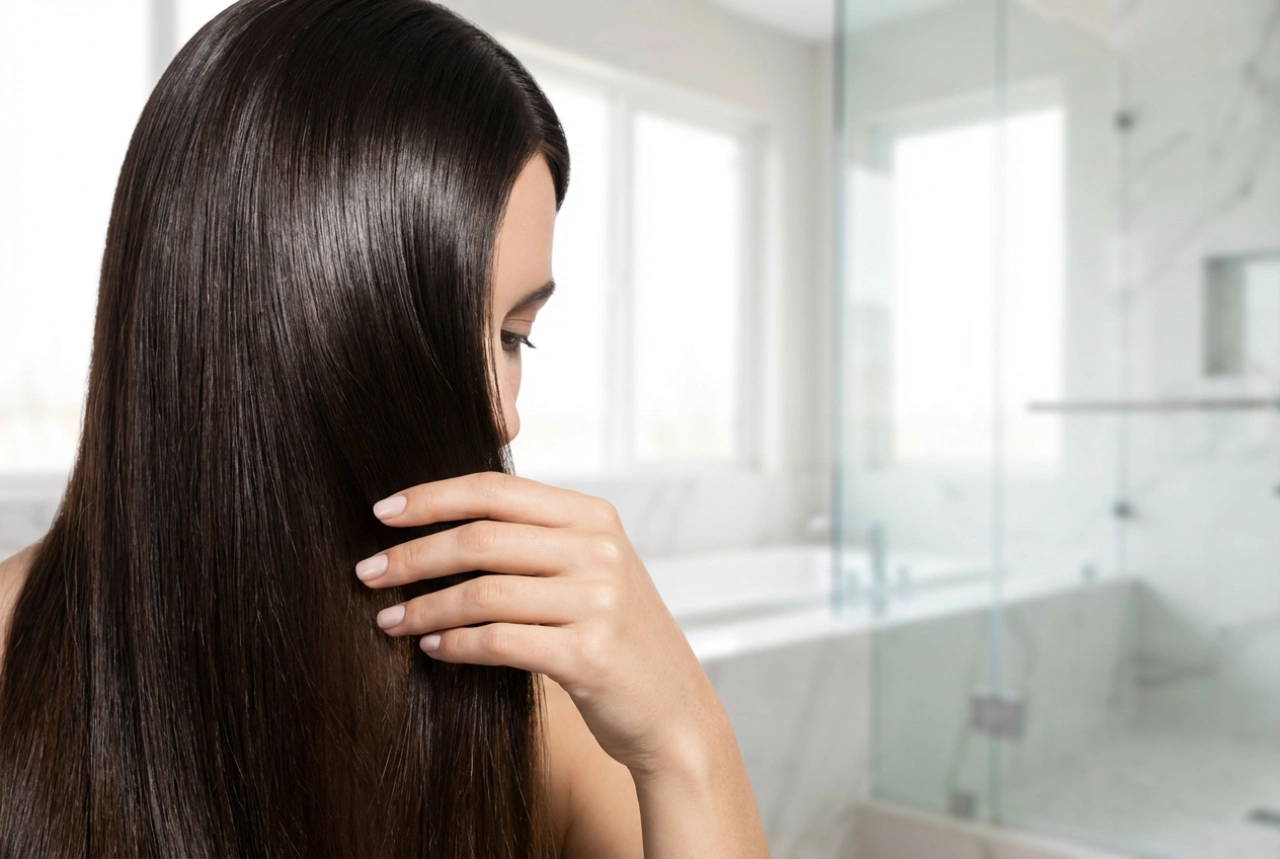


Over time, even with a consistent washing routine, hair can start to feel weighed down, look dull, or become less responsive to styling. This is often due to the gradual accumulation of residues that regular shampoos may not fully remove. A clarifying shampoo is designed to provide a deep cleanse, acting like a reset button for your hair. It effectively removes stubborn build-up, restoring your hair's natural lightness and preparing it to better absorb the benefits of conditioning treatments, all while considering the delicate nature of colour-treated hair.
What is a Clarifying Shampoo?
Think of a clarifying shampoo as a more powerful version of your everyday shampoo. Its primary function is to perform a deep cleanse of both the hair and scalp. These formulations contain stronger surfactants—the ingredients responsible for cleansing—which are highly effective at breaking down and washing away substances that cling to the hair shaft. This includes residue from styling products like mousses, gels, and hairsprays, silicones found in some conditioners and serums, minerals from hard water, and even chlorine from swimming pools. Unlike a daily shampoo designed for gentle cleansing, a clarifying shampoo is meant for occasional use to give your hair a truly fresh start.
Signs You Might Need a Hair Reset
How do you know when it's time to reach for a clarifying shampoo? Your hair often gives clear signals that it's overloaded with build-up. Paying attention to these signs can help you decide when a deep cleanse is necessary. Look out for the following indicators:
- Your hair feels heavy or limp: Even after washing, your hair doesn't have its usual bounce and volume.
- It looks dull and lacks shine: A film of residue can scatter light, making your hair appear lacklustre.
- Styling products seem less effective: You find yourself using more product to get the same results, or your styles don't hold as well as they used to.
- Your hair gets greasy quickly: Build-up on the scalp can trap oils, making your roots feel greasy sooner than normal.
- Your regular shampoo and conditioner don't seem to be working: If your favourite products suddenly stop delivering the results you expect, build-up could be creating a barrier.
- You are a frequent swimmer or live in a hard water area: Chlorine and mineral deposits are common culprits that require a deeper cleanse to remove.
How to Use a Clarifying Shampoo Correctly
Incorporating a clarifying shampoo into your routine is simple, but the key is moderation and proper technique to avoid stripping your hair of its natural oils. It is not intended for daily use. For most people, using it once every two to four weeks is sufficient. If you use a lot of styling products or have very oily hair, you might use it once a week.
A Step-by-Step Guide
First, thoroughly wet your hair with lukewarm water. Apply a small amount of the clarifying shampoo, concentrating on the scalp and roots where build-up is most prominent. Massage gently with your fingertips to create a rich lather, working it down the lengths of your hair. Allow it to sit for about a minute to effectively dissolve residue. Rinse your hair completely, ensuring no product is left behind. Because clarifying can be drying, it is absolutely essential to follow up with a deeply hydrating conditioner or a nourishing hair mask. Leave the conditioning treatment on for at least 3-5 minutes to replenish moisture and seal the hair cuticle, leaving your locks soft and manageable.
Protecting Colour-Treated Hair
The main concern for those with dyed hair is that the powerful cleansing action of a clarifying shampoo could fade their colour. This is a valid worry, as the same ingredients that remove build-up can also strip away colour molecules. However, you can still benefit from a deep cleanse with a few precautions.
The safest time to use a clarifying shampoo is right before a colour appointment. This creates a perfectly clean canvas, allowing the dye to penetrate more evenly and effectively. If you need to clarify between salon visits, do so sparingly. Try to find a formula that is labelled as 'colour-safe', although these are less common. Regardless of the formula, always follow with a conditioner or mask specifically designed for colour-treated hair to help seal the cuticle and lock in your shade. Using cool water for the final rinse can also help minimise colour loss. By being strategic, you can maintain both the cleanliness of your hair and the vibrancy of your colour.