

A thoughtful hair care routine is the foundation of healthy, beautiful hair. While we often focus on the products we use, the way we wash our hair can make a significant difference, especially for hair that is dry, delicate, or prone to damage. One technique gaining popularity for its gentle yet effective approach is the OMO method. This simple adjustment to your washing schedule can help protect fragile ends, boost hydration, and leave your hair feeling softer and looking shinier. Let's explore what this method is and how you can incorporate it into your own routine.
What Exactly is the OMO Method?
OMO is an acronym that stands for Conditioner-Wash-Conditioner (from the Polish 'Odżywka-Mycie-Odżywka'). It describes the order in which you apply your products. Instead of the traditional wash-then-condition routine, the OMO method sandwiches the shampooing step between two applications of conditioner. The main goal is to shield the lengths and ends of your hair—which are older and more susceptible to dryness and breakage—from the potentially stripping effects of some cleansing agents in shampoos. By applying a conditioner first, you create a protective barrier that allows the shampoo to cleanse the scalp effectively without dehydrating the rest of your hair.
Who Can Benefit from the OMO Method?
This method is particularly beneficial for certain hair types and conditions:
- Dry or Damaged Hair: Provides an extra layer of moisture and protection against further dehydration.
- Colour-Treated or Bleached Hair: Helps to preserve colour and prevent the hair from becoming brittle.
- High Porosity Hair: This hair type easily absorbs but also loses moisture quickly. The double conditioning helps to seal the hair cuticle and retain hydration.
- Curly and Wavy Hair: Enhances moisture, which is crucial for defining curls and reducing frizz.
- Long Hair: The ends of long hair are the oldest and most fragile part, making them prime candidates for the protective benefits of OMO.
A Step-by-Step Guide to the OMO Method
Incorporating OMO into your routine is straightforward. It just requires a slight change in the order of your steps. Here's a detailed plan to follow.
Step 1: The First 'O' (Conditioner)
Begin by thoroughly wetting your hair with lukewarm water. Squeeze out the excess water gently. Take a small amount of a lightweight conditioner and apply it from the mid-lengths down to the very ends. Focus on the areas that need the most care. This first conditioner doesn't need to be a heavy, intensive product; a simple, detangling conditioner works perfectly. The aim is to coat and protect, not to deeply nourish at this stage. Do not rinse it out.
Step 2: The 'M' (Wash)
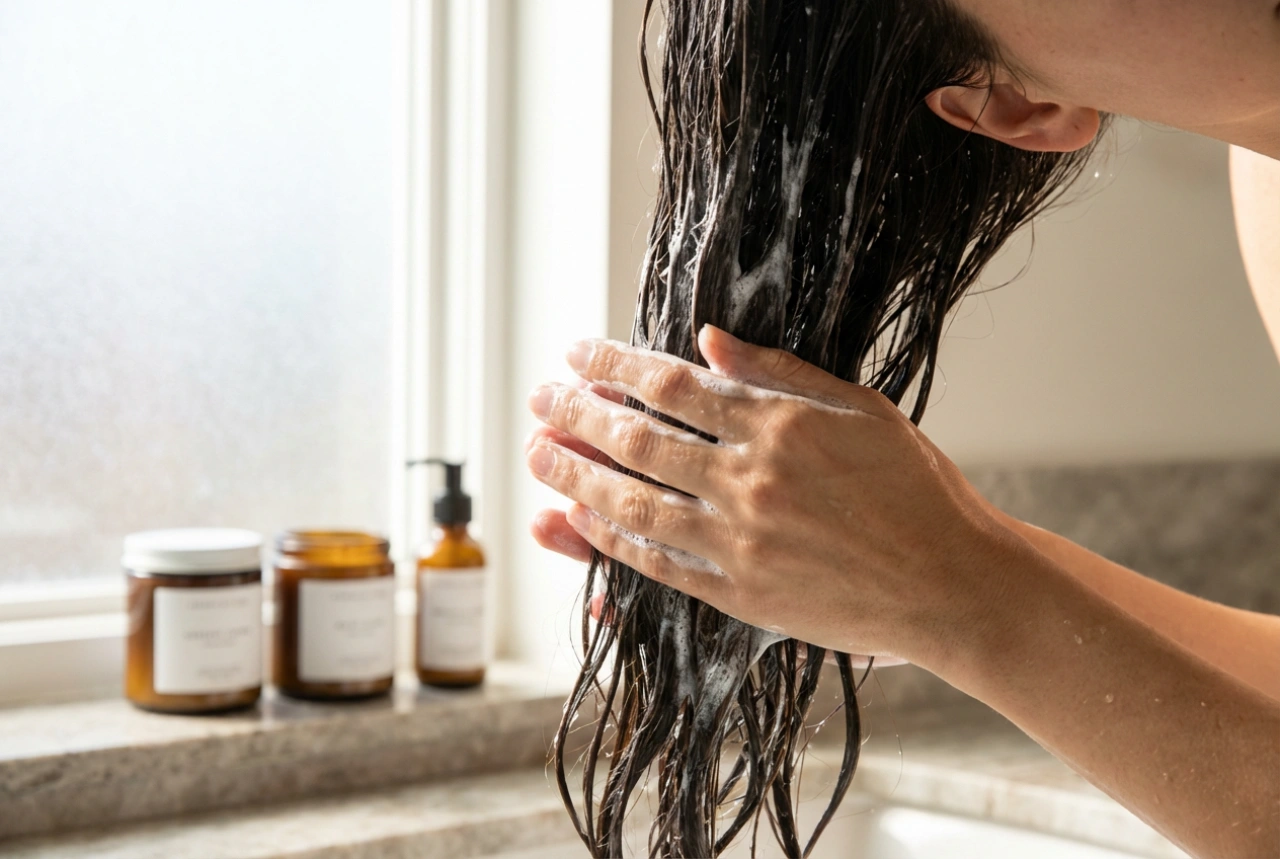
With the first layer of conditioner still on your hair, it's time to wash. Take a small amount of a gentle shampoo and, if needed, dilute it with a little water in your palms. Apply the shampoo directly and only to your scalp. Massage your scalp gently with your fingertips to cleanse away oil and product build-up. Avoid scrubbing the lengths and ends of your hair. As you rinse the shampoo from your scalp, the suds will run down the hair shaft, providing a mild cleansing action to the conditioner-coated ends. This is sufficient to clean them without stripping away natural oils.
Step 3: The Second 'O' (Conditioner)
After thoroughly rinsing out the shampoo and the first conditioner, gently squeeze the excess water from your hair once more. Now, apply your second conditioner. This is the time to use a more nourishing, richer product, or even a hair mask if your hair is very dry. Apply it from the mid-lengths to the ends, avoiding the roots. Leave it on for the duration recommended on the product's packaging—typically 3-5 minutes. This final step replenishes moisture, smooths the cuticle, and leaves your hair soft and easy to detangle. Finish by rinsing thoroughly with cool or lukewarm water to help seal the cuticle and boost shine.
Common Mistakes to Avoid with the OMO Method
While the OMO method is simple, a few common errors can prevent you from getting the best results. Be mindful of the following:
- Using products that are too heavy: Especially for the first 'O', using a very thick, silicone-heavy conditioner can weigh hair down or prevent the shampoo from properly cleansing the scalp. Opt for lighter formulas.
- Applying conditioner to the scalp: Both conditioning steps should focus on the lengths and ends. Applying conditioner to the roots can lead to a greasy scalp and product build-up.
- Applying shampoo to the entire hair length: The purpose of OMO is to protect the ends. Shampooing them directly defeats this purpose. Focus cleansing efforts on the scalp.
- Not rinsing thoroughly enough: Any leftover product can make hair feel heavy, dull, or greasy. Ensure you rinse completely after both the washing and the final conditioning step.
- Assuming it's for everyone: If you have very fine, low-porosity, or easily weighed-down hair, the full OMO method might be too much. You could try it less frequently or modify it by using very lightweight products.
The OMO method is a versatile and effective technique for enhancing hair health and hydration. By protecting your hair's delicate ends during the washing process, you can reduce dryness, minimise breakage, and promote a smoother, healthier appearance. Feel free to experiment with different types of conditioners to find the perfect combination that leaves your hair feeling its absolute best.