

Foot care is a fundamental aspect of personal grooming, yet it's often overlooked until problems like dryness or roughness become noticeable. A well-structured home care routine can keep your feet soft, smooth, and comfortable all year round. One of the most effective ingredients you'll find in foot care products is urea. Its unique properties make it a powerhouse for both hydrating and smoothing the skin, but its effectiveness is directly tied to using the right concentration. Understanding how to choose and use urea-based products can transform your foot care results.
What is Urea and Why is it so Effective?
Urea is a compound that occurs naturally in the skin and plays a vital role in maintaining its moisture balance. In cosmetics, it's a synthetically produced ingredient valued for its dual-action capabilities. Depending on its concentration in a cream or lotion, urea can act as either a potent moisturiser or an effective exfoliating agent.
At low concentrations, urea is a humectant. This means it draws moisture from the deeper layers of the skin and the environment, binding it in the epidermis. This helps to combat dryness and keep the skin supple and hydrated. At higher concentrations, urea has a keratolytic effect. It works by breaking down the bonds between dead skin cells on the surface, which promotes shedding and helps to soften and reduce thick, callused skin. This makes it exceptionally useful for addressing the specific challenges of foot care, where skin is naturally thicker and more prone to building up rough patches.
Choosing the Right Urea Concentration for Your Needs
The key to success with urea is matching the concentration to your skin's condition. Products will clearly state the percentage of urea, which typically falls into one of three main categories.
- Low Concentration (Up to 10%): Creams with this level of urea are ideal for daily maintenance and tackling mild dryness. They act primarily as moisturisers, helping to keep the skin on your feet soft and preventing excessive dryness from developing. If your feet are in generally good condition, a 5-10% urea cream is an excellent choice for your daily routine.
- Medium Concentration (15-25%): This range is designed for feet with more significant dryness, roughness, and emerging calluses. The formula provides intense hydration while also offering a mild exfoliating effect. It's effective at softening stubborn dry patches on heels and the balls of the feet. This concentration is best used as a targeted treatment for a few weeks to improve skin texture, after which you can switch to a lower concentration for maintenance.
- High Concentration (30% and above): Products with high concentrations of urea deliver a powerful keratolytic action. They are intended for short-term, localised use on very thick, stubborn calluses or extremely rough patches. They work to intensively break down and soften hardened skin. It is crucial to use these products sparingly and only on the affected areas, avoiding surrounding healthy skin. They are not intended for all-over, daily use. After a short period of use (e.g., one to two weeks), once the skin has softened, it's important to return to a lower-concentration product for ongoing care.
How to Incorporate Urea Creams into Your Routine
Integrating urea into your foot care is straightforward. Consistency is the most important factor for achieving and maintaining smooth feet.
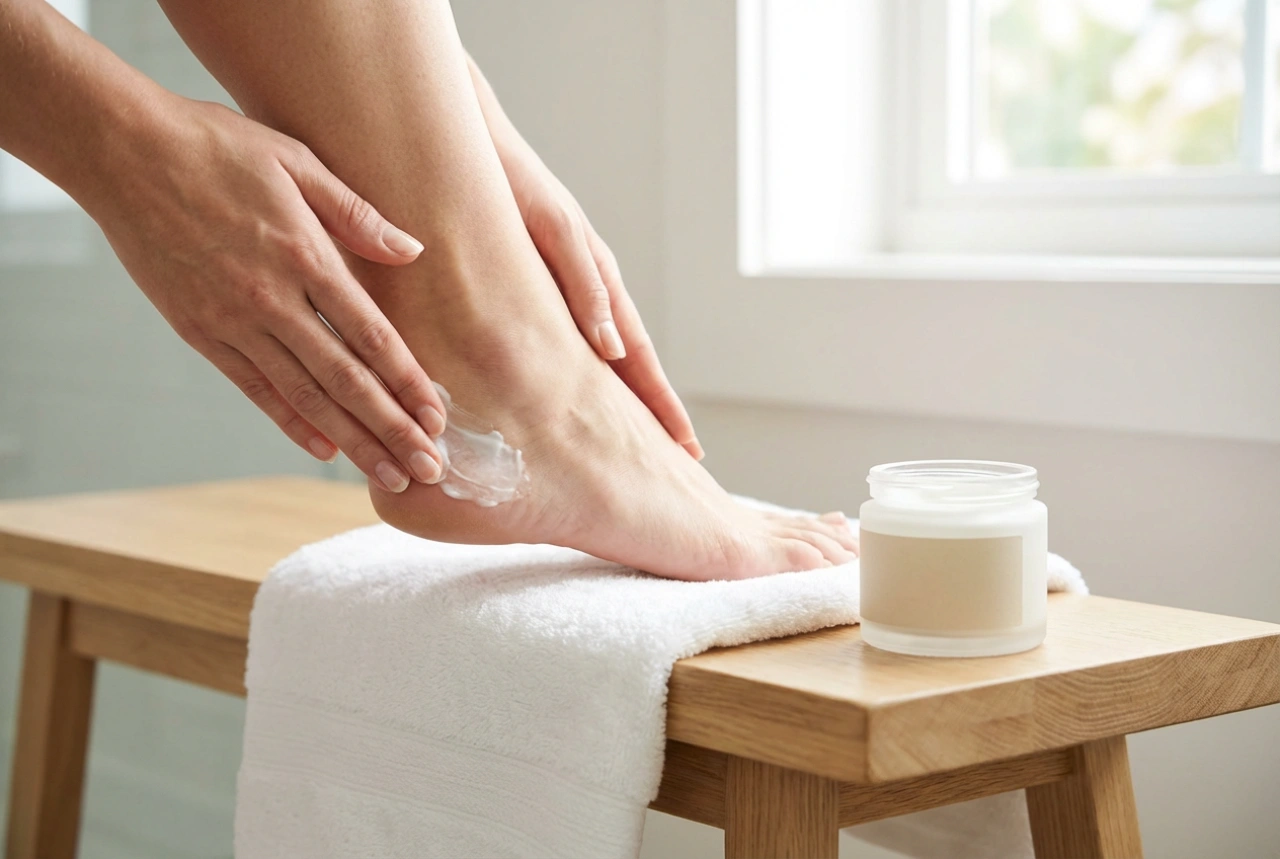
First, always start with clean and dry feet. The best time to apply a foot cream is after a bath or shower when your skin is warm and slightly damp, as this helps with absorption. Pat your feet thoroughly dry, paying attention to the areas between your toes.
Next, take a small amount of the chosen urea cream and massage it into your feet until it is fully absorbed. Focus on the areas that need the most attention, such as the heels and any callused spots. If using a high-concentration product, apply it precisely to the targeted rough area only.
For an intensive overnight treatment, apply a generous layer of a low or medium-concentration cream and then put on a pair of clean cotton socks. The socks will help the product penetrate more deeply and will also protect your bedding.
Common Mistakes to Avoid
To get the most out of your urea foot cream, steer clear of a few common errors. Firstly, avoid using a concentration that is too high for your needs; using a 30% urea cream for simple daily hydration is unnecessary and can be too harsh. Secondly, never apply urea-based products, especially higher concentrations, to broken, sensitive, or irritated skin. Thirdly, be patient. While urea is effective, it takes consistent use to see significant improvement, especially with thick calluses. Finally, don't forget maintenance. Once you've achieved the desired softness, switch to a lower-concentration cream to maintain the results and prevent the roughness from returning.