

Achieving a flawless manicure at home begins with a fundamental tool: the nail file. While it may seem simple, using the right type of file and the correct technique is crucial for maintaining the health and beauty of your nails. Proper filing prevents splitting, peeling, and breakage, laying the perfect foundation for any nail colour or style. Understanding the nuances of this essential step can elevate your nail care routine from basic maintenance to a truly refining ritual.
What is Nail File Grit and Why Does it Matter?
The term 'grit' refers to the coarseness of the abrasive particles on the nail file. It's measured by a number: the lower the number, the coarser the file, and the more aggressively it removes nail length. Conversely, a higher grit number indicates a finer, gentler surface, ideal for smoothing and shaping. Using a file with a grit that is too low for your natural nails can cause damage, including micro-tears and splitting. Choosing the appropriate grit ensures you can shape your nails effectively without compromising their structural integrity.
Understanding Grit Numbers
Nail files often come with two different grit numbers, one on each side. This dual-sided design offers versatility, allowing you to use the coarser side for initial shaping and the finer side for refining the nail edge. When selecting a file, consider the type and condition of your nails. What works for strong, thick nails might be too harsh for those that are thin or prone to peeling.
Choosing the Right Nail File Grit
Navigating the world of nail files is simpler when you understand what each grit level is designed for. Here’s a breakdown to help you make the best choice for your nails.
Low Grit (Coarse Files): 80-100
These files are very coarse and are generally too abrasive for natural nails. They are primarily designed for shaping and shortening artificial nails, such as acrylics or gels. Using a low-grit file on your natural nails can quickly lead to damage, weakening them significantly. It's best to reserve these for synthetic extensions only.
Medium Grit (Standard Files): 180-240
A file with a grit of 180 is considered the universal standard for natural nails. It’s effective enough to shape and shorten the nail edge without being overly aggressive. This is the perfect starting point for most people for their regular manicure routine. A 240-grit file is slightly finer and is excellent for gentle shaping on weaker or more delicate nails, as well as for smoothing the edge after using a 180-grit file.
High Grit (Fine/Buffing Files): 400 and above
Files with a grit of 400 or higher are used for finishing and buffing. They are not designed for shortening the nail but for creating an exceptionally smooth edge, which helps to seal the nail and prevent snagging. Even finer grits (600-2000+) are used as buffers to smooth out ridges on the nail surface and create a natural-looking shine. A light touch is essential when buffing the nail plate to avoid thinning it.
The Correct Technique for Filing Nails
How you file your nails is just as important as the tool you use. A poor technique can undo all the benefits of choosing the right file. Follow these steps for healthy, beautifully shaped nails.
- Start with dry nails: Wet nails are more flexible and susceptible to damage. Always file your nails when they are completely dry to ensure a clean, precise finish.
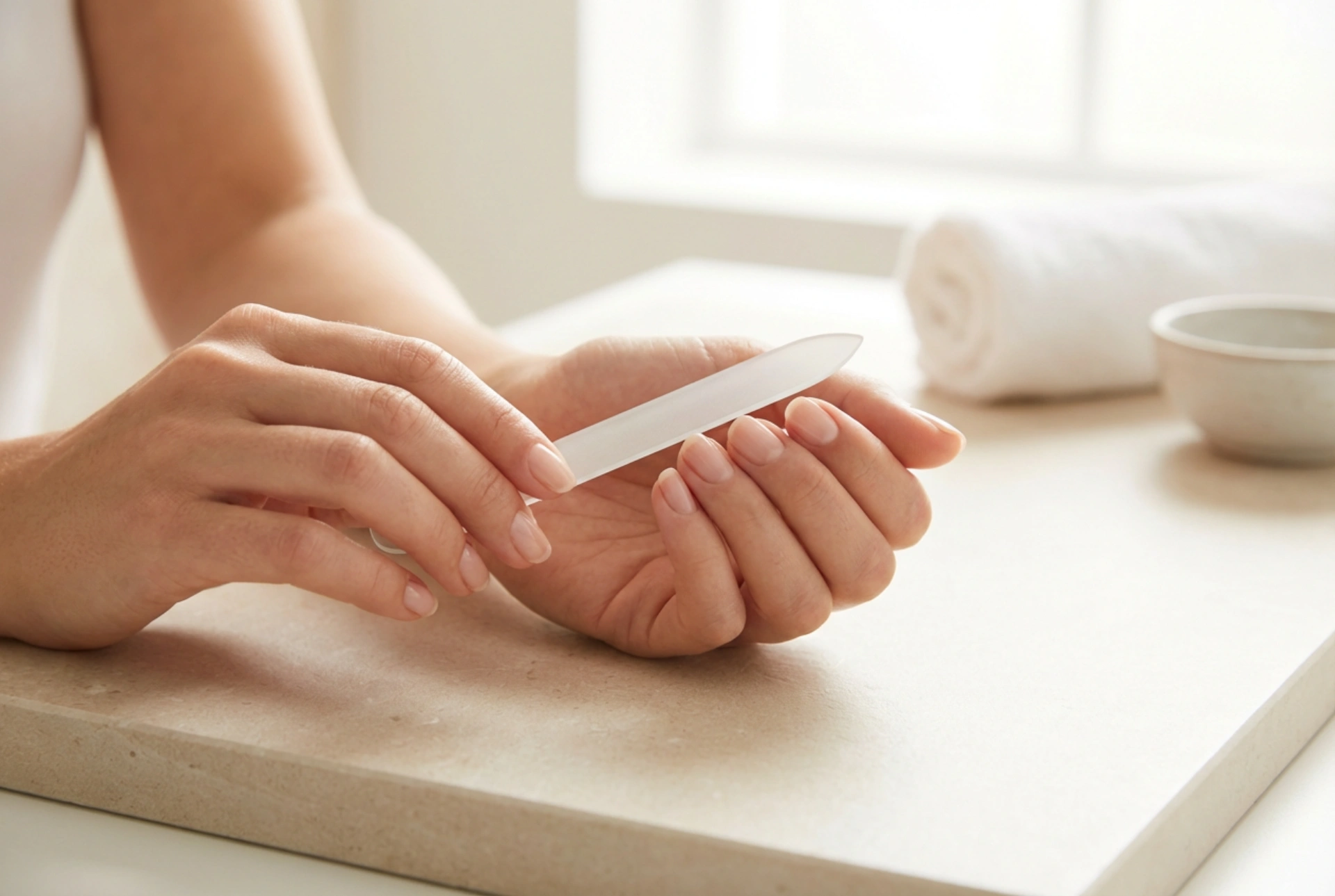
- File in one direction: The most common mistake is filing back and forth in a sawing motion. This creates micro-tears in the nail tip, leading to peeling and splitting. Instead, place the file at the edge of your nail and gently sweep it from the side towards the centre in a single, smooth motion. Lift the file and return to the starting point for the next stroke.
- Be gentle: Apply light pressure. Let the file do the work, rather than forcing it against the nail. Aggressive filing can cause heat and friction, weakening the nail structure.
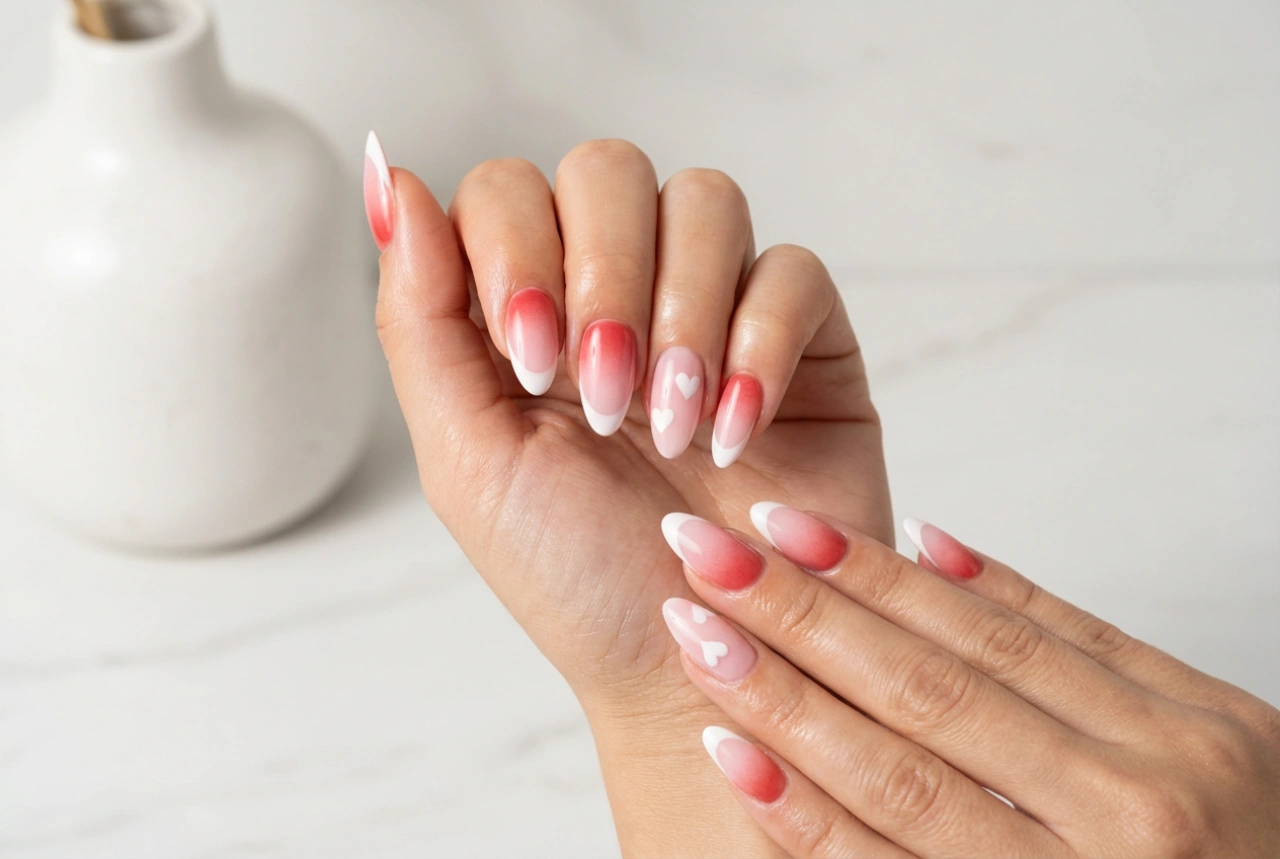
- Shape with care: Whether you prefer a square, oval, or almond shape, work on each side of the nail, filing towards the centre to achieve your desired look. Avoid over-filing the sides, as this is where the nail gets its strength.
Common Mistakes to Avoid When Filing
To keep your nails in top condition, be mindful of these common filing pitfalls. Firstly, avoid using old, worn-out files. A dull file requires more pressure, increasing the risk of damage. Secondly, never file your nails immediately after a bath or shower. Finally, resist the temptation to use a coarse file to fix a break quickly; it’s better to gently smooth the snagged edge with a fine-grit file to prevent further tearing.