

A well-chosen hairstyle is one of the most effective tools in your beauty arsenal for shaping and enhancing your facial features. Much like contouring with makeup, the right cut and style can create illusions of light and shadow, helping to balance proportions and create a more elongated, visually slimmer silhouette. By understanding a few key principles of hairstyling, you can select a look that not only complements your hair's texture but also beautifully frames your face, highlighting your best attributes.
The Magic of Layers and Asymmetry
One of the most effective strategies for optically slimming a fuller face is to incorporate layers. Long, soft layers that start around the chin or collarbone area are particularly effective. They break up the solid line of the hair, preventing it from adding bulk around the cheeks and jawline. This creates vertical movement, which draws the eye downwards and gives the impression of a longer face. Avoid short, choppy layers that end at the widest part of your face, as this can have the opposite effect.
Asymmetry is another powerful technique. An asymmetrical cut, such as a bob that is longer on one side, creates strong diagonal lines that cut across the roundness of the face. This visual disruption tricks the eye into seeing a narrower, more oval shape. Even a simple deep side parting can introduce an element of asymmetry that instantly slims and adds sophistication to your look.
The Importance of Hair Length
When the goal is to elongate the face, length is your best friend. Generally, hairstyles that are shoulder-length or longer are universally flattering for fuller face shapes. Long hair naturally draws the eye down, creating a vertical line that counteracts horizontal width. Styles like long, soft waves or sleek, straight hair can be particularly effective.
It's wise to be cautious with chin-length cuts. A classic bob that ends exactly at the jawline, especially with a blunt edge, can create a horizontal line at the widest part of the face, making it appear fuller. If you prefer shorter hair, opt for a 'lob' (long bob) that falls past the chin to the collarbone, or an asymmetrical style as mentioned earlier.
Styling Tricks for a Slimmer Appearance
Beyond the cut itself, how you style your hair daily can make a significant difference. Here are a few simple tricks to incorporate into your routine:
Add Volume at the Crown
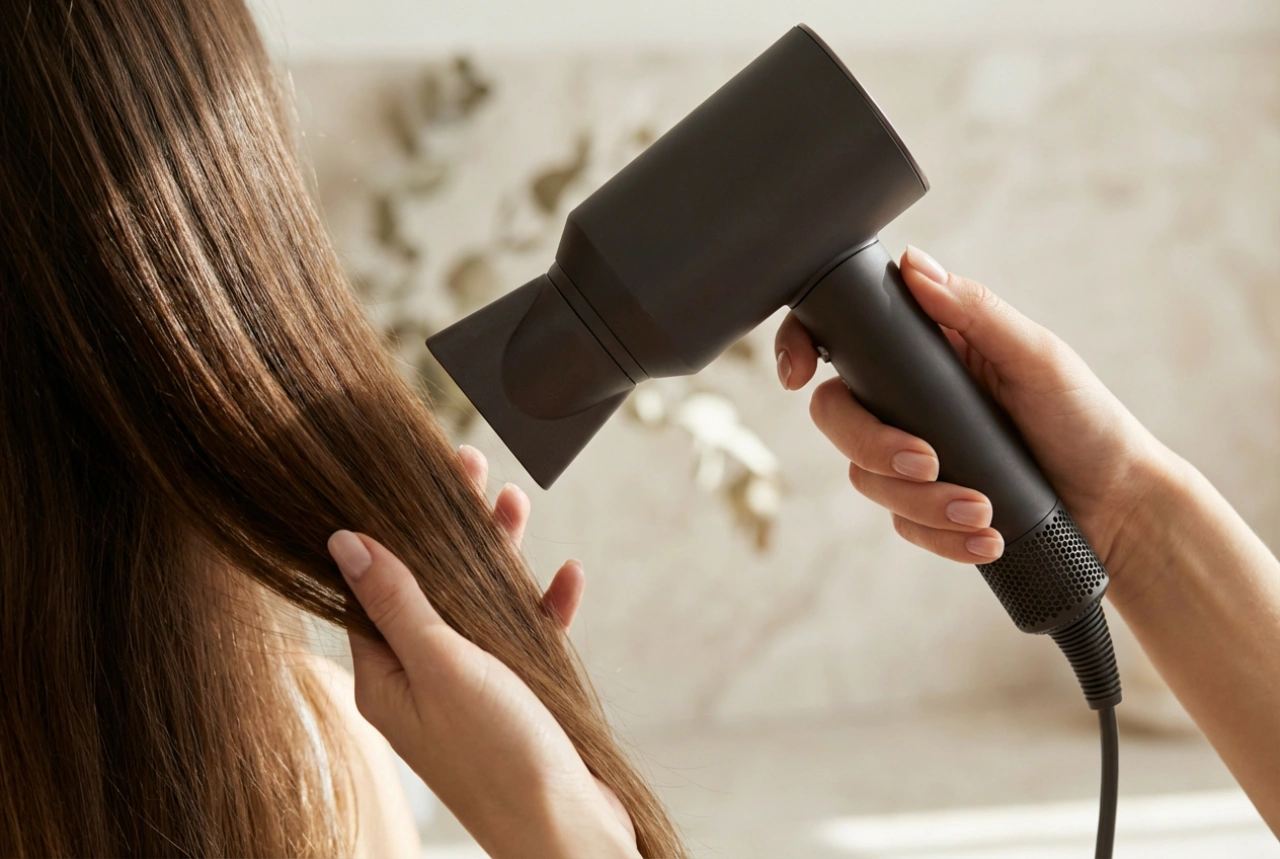
Creating height at the top of your head is a classic trick to balance facial proportions. A little volume at the roots lifts the overall silhouette, making your face appear longer and less round. You can achieve this with a light tease at the crown, using a volume-boosting mousse, or even by blow-drying your hair upside down.
Embrace a Side Parting
While a centre parting can sometimes split the face symmetrically and highlight its width, a deep side parting works wonders. It creates an asymmetrical sweep of hair across the forehead, which slims the face and draws attention to the eyes. It's a simple, instant change with a high impact.
Opt for Soft Waves
Soft, loose waves add texture and dimension without adding excessive width. The key is to ensure the waves are not too tight or rounded, and that they begin below the ear level. This prevents adding volume at the sides of the face and instead encourages a soft, vertical flow. Straight hair or very gentle, tousled waves are excellent choices.
Hairstyles to Approach with Caution
While personal preference is paramount, some styles tend to accentuate facial roundness more than others. It's often best to avoid very short, rounded cuts that mimic the shape of the face. Similarly, a heavy, blunt fringe can shorten the face and create a horizontal line that adds apparent width. If you love a fringe, consider a wispy, side-swept version that opens up the face instead of closing it off. Ultimately, the goal is to create vertical and diagonal lines that guide the eye and create a harmonious balance for your features.