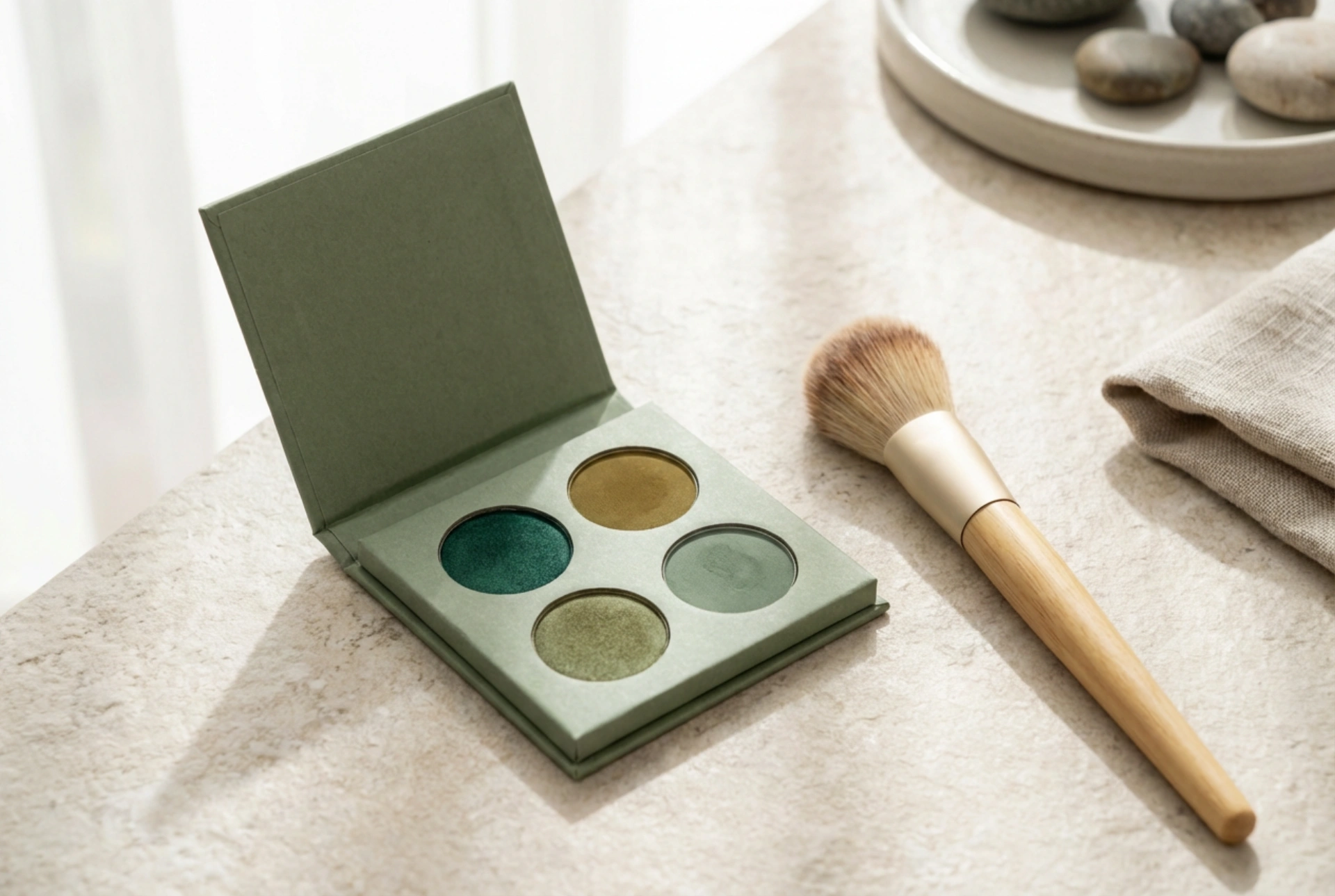


Natural tones have taken the beauty world by storm, offering a refreshing departure from classic neutrals. Among these, green eyeshadow palettes have emerged as a versatile and sophisticated choice. From deep forest hues to soft sage and rich olive, green tones bring a subtle warmth and elegance to everyday makeup. Imagine a minimalist vanity bathed in soft, warm light, where an elegant palette of moss, emerald, and olive shades sits alongside a single, fluffy blending brush. This image encapsulates the modern approach to green eyeshadow: refined, approachable, and deeply artistic. Understanding how to select these tones and combine them effectively allows you to elevate your eye makeup with ease.
Decoding the Green Spectrum: From Olive to Emerald
To make the most of green eyeshadows, it is essential to understand the different undertones within this colour family. Greens can be broadly categorised into warm and cool variations, each creating a distinct mood and finish.
Warm greens include olive, khaki, moss, and pistachio. These shades have strong yellow or golden undertones, making them incredibly flattering on warm skin tones. They blend seamlessly with rich browns, warm taupes, and soft gold shimmers, creating an organic, earthy look.
Cool greens, such as emerald, mint, sage, and forest green, feature blue or silvery undertones. These pigments offer a striking, crisp contrast that looks particularly elegant on cool-toned skin. When creating a cohesive colour story, cool greens pair beautifully with icy silver, charcoal grey, and soft mauve transition shades.
Selecting Greens Based on Your Eye Colour
While anyone can wear green eyeshadow, choosing shades that complement your specific eye colour can enhance your natural features beautifully.
- Brown and Hazel Eyes: These eye colours are highly versatile and look spectacular in almost any shade of green. Olive and deep emerald tones bring out the warm, golden flecks in hazel and dark brown eyes, creating captivating depth.
- Blue Eyes: For blue eyes, a soft, muted sage or a dusty khaki offers a subtle, sophisticated contrast. Avoiding overly bright emeralds prevents the makeup from overpowering the delicate blue pigment of the iris.
- Green Eyes: Wearing green on green can look incredibly chic if you choose the right contrast. Opt for deep forest greens or very light, shimmering olive tones rather than matching your exact eye colour. This creates a multi-dimensional effect that defines the eyes.
How to Construct a Harmonious Green Palette
Whether you are choosing a pre-made palette or assembling a custom magnetic set, a well-balanced selection of shades is key to achieving a professional finish. A complete eye look typically requires a balance of light, medium, and deep tones.
First, include a neutral transition shade. A soft beige, light taupe, or warm peach serves as the perfect base, helping to blend the green edges smoothly into the skin.
Second, select your primary green shades. Choose a matte moss or olive for the lid, and a deeper forest green or charcoal-olive to define the outer corner and crease.
Third, add a touch of light and texture. A shimmering champagne, soft gold, or light mint shimmer applied to the centre of the lid or the inner corner adds dimension and brightens the entire eye area.
Practical Tips for a Flawless Application
Working with rich pigments like green requires a few simple techniques to ensure a seamless, professional result.
Always start with a light layer of primer or powder on the eyelids to create a smooth, even canvas. This prevents the green pigments from looking patchy or shifting during the day. Use a soft, tapered blending brush to apply your transition colour first, sweeping it gently along the brow bone.
When applying the green shades, build the intensity gradually rather than applying too much product at once. Gently pat the colour onto the lid before using light, circular motions to blend the edges outwards. This ensures a clean, gradient effect that looks effortless and polished.