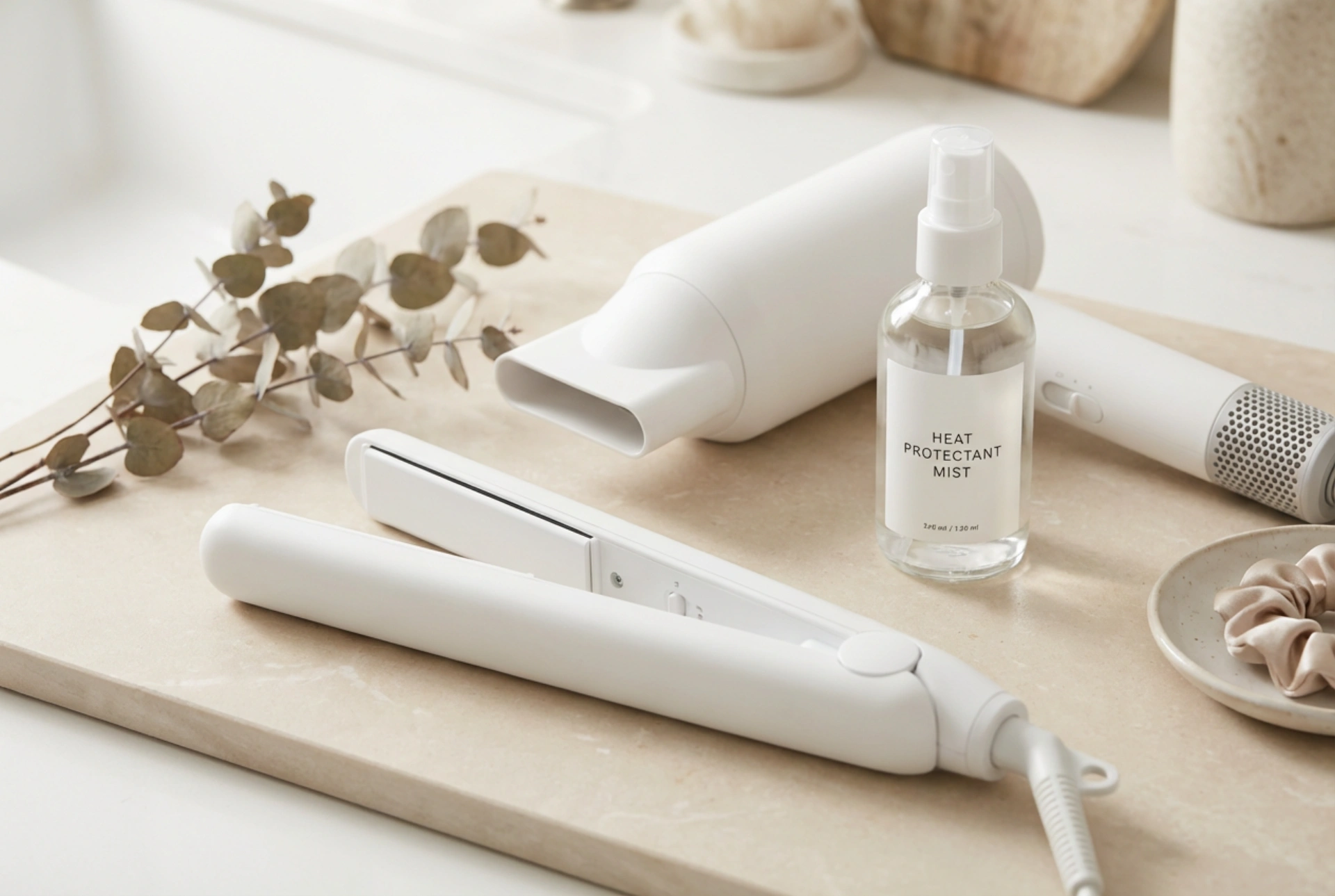


Achieving a sleek, salon-worthy finish at home often involves a combination of styling tools. When looking at a beautiful vanity setup, featuring a modern, sleek white hairdryer and a matching hair straightener alongside a protective spray, it is easy to feel inspired. However, using both of these high-heat devices in a single styling routine requires a careful approach to avoid overheating and compromising the hair structure. Understanding how to harmoniously combine a hairdryer and a straightener is key to keeping your hair looking radiant, smooth, and resilient.
The Foundation: Preparing the Hair for Heat
Safe styling begins long before you plug in your devices. Every time you plan to use both a hairdryer and a straightener, your hair needs to be primed to withstand the elevated temperatures. This preparation starts in the shower with a focus on hydration. Well-moisturised hair is naturally more resilient to heat, as the water molecules inside the cortex are bound securely, reducing the risk of sudden moisture loss.
Using a nourishing conditioner or a lightweight hair mask helps to seal the cuticle layer, creating a smooth barrier. When the cuticles lie flat, they reflect light better and offer superior protection to the delicate inner layers of the hair shaft. After washing, avoid rough drying with a traditional towel. Instead, gently blot excess water with a soft microfibre towel or a cotton t-shirt. This minimises friction, preventing the outer layer of the hair from lifting and becoming more vulnerable to heat damage.
The Art of Gentle Drying: Getting the Base Right
The most common mistake when combining a hairdryer and a straightener is attempting to straighten hair that is still damp. Straightening wet or damp hair can lead to a phenomenon known as "bubble hair," where moisture inside the hair shaft turns to steam and expands, literally bursting the hair structure from within. Therefore, the drying phase is critical.
- Rough drying first: Start by drying your hair on a medium heat setting with high airflow, moving the hairdryer constantly. Avoid concentrating heat on one section for too long.
- Use the nozzle: Always attach the concentrator nozzle. This helps direct the airflow downwards along the hair shaft, which naturally aligns the cuticles and minimises frizz.
- Keep your distance: Keep the hairdryer at least fifteen to twenty centimetres away from your head to prevent local overheating of the scalp and strands.
Dry your hair to one hundred per cent. Even if a section feels only slightly cool or humid, it is not ready for the straightener. Take your time during this step, as a thorough blow-dry actually reduces the amount of time the straightener needs to spend on each strand later on.
The Shield: How to Properly Apply Heat Protection
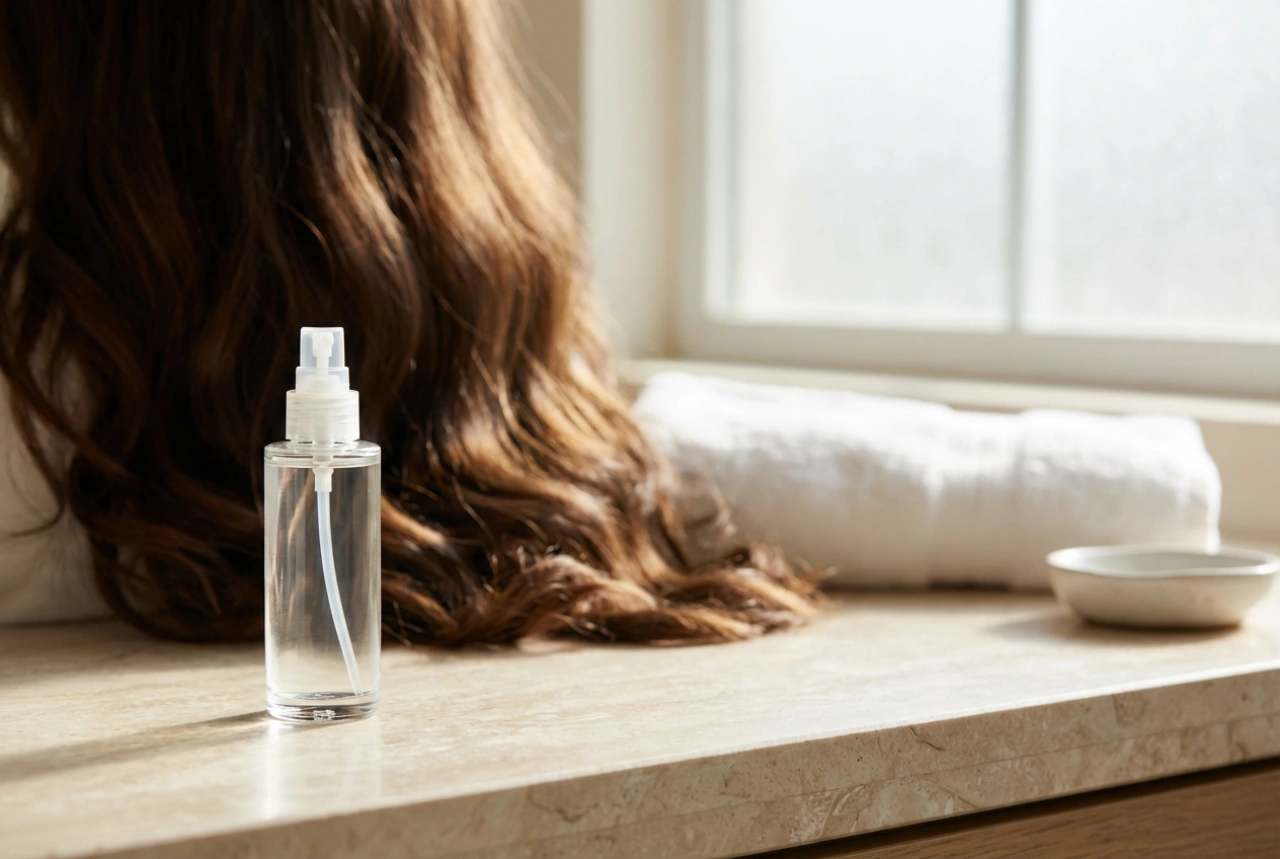
No double-styling routine is complete without a high-quality heat protectant. This invisible shield is essential for dispersing heat evenly across the hair surface and preventing direct thermal shock. Heat protectants work by coating the hair with a protective film that slows down heat conduction, ensuring that the inner core of the hair is not exposed to sudden spikes in temperature.
For the best results, apply your heat protectant spray to damp hair before blow-drying. This allows the product to distribute evenly as you brush and dry. If your hair is particularly thick or coarse, you may benefit from a lightweight misting on dry hair just before straightening, but make sure to let the spray dry completely for a minute before applying the hot plates. Always section your hair to ensure every strand receives adequate coverage, rather than just spraying the top layer.
The Polish: Safe Straightening Techniques
Once the hair is completely dry and protected, it is time to use the straightener. The goal here is to achieve a sleek finish with the absolute minimum number of passes. Modern straighteners offer adjustable temperature controls, which should be utilised to match your specific hair type.
For fine, thin, or colour-treated hair, keep the temperature below one hundred and eighty degrees Celsius. Thicker, coarser hair can tolerate slightly higher temperatures, but it is rarely necessary to exceed two hundred degrees. When straightening, work in clean, manageable sections. Slide the straightener slowly and smoothly from root to tip in a single, continuous motion. Avoid stopping at any point along the hair shaft, as this creates hot spots that can instantly weaken the hair. By ensuring your blow-dry was thorough and smooth, you should only need one, or at most two, passes with the straightener per section.
Post-Styling Care and Structural Restoration
Even with the most meticulous styling habits, using a hairdryer and a straightener regularly places a structural demand on your hair. To keep your strands looking vibrant, soft, and healthy, it is essential to establish a dedicated restorative routine. Integrating a deeply nourishing hair mask once or twice a week helps to replenish lost lipids and moisture, ensuring that the hair retains its elasticity. Look for ingredients that naturally smooth the cuticle and lock in hydration without weighing the hair down.
Additionally, pay close attention to the ends of your hair. As the oldest part of the hair shaft, the ends are highly susceptible to splitting and dryness from thermal styling. Applying a few drops of a lightweight hair oil after styling can help seal the tips, prevent moisture loss, and add a beautiful, natural shine. Finally, try to introduce heat-free styling days into your weekly schedule, giving your hair ample time to rest, recover, and maintain its natural bounce and vitality.