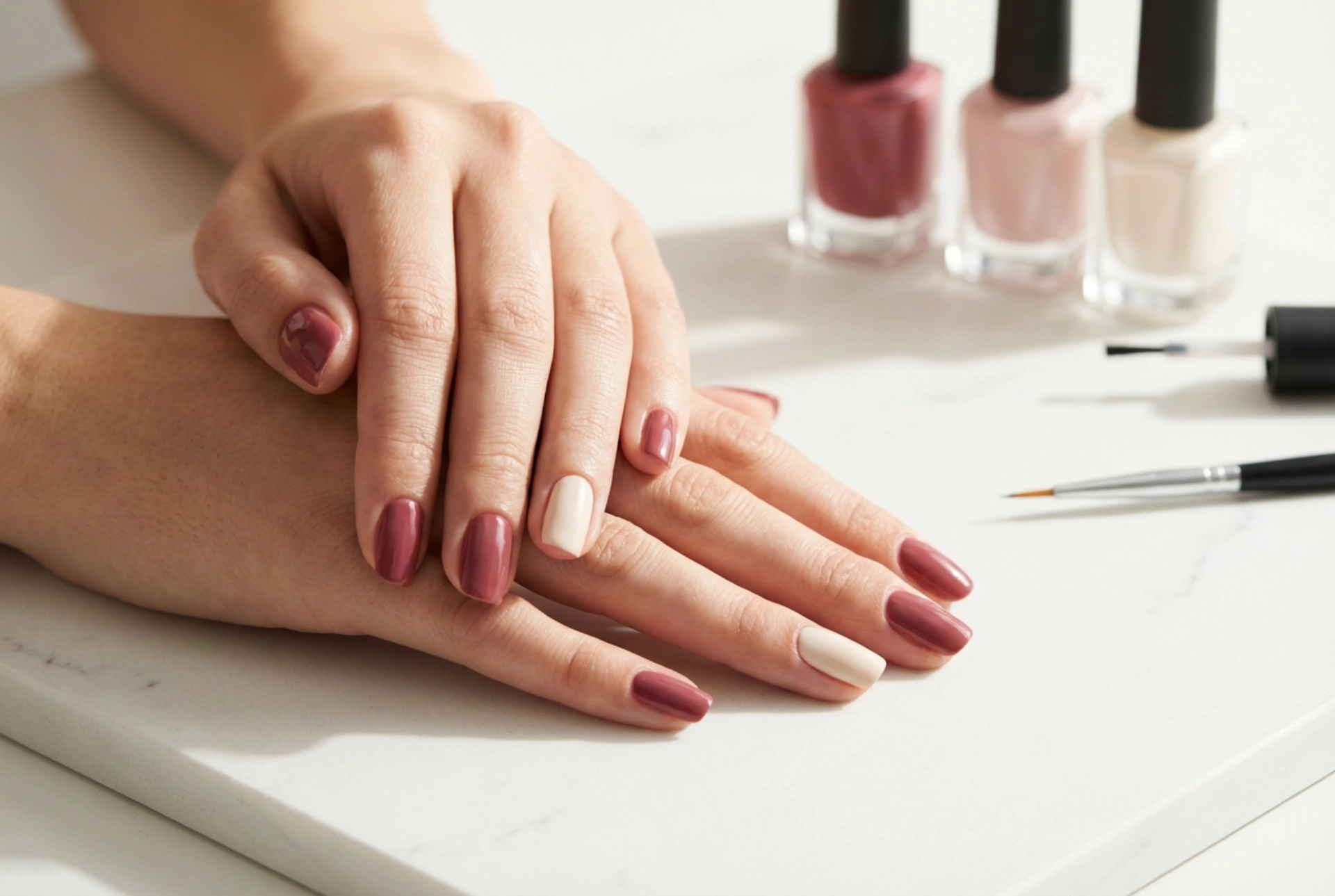


Elegant, well-manicured hands are a beautiful showcase of personal style. In the soft, natural light of day, two-tone nails offer a chic and modern aesthetic that effortlessly elevates any look. Combining two harmonious shades is an easy yet creative way to express your personality without the need for complex professional treatments. With a few simple tools, such as generic nail polish and a fine brush, you can achieve a sophisticated, clean finish right at home.
Understanding Colour Harmony in Nail Art
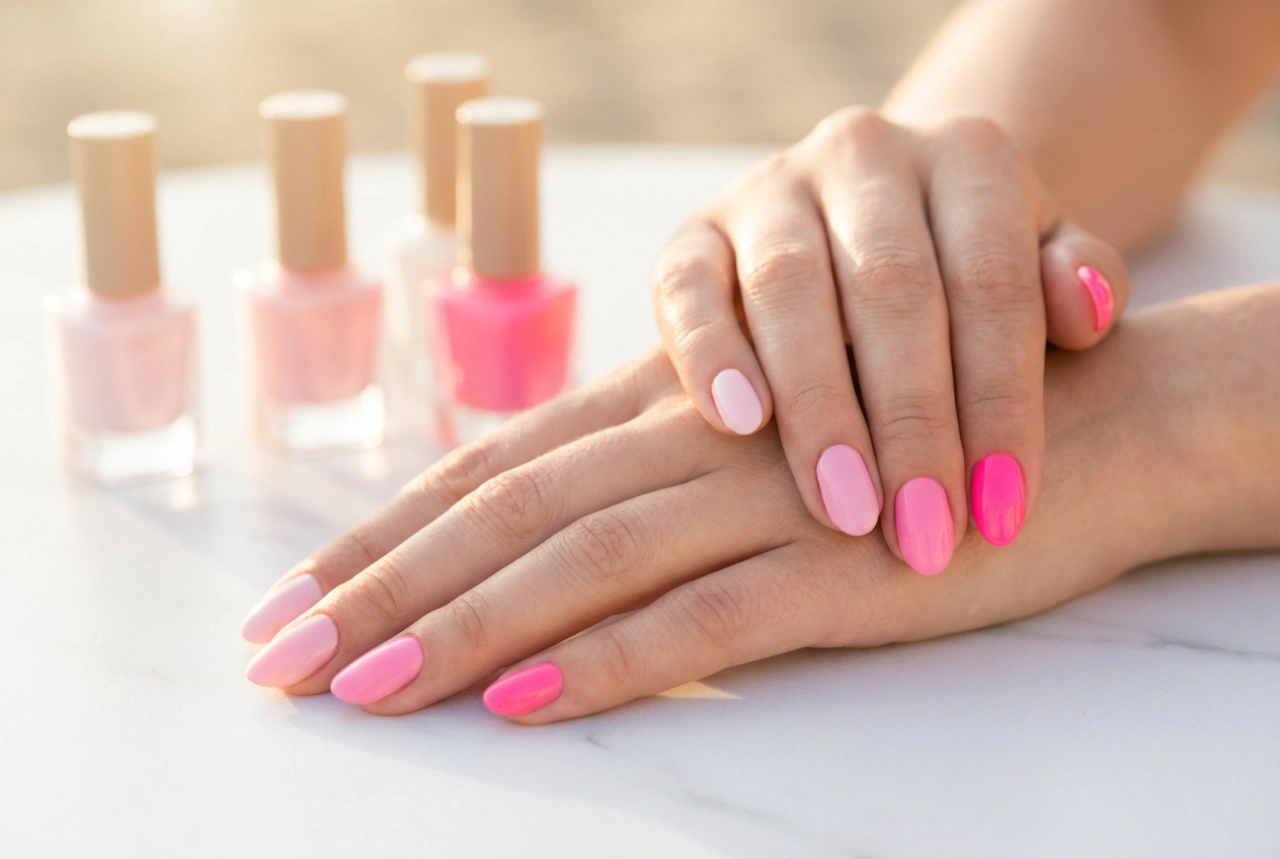
Before applying the first coat of polish, it is helpful to understand how different colours interact. A successful two-tone manicure relies on balance. You can choose colours from the same family for a subtle, gradient effect, or select contrasting shades for a bold statement. For instance, pairing soft pastel pink with a deeper rose creates a delicate transition. Alternatively, combining a neutral beige with a classic navy blue offers an elegant contrast that suits both casual and formal settings. Neutral shades like grey, cream, and taupe also make excellent partners for brighter tones, grounding the overall look.
5 Simple Ways to Combine Colours on Your Nails
1. The Classic Half-and-Half Split
One of the easiest ways to create a two-tone design is by splitting the nail vertically or horizontally. Apply your base shade and let it dry completely. Then, use a piece of gentle paper tape to cover one half of the nail and apply the second colour to the exposed side. Remove the tape carefully whilst the polish is still slightly wet to ensure a clean, sharp line. This method is perfect for beginners who want a geometric, modern look with minimal effort.
2. The Modern French Manicure
The traditional French manicure is timeless, but replacing the standard white tip with a contrasting colour instantly modernises the style. For a soft look, use a nude pink base with a lavender tip. If you prefer high contrast, try a soft grey base paired with a rich forest green or burgundy tip. Using a fine detail brush allows you to paint the curved tips with precision, creating a harmonious and balanced appearance.
3. The Subtle Ombré Blend
An ombré transition blends two colours seamlessly, creating a soft sunset effect on the nails. To achieve this at home, apply your lighter shade as the base coat. Once dry, apply a small amount of both colours side-by-side on a clean make-up sponge, letting them overlap slightly. Gently pat the sponge onto your nail several times to transfer the gradient. Clean any excess polish from the surrounding skin using a cotton bud dipped in gentle remover for a neat look.
4. The Stylish Accent Nail
If you prefer a minimalist aesthetic, the accent nail technique is an ideal choice. Paint four of your fingernails in one dominant shade, and use a complementary colour on the ring finger or thumb. This approach is incredibly subtle yet visually interesting, adding a touch of creativity to a classic manicure without requiring any complex painting skills.
5. Delicate Diagonal Blocks
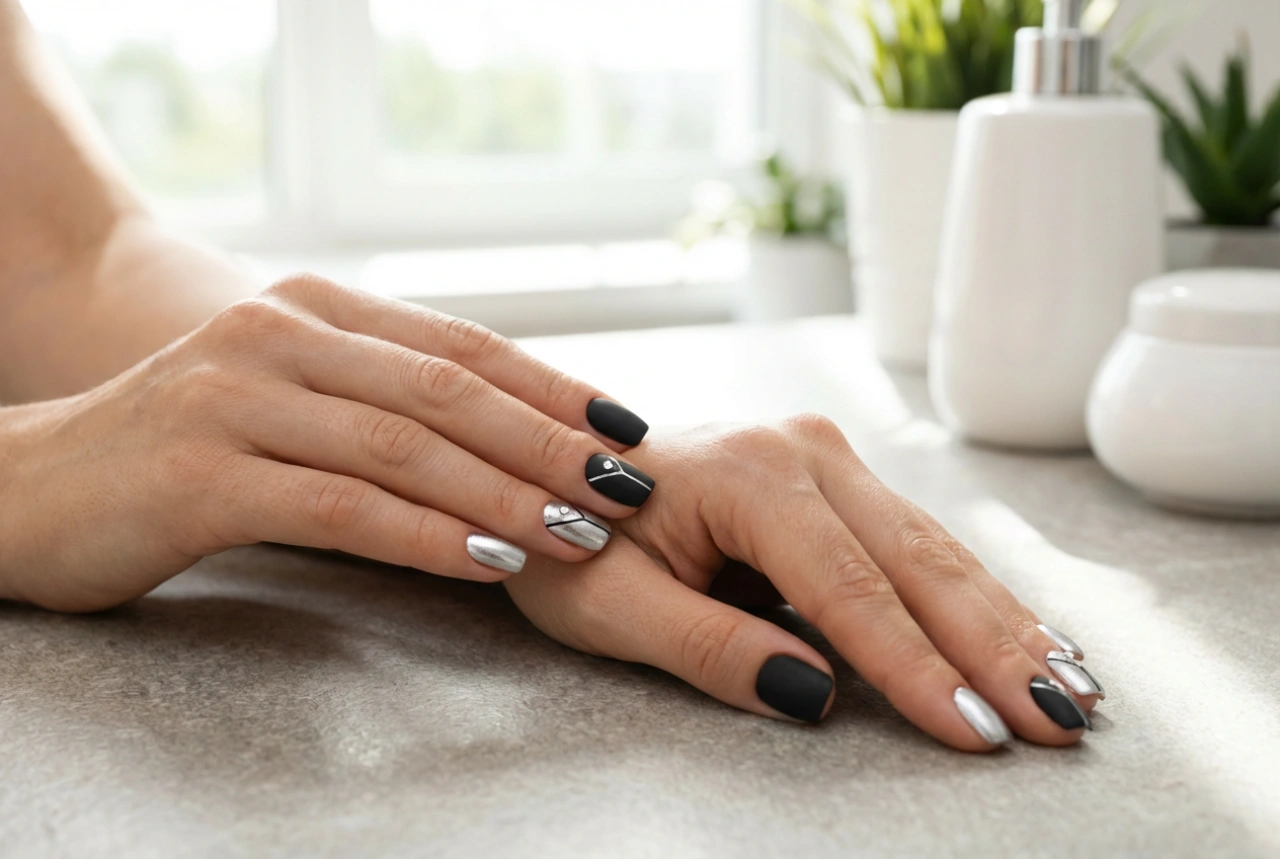
Creating diagonal colour blocks adds dynamic movement to your hands. Simply paint the nail with your primary colour. Once dry, paint a diagonal stripe across the top or bottom corner using your second colour. This technique works beautifully with metallic shades paired with matte neutrals, offering a contemporary twist that catches the light beautifully and flatters the natural shape of your fingers.
Securing a Long-Lasting Finish
To ensure your two-tone design remains pristine, proper preparation and sealing are key. Always start with clean nail plates, removing any natural oils with a gentle cleanser. After completing your chosen design, apply a high-quality, clear top coat. A top coat not only seals the edges where the two colours meet but also adds a beautiful gloss that enhances the vibrancy of the shades. Regular reapplication of a top coat every few days will protect your creative design and help maintain the fresh look of your manicure.