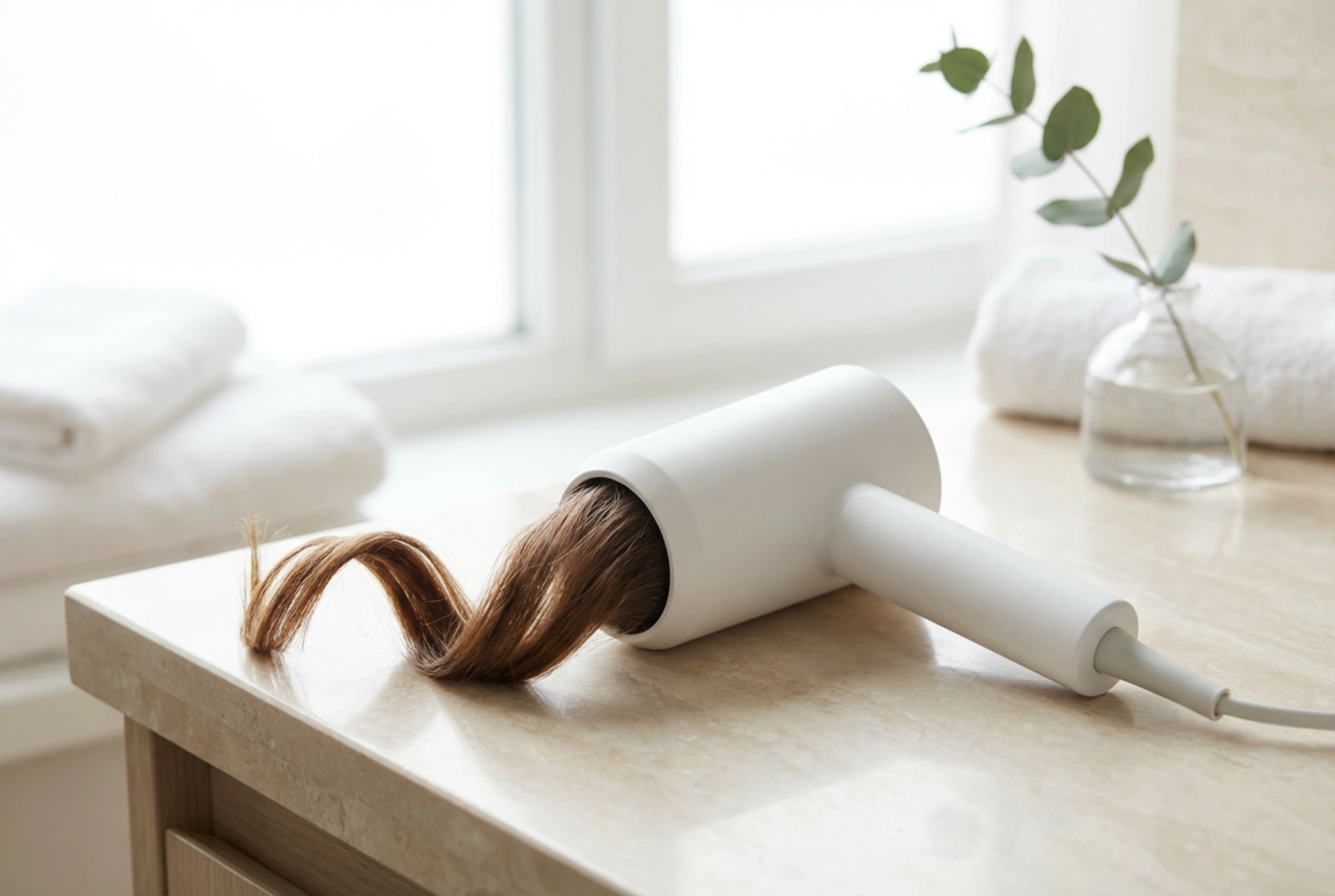


In the quest for beautifully styled, healthy-looking locks, the tools we use play a pivotal role. Gentle care begins with understanding how our everyday styling appliances affect our hair's structure. A sleek, modern hair dryer is more than just a convenience; it is a fundamental styling instrument that, when selected and used correctly, preserves the natural moisture and lustrous texture of the hair. Achieving that smooth, salon-like finish at home requires a combination of the right technology and proper drying techniques to prevent unnecessary thermal damage.
Key Features of a High-Quality Hair Dryer
When selecting a new hair dryer, it is important to look beyond basic aesthetics and focus on the built-in technologies designed to protect the hair fibre. Modern advancements have transformed these styling tools from simple heat emitters into sophisticated devices that respect hair health.
Ionic Technology
One of the most valuable features to look for is ionic technology. Ionic hair dryers emit negatively charged ions that break down the positively charged water droplets on wet hair. This process allows the water to evaporate much faster without requiring excessive heat. Furthermore, ionic technology helps seal the hair cuticle, reducing frizz, smoothing static, and leaving the hair looking naturally shiny and sleek.
Ceramic and Tourmaline Components
The heating elements inside the dryer also matter. Devices equipped with ceramic or tourmaline grills distribute heat much more evenly than traditional metal elements. Ceramic heat is gentle and infrared, meaning it penetrates the hair shaft to dry it from the inside out, minimising surface damage. Tourmaline, a semi-precious mineral, naturally generates even more negative ions and infrared heat, ensuring an exceptionally smooth and quick drying process.
Adjustable Speed and Temperature Settings
A good hair dryer must offer versatility. Look for a device that has at least three temperature settings (cool, warm, and hot) and at least two speed settings. Having control over these variables allows you to tailor the drying process to your specific hair type. Fine or damaged hair requires much lower temperatures, while thicker hair may need a slightly higher heat setting to dry efficiently without prolonged exposure.
The Cool Shot Button
Often overlooked, the cool shot button is a crucial feature for securing your style. Applying a blast of cool air at the end of your styling session cools the hair down rapidly, locking the cuticle in place and setting the shape. This not only adds a beautiful, reflective shine but also ensures that your volume and styling efforts last longer throughout the day.
How to Blow-Dry Hair Without Damage
Even with the most advanced hair dryer, improper technique can still lead to dryness, split ends, and breakage. Implementing a mindful blow-drying routine is essential for maintaining the integrity of your hair over time.
Pre-Drying Preparation
The drying process actually begins before you turn on the machine. After washing, avoid rubbing your hair vigorously with a rough cotton towel, as wet hair is in its most vulnerable and stretchable state. Instead, gently squeeze out excess water using a soft microfibre towel or a clean cotton t-shirt. Once the hair is damp rather than soaking wet, apply a lightweight heat protectant spray or cream evenly from the mid-lengths to the ends. This creates a protective barrier that reduces heat absorption and retains moisture.
Keep a Safe Distance
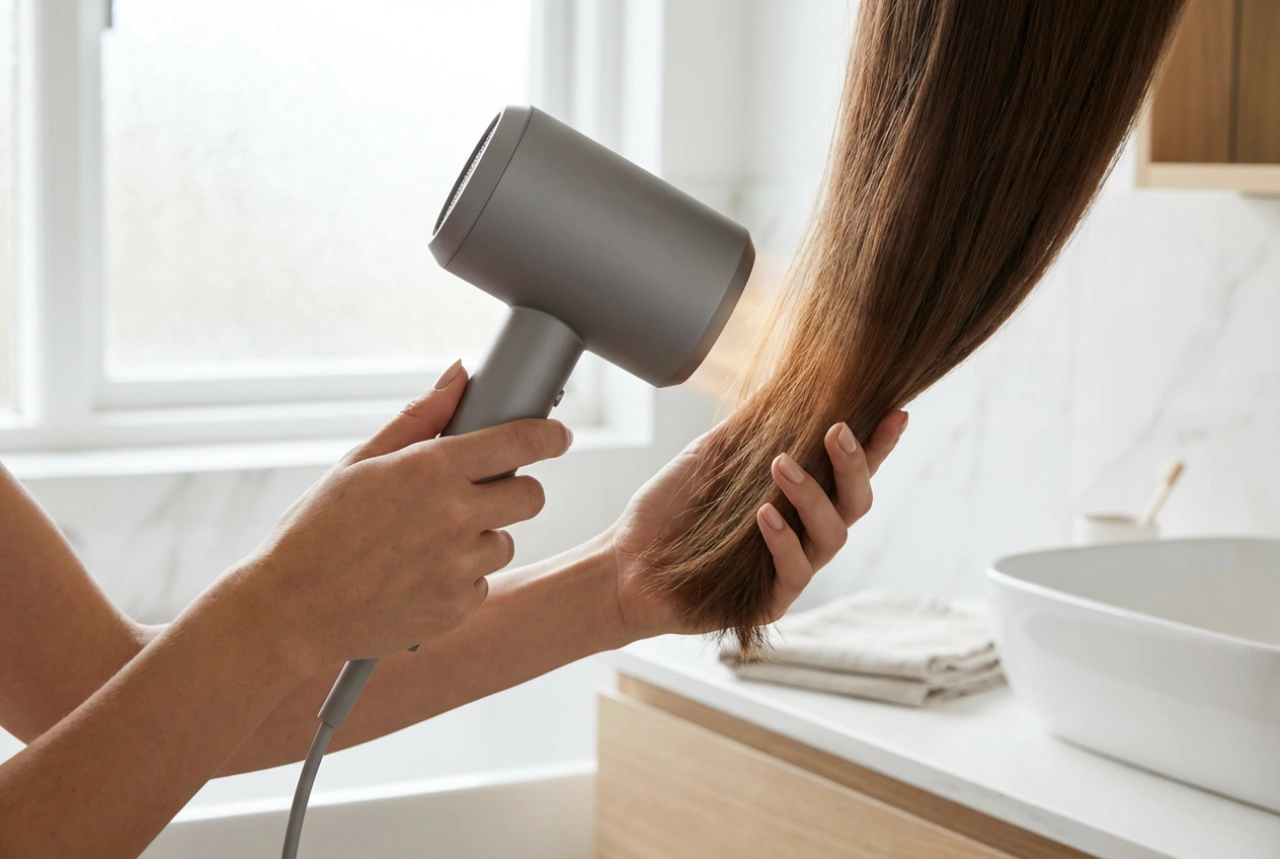
A common mistake is holding the nozzle of the hair dryer too close to the hair. To prevent localized overheating and singeing, always maintain a distance of at least fifteen to twenty centimetres between the dryer and your head. Keep the dryer in constant motion rather than focusing the airflow on one spot for too long.
Direction of Airflow
Always point the nozzle downwards, from the roots to the ends of the hair. This technique follows the natural direction of the hair cuticles, which lie like shingles on a roof. By drying in a downward direction, you smooth the cuticles down, which prevents tangles, enhances natural shine, and creates a sleek, cohesive finish.
Tailoring the Technique to Your Hair Type
Different hair textures have unique needs when it comes to drying. Customising your approach ensures optimal results without compromising hair health.
- Fine and Thin Hair: Use low heat and low speed settings. Fine hair dries very quickly and is highly susceptible to heat damage. Avoid heavy styling products and focus on lifting the roots gently with your fingers to create natural volume.
- Thick and Coarse Hair: You can utilise a medium to high speed setting, but keep the temperature moderate. Sectioning the hair is key here; drying in small, manageable sections ensures even drying and prevents you from keeping the heat on one area for too long.
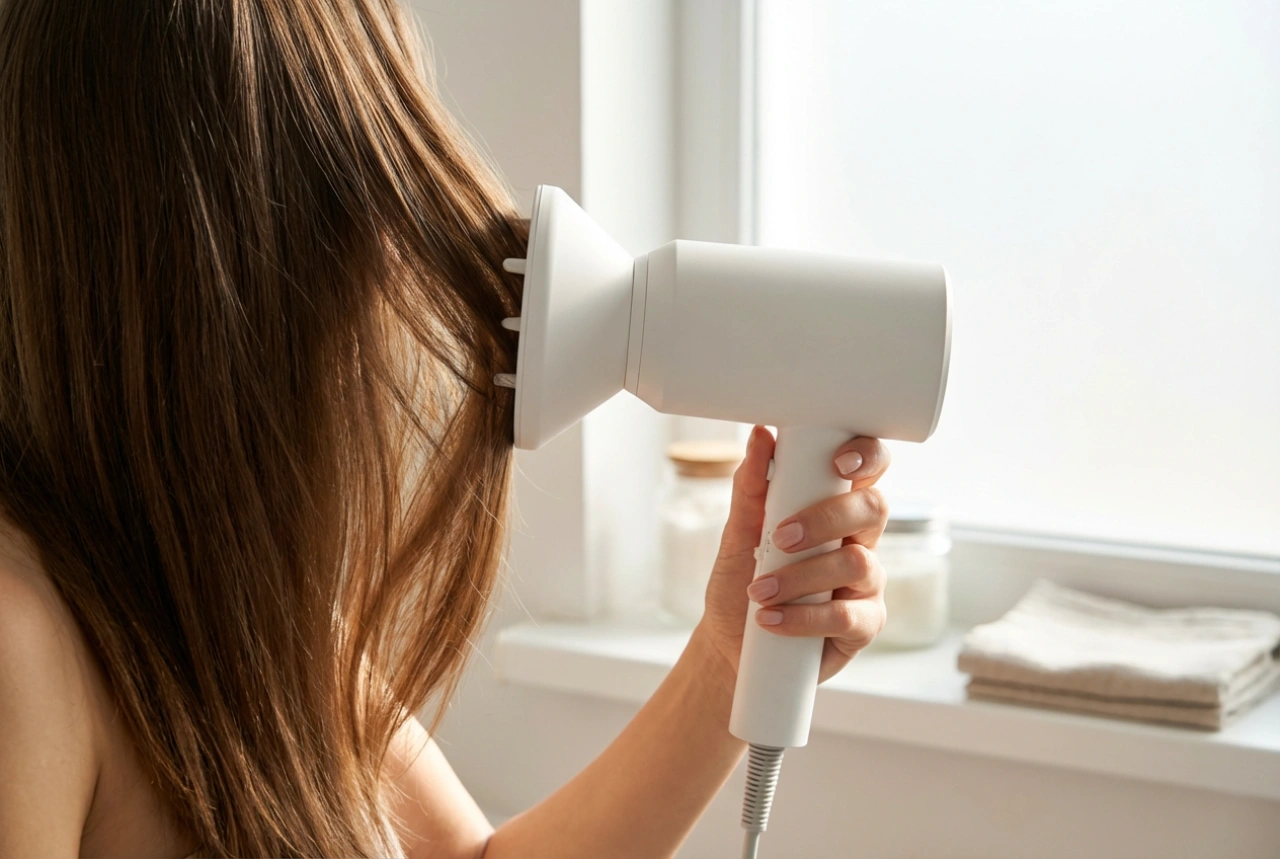
- Curly and Wavy Hair: Always use a diffuser attachment on a low speed and low-to-medium heat setting. A diffuser disperses the airflow evenly, preserving the natural pattern of the curls and preventing frizz. Gently cradle the curls in the diffuser bowl and move it upwards towards the scalp.