

Perfectly shaped eyebrows can frame the face, enhance your features, and complete any look. Achieving that polished appearance at home is entirely possible with the right set of tools and a little know-how. From precision plucking to overall shaping, different accessories serve unique purposes in the art of eyebrow grooming. Understanding how to use tweezers, scissors, thread, and wax correctly will empower you to maintain your ideal brow shape between professional appointments or to master the craft yourself. This guide will walk you through the primary tools used for eyebrow regulation, helping you choose and use them effectively for beautiful results.
The Essential Tweezer: For Precision and Detail
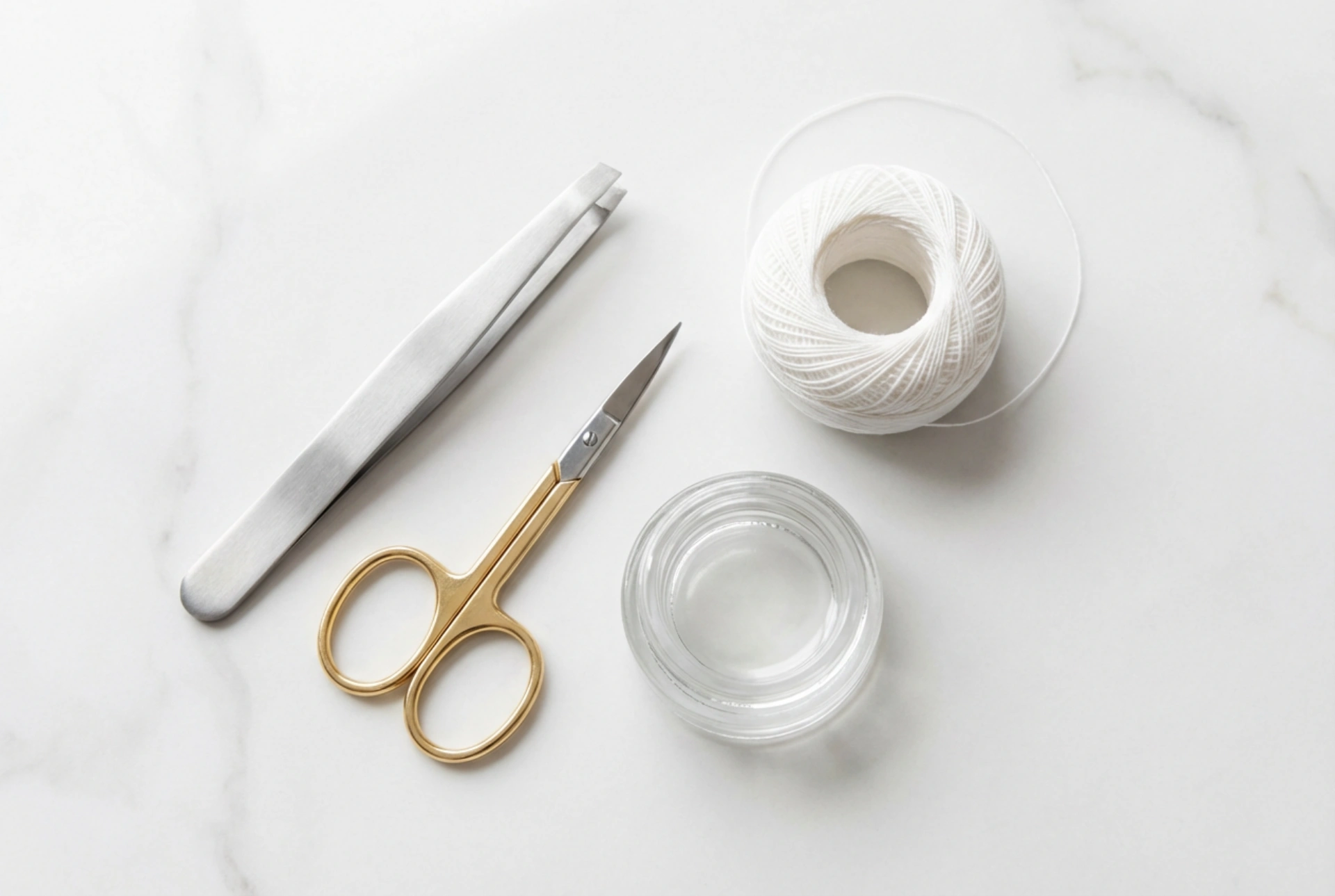
The tweezer is arguably the most common and fundamental tool for eyebrow maintenance. It is ideal for plucking individual, stray hairs that grow outside your desired brow line. Its precision allows for meticulous work, ensuring you don't accidentally remove hairs that are part of your main brow shape. For best results, opt for a slant-tip tweezer, which offers a good combination of a pointed tip for fine hairs and a flat edge for gripping stronger ones.
How to Use Tweezers Effectively
To minimise discomfort and achieve clean removal, it's best to tweeze after a warm shower when your pores are open. Hold the skin taut with one hand while you pluck with the other. This prevents the skin from pulling and reduces the sensation. Always pluck in the direction of hair growth to avoid breakage and irritation. Use a magnifying mirror in a well-lit area, but remember to step back and look at your full face in a regular mirror periodically to maintain symmetry and avoid over-plucking.
- Ensure your tweezers are clean before and after each use to prevent skin issues.
- Isolate the hair you want to remove before gripping it firmly at the base.
- Pull swiftly and decisively in the direction the hair is growing.
- Take breaks to assess your progress and ensure both brows remain balanced.
Trimming with Precision: Eyebrow Scissors
While tweezers are for removing hairs, small, sharp scissors are for managing their length. Long, unruly brow hairs can make your eyebrows look untidy, even if the shape is well-defined. Eyebrow scissors, often paired with a small comb or a spoolie brush, are the perfect tool for trimming them down to a uniform length. These scissors typically have a straight or slightly curved blade and are small enough for detailed work around the delicate eye area.
A Step-by-Step Guide to Trimming
The key to trimming is moderation. You only want to snip the very ends of hairs that are too long. Start by brushing your eyebrow hairs straight up using a spoolie. Using the scissors, carefully trim any hairs that extend above the top line of your brow's natural shape. Then, brush the hairs downwards and trim any that fall excessively below the bottom line. Always trim one hair at a time or in very small sections to avoid creating gaps.
- Use a dedicated pair of eyebrow scissors; they are designed for the required precision.
- Never trim the hairs too short, as this can create a sparse or stubbly appearance.
- Trim in small increments; you can always cut more, but you can't put it back.
- A spoolie is an indispensable partner to scissors for combing and holding hairs in place.
The Art of Threading: A Traditional Technique
Threading is a method of hair removal that uses a twisted piece of cotton thread to pull out hairs from the root. It's known for creating incredibly straight, clean lines and is excellent for defining the top and bottom edges of the brow. While it is often performed by a professional, the basic technique can be learned for at-home use with practice. It removes multiple hairs at once, making it faster than tweezing for cleaning up larger areas.
Basic Threading Principles for Home Use
Learning to thread requires patience and dexterity. You'll need a spool of high-quality cotton thread. A piece about the length of your forearm is a good starting point. You tie it into a loop, then twist it in the middle to create a figure-eight shape. By opening and closing your hands, you move the twisted section along the skin, trapping hairs within the thread and pulling them out. It is highly recommended to practice on a less sensitive area, like your leg or arm, to get the motion right before attempting it on your face.
- Ensure the skin is clean and dry, free from any oils or lotions.
- The technique relies on a swift, controlled gliding motion across the skin.
- Threading can be particularly effective for removing fine, downy hair that tweezers might miss.
- Follow up with a soothing agent like aloe vera gel to calm any redness.
Shaping with Wax: For Quick and Clean Results
Waxing is another popular method for removing a significant number of hairs at once, making it a very efficient way to shape eyebrows. At-home waxing kits come in two main forms: pre-waxed strips that you warm between your hands, or pots of warm wax that you heat up and apply with a spatula. Waxing is excellent for creating a sharp arch and cleaning up the area between the brows and on the brow bone.
Key Considerations for Home Waxing
Safety is paramount when waxing at home. Always perform a patch test on a small area of skin 24 hours beforehand to check for any adverse reactions. When you are ready to wax, your skin must be completely clean and dry. Apply the wax in the direction of hair growth and apply the fabric strip (if using hot wax). Hold the skin taut and pull the strip off quickly in the opposite direction of hair growth, keeping it close and parallel to the skin. Never pull upwards. Work in small, manageable sections to maintain control and precision.
- Carefully read and follow the instructions included with your home waxing kit.
- Never apply wax to irritated, broken, or sunburnt skin.
- Apply a post-wax oil or soothing lotion to remove any residue and calm the skin.
- Avoid hot baths, saunas, and applying makeup to the area for 24 hours after waxing.