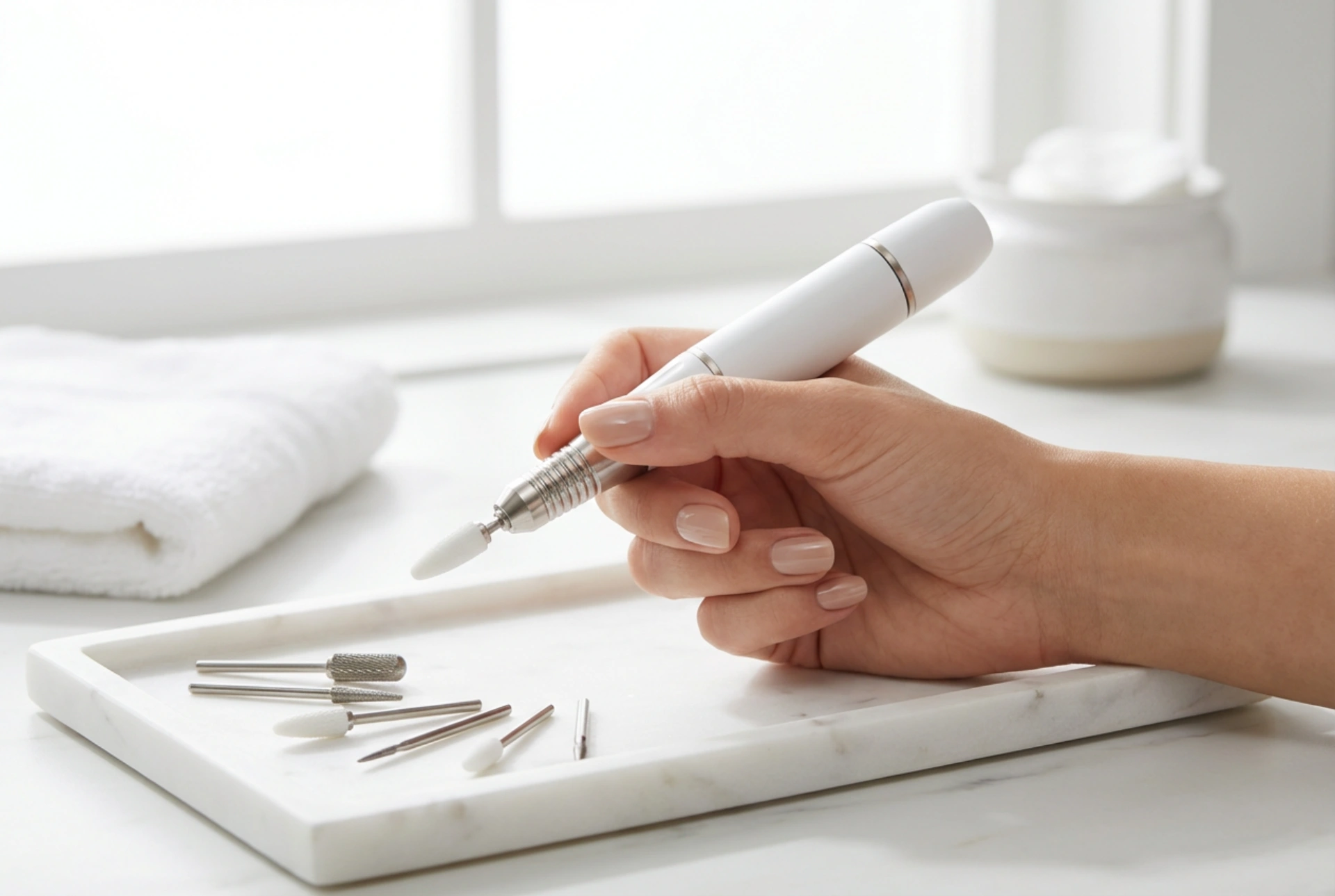


A nail drill, also known as an e-file, is a powerful tool that can help you achieve a salon-quality manicure at home. Once reserved for professionals, these devices are now widely available for personal use, offering precision and efficiency for tasks like shaping nails, managing cuticles, and removing old polish. However, their power also means that incorrect use can lead to nail damage. Understanding how to operate your nail drill safely, choose the right bits, and set the appropriate speed is essential for protecting the health of your nails while achieving beautiful results.
Choosing the Right Nail Drill for Home Use
When selecting a nail drill for home use, it’s important to prioritise safety and ease of use. Look for a model with adjustable speed settings, often measured in Rotations Per Minute (RPM). This feature is crucial as different tasks require different speeds. A drill that offers both forward and reverse rotation is also beneficial, as it allows for comfortable use on both hands. Opt for a device with a lightweight, ergonomic handpiece that has low vibration to ensure better control and reduce hand fatigue. While cordless models offer portability, corded drills often provide more consistent power. For a beginner, a user-friendly model with a moderate RPM range (up to 20,000 RPM) is usually more than sufficient.
Understanding Nail Drill Bits
The attachments for your nail drill, known as bits or burrs, are not one-size-fits-all. Each shape and material is designed for a specific purpose. Using the wrong bit can be ineffective and even harmful. Here are some of the most common types and their uses:
Mandrel Bit and Sanding Bands
This is a metal or rubber bit that holds disposable sanding bands. Sanding bands come in various grits (coarse, medium, fine) and are excellent for surface work, shortening the length of artificial nails, and removing gel polish. They are not typically recommended for use on the natural nail plate, as they can be too aggressive.
Barrel Bits
Often made from carbide or ceramic, these are used for surface work, shaping, and shortening acrylic or hard gel nails. Small barrel bits can be used for refining the surface near the cuticle area, but great care must be taken to avoid touching the skin.
Cone-Shaped Bits
These are versatile bits perfect for more detailed work. A tapered cone can be used to clean under the nail, shape the sidewalls, and prepare the cuticle area. Their pointed shape allows for precision but requires a steady hand.
Ball-Tipped Bits
As the name suggests, these have a small ball at the tip. They are used for gently cleaning up excess non-living tissue around the cuticles or sidewalls after it has been lifted. They are ideal for creating a clean, neat nail frame.
Flame or Needle Bits
These fine, pointed bits are designed for intricate cuticle work. They can be used to gently lift the eponychium (the seal between the nail plate and the proximal nail fold) and clean the nail folds. They require extreme care and are best used at very low speeds.
Setting the Correct Speed (RPM)
The speed of your nail drill is one of the most critical factors for safe operation. Using a speed that is too high can cause friction, leading to heat spikes and potential damage to the nail bed. Always start low and increase the speed only if necessary and when you feel confident. A general guideline is:
- Low Speeds (2,000-7,000 RPM): This range is ideal for working on the natural nail, performing delicate cuticle work, and cleaning under the nail. Beginners should always start in this range.
- Medium Speeds (7,000-15,000 RPM): Suitable for filing and shaping natural nails, refining acrylic or gel enhancements, and removing gel polish.
- High Speeds (15,000+ RPM): These speeds are generally reserved for experienced users working on artificial nails, such as for significant reshaping or bulk removal. Avoid using high speeds on the natural nail plate.
Key Principles for Safe Application
To avoid damaging your nails or the surrounding skin, always follow these fundamental safety rules. First, never apply pressure. Let the speed of the drill and the grit of the bit do the work for you. Pressing down increases friction and the risk of injury. Second, keep the drill constantly moving. Do not hold it in one spot for more than a second or two, as this will create heat and can burn the nail bed. Use light, sweeping motions across the nail surface. Hold the handpiece like a pencil to maintain control and rest your hand on a stable surface. Finally, ensure you are using the correct rotation direction (forward or reverse) for the hand you are working on to prevent the bit from catching or skipping.
Maintenance and Final Safety Tips
Proper care of your tools is part of safe use. Always clean your bits after every manicure to remove dust and debris. They should then be sanitised according to the manufacturer's instructions to prevent the transfer of germs. Store your drill and bits in a clean, dry place. Before you begin working on your own nails, it's highly recommended to practice on a training hand or artificial nail tips to get a feel for the tool, the different bits, and the appropriate speeds. Always wear safety glasses to protect your eyes from nail dust and approach each manicure with patience and focus.