

The styling comb is a fundamental, yet often underestimated, tool in the world of hair care. Far more than a simple detangler, the right comb used with the correct technique can be the key to achieving precise, beautifully crafted hairstyles. From creating perfect partings to adding volume and taming flyaways, mastering the use of a styling comb can elevate your daily hair routine, giving you a polished, professional look with minimal effort. This guide will explore the essential techniques for sectioning, lifting, and smoothing your hair using this versatile tool.
Choosing the Right Styling Comb
Before diving into techniques, it’s important to understand that not all combs are created equal. The type of comb you choose will significantly impact your results. Your styling kit should ideally include a few key types to cover all your needs.
Key Comb Types
- Pintail Comb: This is arguably the most versatile styling comb. It features fine teeth for smoothing and a long, thin handle (the 'tail') perfect for creating precise sections and partings. The tail can be made of plastic or metal.
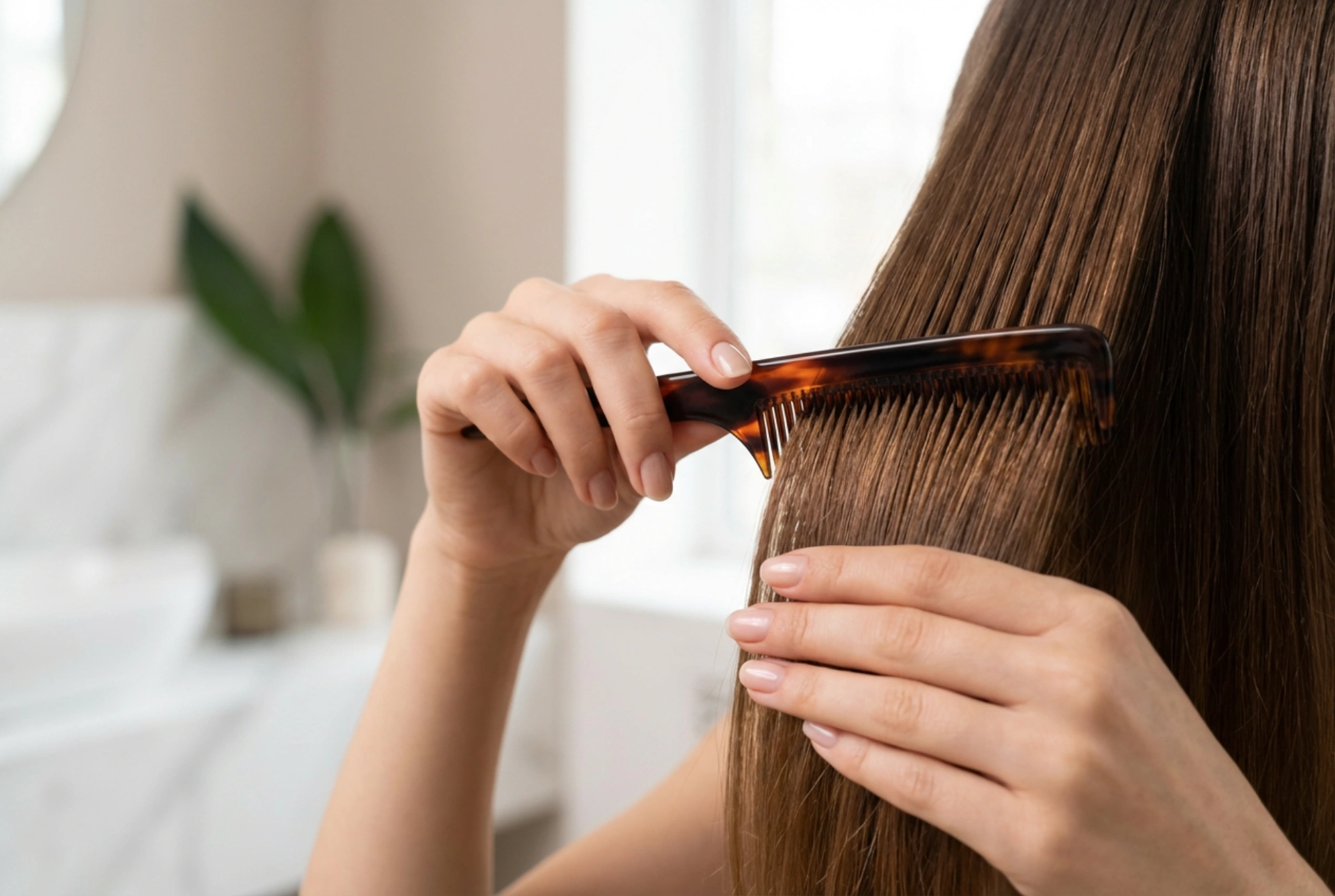
- Wide-Tooth Comb: Primarily used for detangling wet hair with minimal breakage, a wide-tooth comb can also be useful for gently separating curls or creating a more textured, piecey look in dry hair.
- Fine-Tooth Comb: With teeth set closely together, this comb is ideal for creating sleek, smooth finishes. It’s perfect for taming frizz and flyaways, and for detailed styling like backcombing or creating very straight, sharp lines.
The material also matters. Carbon fibre combs are anti-static and heat-resistant, making them great for use with heat styling tools. Simple plastic combs are affordable and effective for everyday use, while wooden combs can help reduce static and distribute natural oils through the hair.
Mastering the Art of Sectioning
Proper sectioning is the foundation of almost any great hairstyle, from simple blow-drying to more intricate updos. It ensures that heat and styling products are applied evenly, leading to a more consistent and longer-lasting result. The pintail comb is your best friend for this task.
How to Create Clean Sections
- Start with dry or damp hair, depending on your styling goal.
- Use the tip of the pintail comb to draw a line through your hair where you want the part to be. Start at the hairline and draw it back as far as needed.
- Press the comb gently against your scalp to create a clean, sharp line.
- Once the line is drawn, use your fingers or the comb itself to separate the hair on either side of the part.
- If you are sectioning your hair for blow-drying or curling, use clips to hold the separated sections in place, allowing you to work on one area at a time without interference.
For a classic centre part, draw a line from the middle of your forehead straight back. For a side part, start from the arch of your eyebrow and draw a line diagonally backwards. A zigzag part can add a fun, playful element and is created by drawing a series of connected diagonal lines.
Techniques for Lifting and Adding Volume
If your hair tends to fall flat, a styling comb can be used to create instant lift and volume at the roots. This technique, often called teasing or backcombing, should be done gently to avoid causing damage or tangles.
Gentle Backcombing for Volume
- Take a small section of hair, about one to two inches wide, from the crown of your head.
- Hold the section straight up, pulling it taut.
- Place a fine-tooth comb a few inches away from the scalp.
- Gently push the comb down towards the roots in two or three short, soft strokes. Avoid aggressive, repeated motions which can damage the hair cuticle.
- Release the section. You will have a small 'cushion' of teased hair at the base.
- Repeat this process on several sections around the crown.
- Once you have created the volume you want, gently smooth the top layer of hair over the backcombed sections with your comb or a soft brush to hide the teased hair and create a smooth finish.
Achieving a Smooth, Polished Finish
A fine-tooth styling comb is the perfect tool for putting the finishing touches on your hairstyle, ensuring it looks sleek, smooth, and free of flyaways. This is especially useful for creating polished ponytails, buns, and updos.
How to Smooth Hair
After styling, lightly mist a fine-tooth comb with a light-hold hairspray or apply a small amount of smoothing serum to its teeth. Then, gently comb through the surface layers of your hair. This will press down any stray hairs without disturbing the volume or texture you’ve created underneath. For a sleek ponytail, use the comb to smooth the hair from your hairline back towards the elastic, ensuring a flawless, bump-free surface.
By incorporating these simple yet effective techniques into your hair care regimen, you can unlock the full potential of your styling comb. It’s a small tool that delivers significant results, helping you achieve precise sections, lasting volume, and a perfectly smooth finish every time.