

A flawless and long-lasting hybrid manicure begins long before the first coat of colour is applied. The foundation of any stunning nail design is a properly selected and applied base coat. This essential product not only protects your natural nail plate but also ensures the durability and impeccable appearance of your manicure for weeks. Understanding the differences between base coats and mastering their application is the key to achieving professional results at home.
What is a hybrid nail base coat and what is its role?
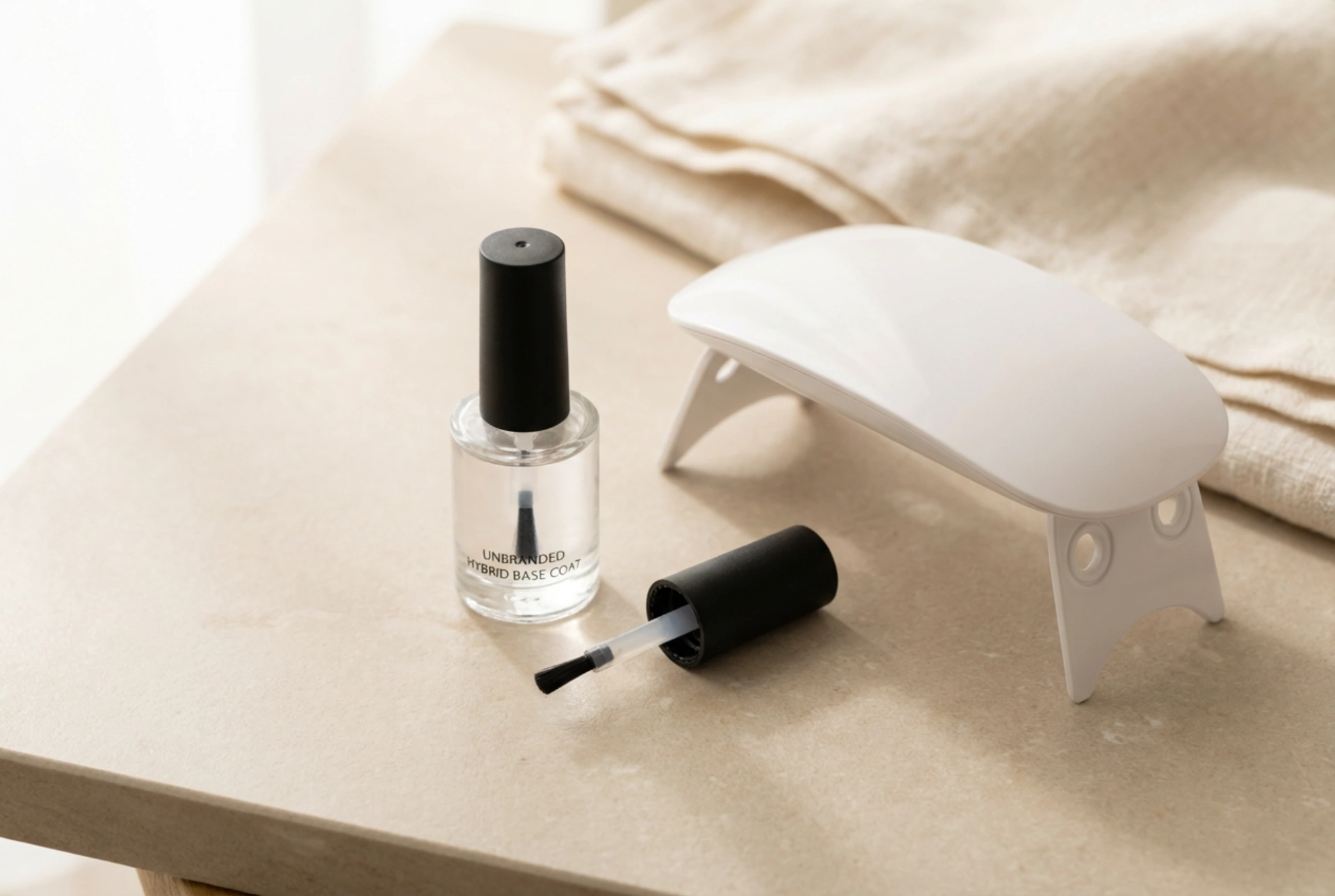
A hybrid base coat is a light-cured product that serves as the first layer in a hybrid manicure, applied directly onto the prepared natural nail plate. Its primary function is to create a strong adhesive layer between the nail and the subsequent coats of hybrid polish. This significantly increases the manicure's longevity and prevents it from chipping or lifting. Furthermore, a good base coat protects the nail plate from potential discolouration caused by the pigments in coloured polishes. It can also even out minor irregularities on the nail surface, creating a smooth canvas for the colour application.
Choosing the right base coat hardness
Base coats come in various levels of hardness and flexibility, and choosing the right one depends on the condition of your nails. Selecting a base tailored to your individual needs is crucial for both the aesthetics and health of your nails.
Soft and flexible bases
These are the most classic and versatile types of bases. They are relatively thin and create a flexible layer that works in harmony with the natural movement of the nail plate. They are an excellent choice for individuals with healthy, strong nails that do not require extra reinforcement. Their primary role is to increase adhesion and protect the nail plate without adding significant structure.
Medium-hard bases
Medium-hard bases offer a perfect compromise between flexibility and strength. They are slightly thicker than soft bases and provide better reinforcement for the nail plate. This makes them ideal for people with slightly weaker or more brittle nails that tend to bend. They offer good support while still maintaining a degree of natural elasticity, preventing the manicure from cracking under pressure.
Hard and building bases
Hard bases, often referred to as 'building' or 'builder' bases, are the thickest and most rigid option. They are designed for weak, brittle, or damaged nails that need significant reinforcement and structuring. Thanks to their thick consistency, they can be used to even out significant surface imperfections, repair a broken corner, or even slightly extend the nail plate. They create a very hard, protective shell, but it's important to remember that this rigidity makes them less flexible.
Step-by-step application of a hybrid base coat
Correct application is just as important as choosing the right product. Following these steps will ensure optimal adhesion and durability for your manicure.
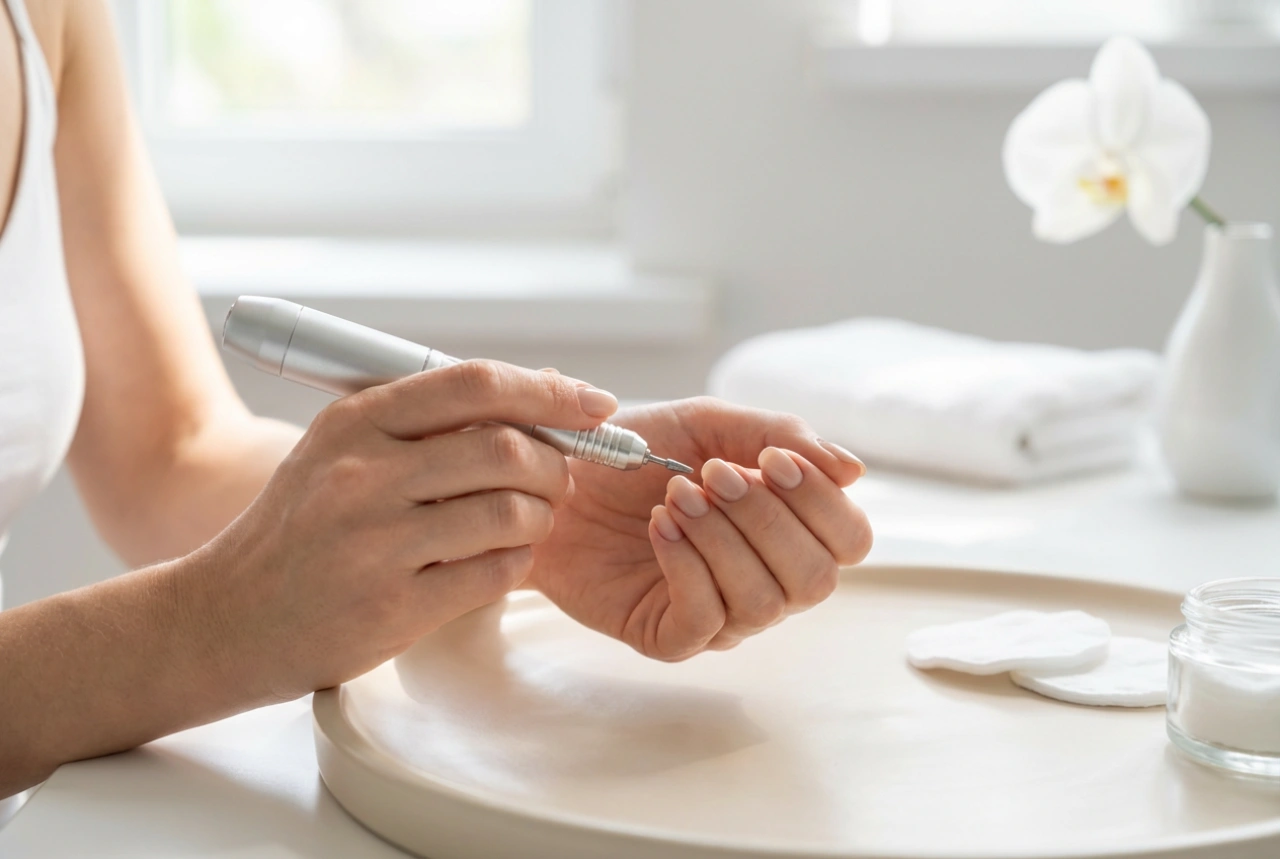
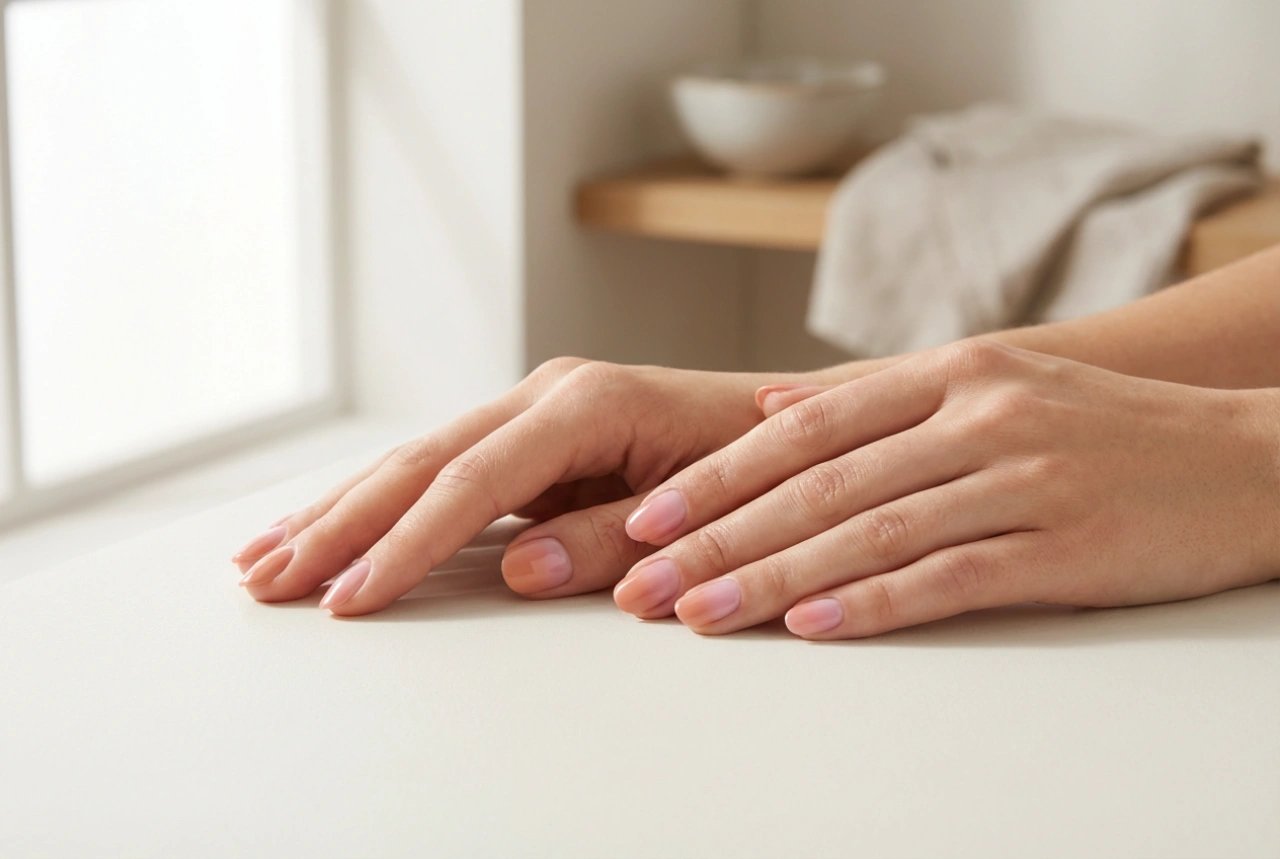
- Nail Preparation: Begin by shaping your nails with a file. Gently push back or remove your cuticles. Then, using a soft buffer block, gently mattify the entire surface of the nail plate to remove any natural shine. This creates a better surface for the base to adhere to.
- Degreasing: Wipe each nail thoroughly with a lint-free wipe soaked in a nail cleaner or dehydrator solution. This removes any dust, oils, and moisture from the nail plate, which is essential for proper adhesion.
- Base Application: Apply a thin, even layer of the chosen base coat to the nail plate, being careful to avoid flooding the cuticles. For building bases, you may apply a slightly thicker layer to build the nail's apex (the highest point of the nail) for added strength.
- Securing the Free Edge: Gently run the brush along the free edge (the tip) of the nail. This 'caps' the nail and helps to prevent chipping and lifting from the tip.
- Curing: Place your hand under a UV/LED lamp and cure the base coat for the time recommended by the product manufacturer. Do not wipe the sticky layer (dispersion layer) that forms after curing.
Curing the base coat: key principles
Curing is the process of hardening the hybrid product using ultraviolet or LED light. For the base coat to perform its function correctly, it must be properly cured. The curing time depends on the type and power of your lamp, as well as the specific base coat you are using. Generally, LED lamps cure products much faster (30-60 seconds) than traditional UV lamps (120 seconds). Always refer to the manufacturer's instructions for the recommended curing time. Insufficient curing can lead to a weak manicure that lifts easily, while over-curing can sometimes make the product brittle. After curing, a sticky film known as the dispersion layer will remain on the surface. This layer is crucial as it helps the next coat of polish adhere to the base, so it should not be removed before applying your colour.