

Achieving healthy, strong, and beautifully shiny nails does not always require layers of colourful polish. The secret to natural nail elegance can be found in a traditional Japanese method that focuses on nourishment and protection. A Japanese manicure enhances the natural beauty of your nails, leaving them with a brilliant, long-lasting gloss. This treatment is an excellent way to regenerate and strengthen the nail plate, giving it a healthy and well-groomed appearance. Let's explore what a typical set for this treatment includes and how you can perform it yourself at home.
What is a Japanese Manicure?
A Japanese manicure is a nail care technique that has been practised for centuries. Its philosophy is not about covering the nail, but about treating it from within. The process involves rubbing a special vitamin-rich paste into the nail plate and then sealing it with a fine powder. The result is an incredibly high-gloss shine that looks like a clear topcoat but is actually the buffed, sealed surface of your natural nail. This method helps to improve the condition of the nails, making them more resilient to splitting and breaking. It's an ideal solution for anyone with weak, brittle, or damaged nails, or simply for those who prefer a natural, polished look.
Contents of a Typical Japanese Manicure Set
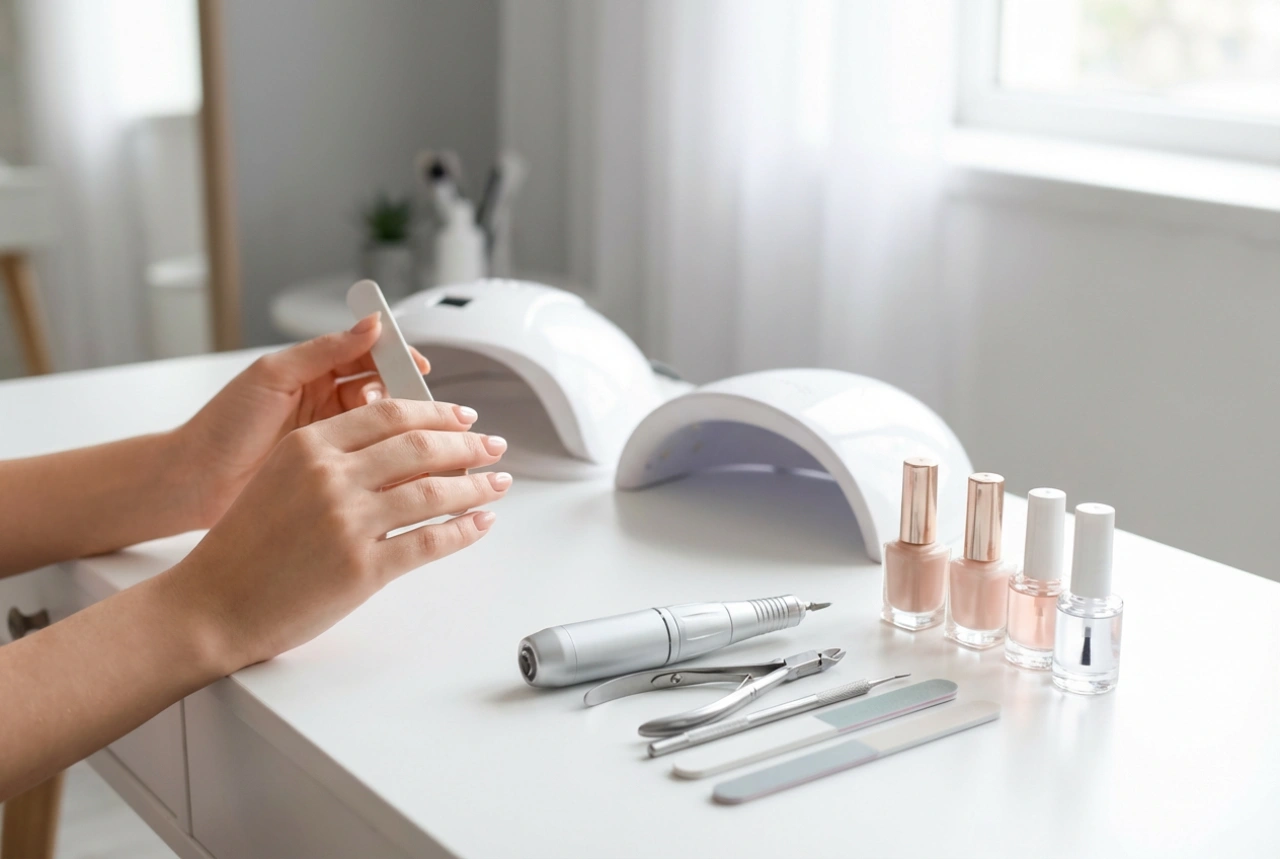
A standard Japanese manicure kit contains a few specialised tools and products designed to work together to nourish and polish the nail plate. While the packaging may vary, the core components are usually consistent.
- Nourishing Paste: This is the first and most crucial product applied. It is usually a green-coloured, thick paste. Its formula is rich in natural ingredients like vitamin A and E, keratin, bee pollen, and silica from the Sea of Japan. These components work to deeply nourish the nail plate, smooth its surface, and stimulate healthy growth.
- Polishing Powder: Applied after the paste, this fine powder is typically pink or white. Its main function is to seal the nutrients from the paste into the nail plate and to create the characteristic high-gloss shine. The powder forms a protective layer that repels water and detergents, helping the effects of the manicure to last longer.
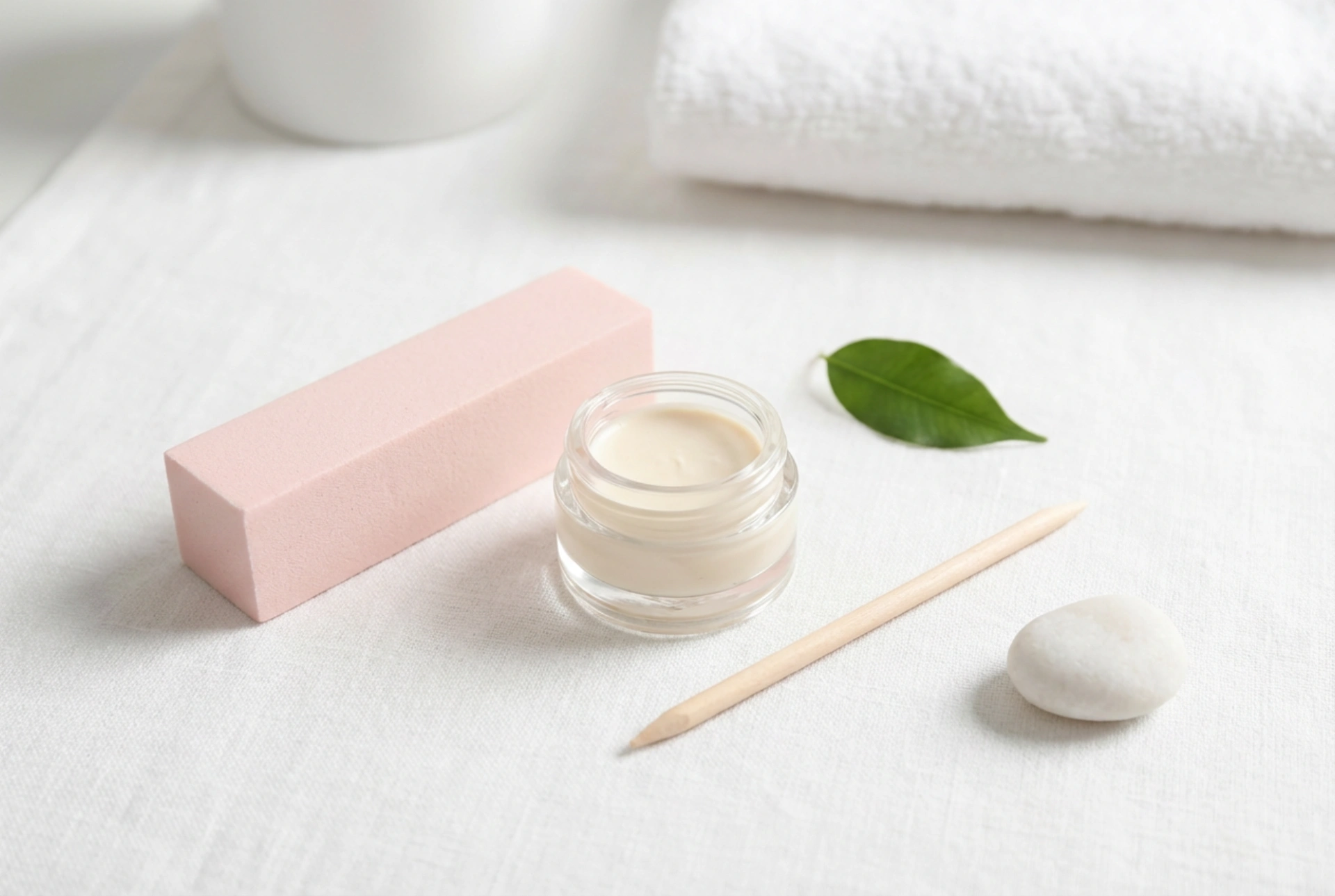
- Specialised Buffers: The set will include two different buffers, often colour-coded to match the products. For instance, a green buffer for the green paste and a pink one for the pink powder. These are usually made from a soft material like deerskin and are designed to work the products into the nail without causing damage.
- Cuticle Pusher: A wooden or plastic stick is included for gently pushing back the cuticles before the treatment begins. This helps to create a clean and tidy nail shape.
- Nail File: A gentle, double-sided file is often part of the kit for shaping the nails and preparing the surface of the nail plate before applying the paste.
How to Perform a Japanese Manicure at Home: A Step-by-Step Guide
Performing a Japanese manicure is a mindful and relaxing process. Follow these steps for the best results.
Step 1: Nail Preparation
Start with clean, dry hands. Remove any old nail polish. Use the nail file to shape your nails to your desired length and form. Next, gently push back your cuticles using the wooden stick. Do not cut them. To prepare the nail plate for the treatment, you may need to very gently mattify its surface with the finer side of the file. This helps the products to adhere better. Be careful not to file too aggressively; a light touch is all that is needed.
Step 2: Applying the Nourishing Paste
Using the spatula or the tip of the buffer, take a very small amount of the green paste and apply it to the nail plate. Using the corresponding green buffer, rub the paste into the nail with firm, even strokes. It is important to work in one direction only, from the cuticle towards the tip of the nail. Continue buffing until the nail plate absorbs the paste and starts to look slightly shiny.
Step 3: Applying the Polishing Powder
Next, take a small amount of the pink powder and apply it onto the nail plate, on top of the paste layer. Using the second, pink buffer, rub the powder into the nail. Again, use unidirectional strokes. You will quickly notice the nail developing a brilliant, high-gloss shine. The powder seals the nourishing ingredients and creates a protective coating.
Benefits and Aftercare
The main benefit of a Japanese manicure is the significant improvement in the condition of the nails. They become stronger, more flexible, and less prone to damage. The treatment also stimulates blood circulation in the fingertips, which can support healthier nail growth. To maintain the beautiful results, it is recommended to repeat the treatment every 2-3 weeks. Avoid applying nail polish for at least a couple of days after the manicure to allow the nails to fully benefit from the nourishing ingredients. Remember to regularly moisturise your hands and cuticles with a good quality cream or oil to keep them in optimal condition.