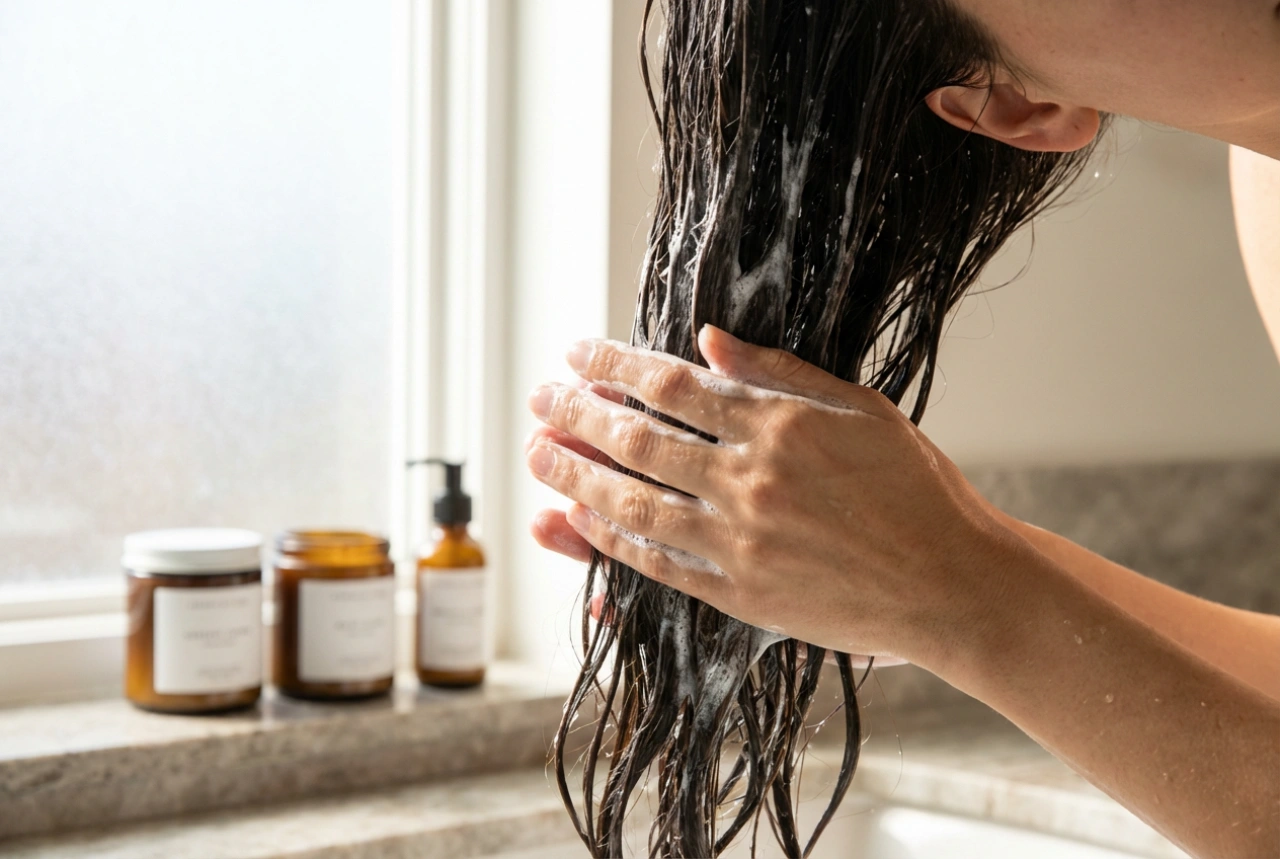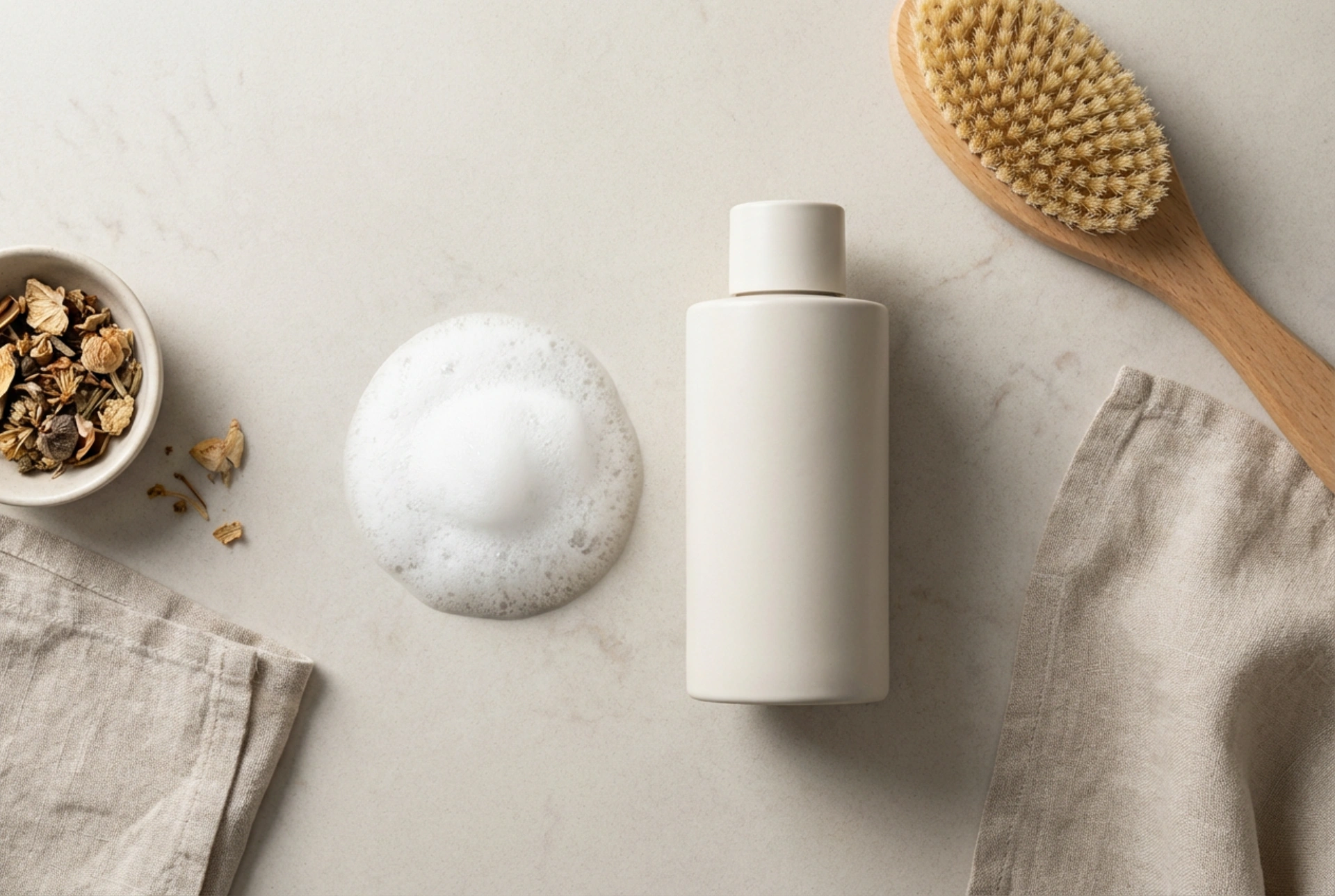


Choosing the right shampoo can feel like navigating a complex world of ingredients. One of the most talked-about is Sodium Lauryl Sulfate, or SLS. Its presence in many cleansing products, symbolised by the rich foam in a pristine bathroom setting, prompts many of us to think more deeply about our haircare choices. Understanding what SLS is, what it does, and who it's best for is the first step towards building a routine that truly benefits your hair and scalp.
What is SLS and Why is it in Shampoos?
Sodium Lauryl Sulfate is a type of surfactant. In simple terms, a surfactant's job is to reduce the surface tension between oil and water, allowing them to mix. When you wash your hair, SLS helps to lift grease, dirt, and product residue from the scalp and hair shafts, so they can be easily rinsed away with water. It is also an incredibly effective foaming agent, creating the rich, satisfying lather that many people associate with a thorough clean. Because of its powerful cleansing ability and low cost, it has been a staple ingredient in shampoos for decades.
The Advantages of Using Shampoos with SLS
The primary benefit of SLS is its unmatched cleansing power. If you have hair that tends to get oily quickly or if you use a lot of styling products like serums, gels, or hairsprays, an SLS shampoo can be highly effective at providing a deep clean and preventing buildup. This buildup can weigh hair down, make it look dull, and even affect the scalp. A clarifying wash with an SLS-based shampoo can reset your hair, leaving it feeling exceptionally clean, light, and refreshed. For individuals with robust, non-sensitive scalps and oily hair, it can be a very useful tool in their haircare arsenal.
Potential Disadvantages and Who Might Avoid SLS
While its strength is an advantage, it can also be a drawback for some. Because SLS is so effective at removing oils, it can sometimes strip away too much of the scalp's natural sebum. This protective oily layer is essential for keeping the scalp hydrated and the hair shaft smooth. Over-stripping can lead to:
- Dryness and Irritation: Individuals with naturally dry skin or a sensitive scalp may find that SLS causes feelings of tightness, itchiness, or general discomfort. The hair itself can also become dry and brittle.
- Colour Fading: For those with colour-treated hair, the powerful cleansing action of SLS can strip away colour molecules more quickly, leading to faster fading and less vibrancy.
- Increased Frizz: By lifting the hair's cuticle, a harsh cleanse can make already prone-to-frizz hair appear even less smooth and manageable.
If you have a sensitive scalp, very dry or damaged hair, or have recently had your hair coloured, you might benefit from choosing a milder cleansing formula.
How to Use SLS Shampoos Mindfully
You don't necessarily have to banish SLS from your routine completely. Using it strategically can allow you to reap its benefits while minimising the potential downsides. Consider these tips:
- Use it as a clarifying treatment: Instead of using an SLS shampoo for every wash, reserve it for a once-a-week or bi-weekly deep clean to remove stubborn buildup. Alternate with a gentler, SLS-free shampoo for daily washing.
- Focus on the scalp: Apply the shampoo primarily to your scalp, where most of the oil and dirt accumulate. Gently massage it in with your fingertips. The lather that rinses down the lengths of your hair is usually sufficient to clean them without direct, harsh application.
- Always follow with a conditioner: After using a strong cleansing shampoo, it's crucial to replenish moisture. Apply a nourishing conditioner, focusing on the mid-lengths and ends, to help seal the hair cuticle and restore hydration.
- Rinse thoroughly: Make sure all shampoo residue is completely rinsed from your hair and scalp to prevent any potential for lingering irritation.
Discovering Milder Alternatives
The beauty industry offers many alternatives to SLS. Shampoos formulated without SLS use other, often gentler, surfactants to cleanse the hair. These might include Sodium Laureth Sulfate (SLES), which has a slightly different molecular structure that makes it milder, or plant-derived cleansers like cocamidopropyl betaine or various glucosides. These formulations may produce less foam, but they still clean the hair effectively while being less likely to cause dryness or irritation, making them an excellent choice for daily use or for those with sensitive needs.