

An electric nail file, often known as a cosmetic e-file, is a versatile tool that can elevate a home manicure to a professional standard. It allows for precision, speed, and a finish that is often difficult to achieve with manual files alone. Understanding how to use it correctly is key to achieving beautiful results while maintaining the health of your nails. This guide will walk you through the functions of an e-file and the best practices for its safe operation.
What is a Cosmetic E-file?
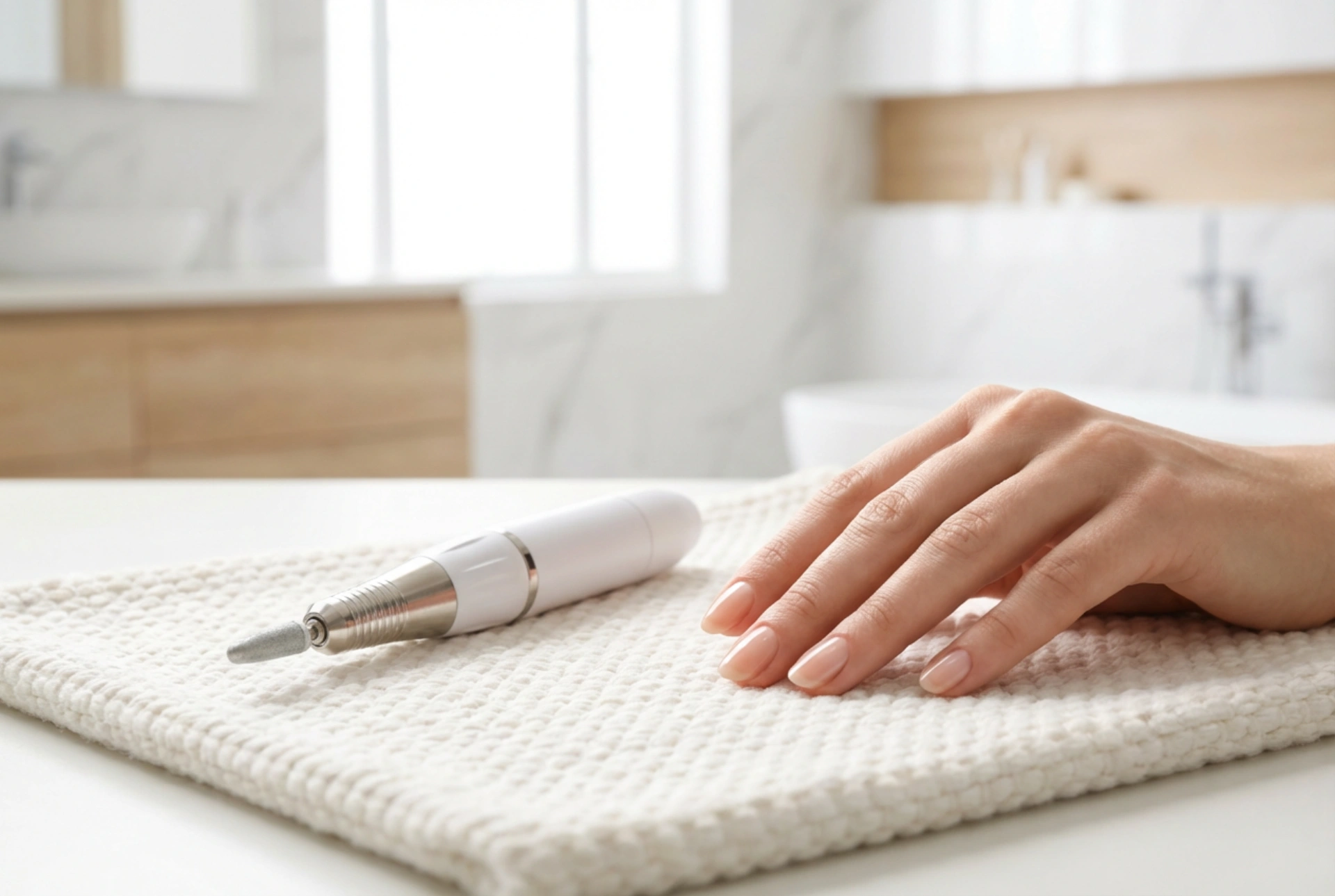
A cosmetic e-file is a motorised rotary tool designed specifically for nail care. It consists of a handpiece, which houses the motor, and a variety of interchangeable attachments called 'bits' or 'burs'. These bits come in different materials, shapes, and grits, each designed for a specific task. By controlling the rotation speed and using the appropriate bit, you can perform several manicure steps with greater efficiency and precision than with traditional tools.
The Main Functions of an E-file in a Manicure
An e-file is a multi-purpose tool that can be used throughout the manicure process. Its primary applications include:
- Cuticle Care: Specialised, fine-grit bits can be used at a low speed to gently lift and remove non-living tissue from the nail plate, creating a clean and tidy cuticle line. This helps to achieve a neater polish application.
- Shaping and Shortening: An e-file can quickly and evenly shape the free edge of the nails or reduce their length. This is particularly useful for stronger natural nails or nail enhancements.
- Surface Preparation: Before applying products like gel polish or builders, the nail surface needs to be gently buffed. An e-file with a soft buffer bit can lightly etch the surface to improve product adhesion.
- Removing Old Product: One of the most common uses for an e-file is the efficient removal of old gel polish, hard gel, or acrylic enhancements. This saves a significant amount of time compared to soaking in acetone.
- Smoothing and Refining: After product application, an e-file can be used to smooth the surface, refine the shape, and ensure the enhancement is perfectly blended with the natural nail.
Understanding E-file Bits
The effectiveness of an e-file lies in its bits. Choosing the right one is crucial for both safety and results. Bits are categorised by material, shape, and grit.
Common Materials
- Diamond Bits: These have fine particles and are excellent for delicate work like cuticle exfoliation or preparing the natural nail plate. They create less friction and heat.
- Carbide Bits: Made of hard metal with flute-like cuts, these are very durable and efficient at removing product like gel or acrylic. They shave off product rather than grinding it.
- Ceramic Bits: These dissipate heat better than metal bits, making them more comfortable for sensitive users. They are also effective for product removal and surface work.
- Sanding Bands: These are single-use paper bands that fit over a mandrel bit. They are ideal for preparing the nail surface and gently removing product.
Common Shapes
Each shape is designed for a specific area of the nail. For example, a small 'flame' or 'ball' bit is perfect for the cuticle area, while a larger 'barrel' or 'cone' bit is better for surface work or shortening the nail.
How to Use an E-file Safely
Incorrect use of an e-file can cause damage to the nail plate. Following safety guidelines is essential, especially for beginners.
1. Start with the Right Settings
Always begin on the lowest speed setting. As you become more comfortable and skilled, you can gradually increase the speed for certain tasks. High speeds are for experienced users and are typically used for removing hard products, not for work on the natural nail.
2. Maintain a Secure Grip
Hold the handpiece as you would a pen or pencil to ensure maximum control. Rest the side of your hand on a stable surface to steady your movements. This prevents slipping and allows for precise, gentle pressure.
3. Keep the Tool Moving
This is the most important rule. Never hold the rotating bit in one spot on the nail. This can cause friction, which leads to heat build-up and can create dips or rings of fire on the nail plate. Use continuous, light, sweeping motions across the nail surface.
4. Use Light Pressure
Let the speed of the tool and the grit of the bit do the work for you. Applying too much pressure can cause damage to the nail bed and lead to overheating. A light touch is all that is needed for most tasks.
5. Practise First
Before using an e-file on your own nails for the first time, it is highly recommended to practise on a nail training hand or plastic nail tips. This will help you get a feel for the tool, understand the effect of different bits, and build your confidence without risking damage to your natural nails.