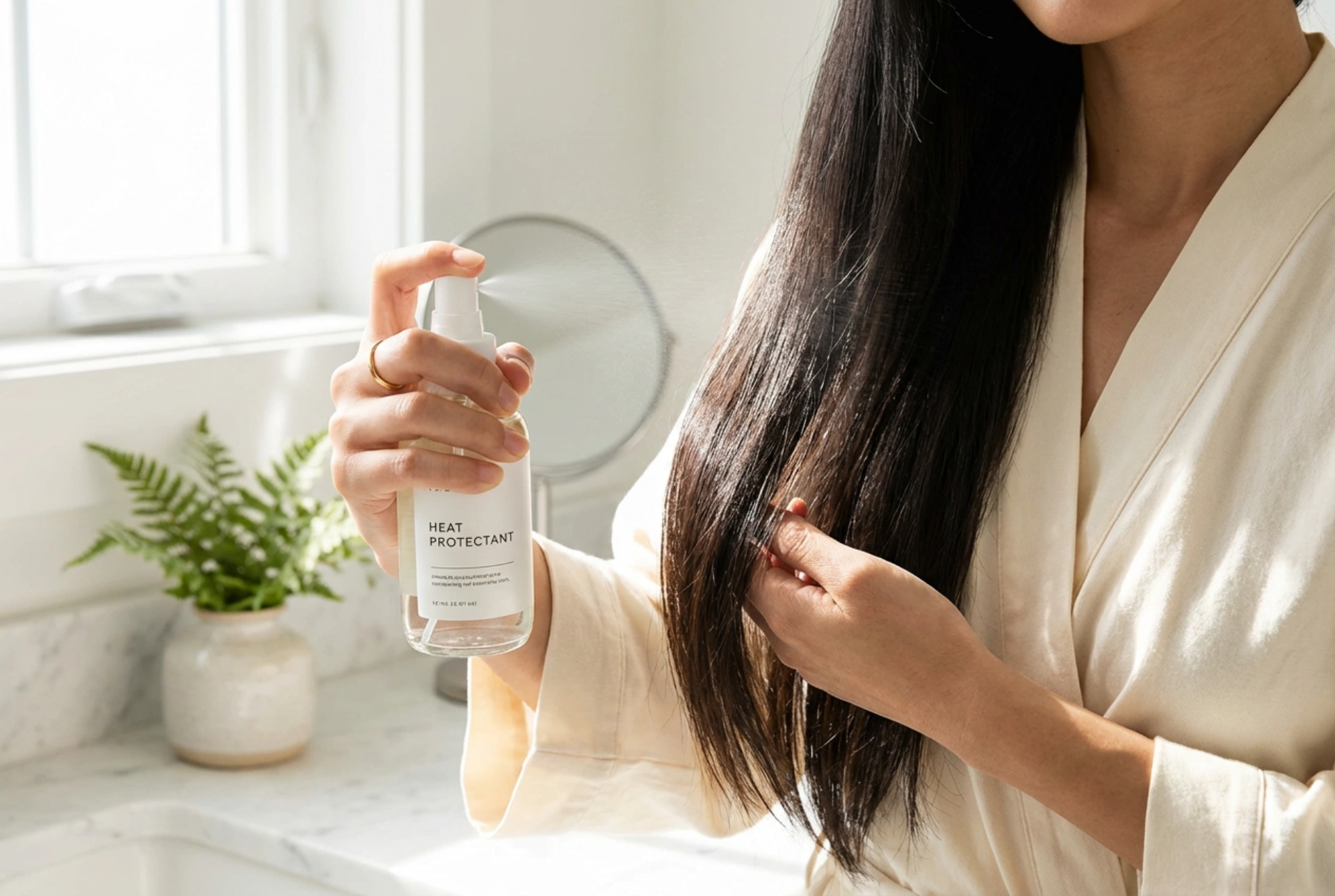


The act of gently misting hair with a protective spray before styling is more than just a routine; it is a vital step in preserving the health and shine of your locks. Heat from straighteners, curling tongs, and even hairdryers can take a toll on hair, leading to dryness, breakage, and a loss of natural lustre. However, with the right approach, you can style with confidence. Understanding how to choose and use a heat protectant is the key to keeping your hair looking its best, allowing you to create your desired look without compromising its health.
Why Is Heat Protection Crucial for Hair Health?
To appreciate the role of a heat protectant, it helps to understand what happens to hair when it is exposed to high temperatures. Each strand of hair is covered by a protective layer called the cuticle, which looks like overlapping scales. High heat can lift these scales, causing moisture to escape from the hair's inner core, the cortex. This loss of moisture leaves hair feeling dry and brittle. Furthermore, extreme heat can permanently damage the keratin proteins that give hair its strength and elasticity, leading to split ends and breakage. A heat protectant works by forming a thin film over the surface of the hair. This barrier serves two main purposes: it helps to slow down heat conduction and distributes the heat more evenly across the hair shaft. This means no single area gets 'scorched'. Many formulas also contain ingredients that seal the cuticle, locking in moisture and leaving hair feeling smoother and looking shinier.
How to Choose the Right Heat Protectant for Your Hair Type
Not all heat protectants are created equal, and the best one for you depends largely on your hair type and texture. Choosing a product tailored to your hair's specific needs will deliver better results and ensure your hair is not weighed down or left feeling greasy.
For Fine or Thin Hair
If you have fine hair, your main concern is finding a product that will not weigh it down or make it look flat. Opt for lightweight sprays or mists. These formulas provide an even, fine coating of protection without adding excess weight. Look for water-based products and avoid heavy oils or creams. A light mist applied from a distance is usually sufficient to protect your delicate strands.
For Thick or Coarse Hair
Thick, coarse, or very dense hair can handle and often benefits from more substantial products. Heat-protecting creams, lotions, or serums are excellent choices. These richer formulas provide a thicker protective barrier, which is necessary for hair that takes longer to heat up and style. They often contain extra moisturising ingredients that help to tame frizz and add softness to unruly textures.
For Dry or Damaged Hair
If your hair is already dry, colour-treated, or showing signs of damage, you need a heat protectant that offers both protection and nourishment. Look for products enriched with hydrating and repairing ingredients like hydrolysed proteins, amino acids, or natural oils. Cream-based formulas are often ideal as they provide intense moisture while shielding the hair from further harm. These products help to replenish lost moisture and strengthen the hair fibre during the styling process.
For Curly Hair
Curly hair is naturally more prone to dryness, so heat protection is non-negotiable. Look for products designed to work with your curls, not against them. Heat-protecting creams, gels, or serums that also offer curl definition and frizz control are a great multi-tasking option. Apply the product to damp hair before diffusing or to dry hair before using a curling tong to refresh your curls.
The Correct Way to Apply Heat Protection
Even the best product will not be effective if it is not applied correctly. Following a few simple steps will ensure every strand is shielded from heat.
- Start with Damp, Towel-Dried Hair: For most products, especially those used before blow-drying, it is best to apply them to damp, not soaking wet, hair. Squeeze out excess water with a towel or microfibre cloth first.
- Section Your Hair: To ensure even coverage, divide your hair into several manageable sections. This prevents you from missing spots or over-saturating others.
- Apply from a Distance: If you are using a spray, hold the bottle about 6-8 inches (15-20 cm) away from your hair. This allows for a fine, even mist rather than concentrating the product in one area.
- Focus on Mid-Lengths and Ends: The ends of your hair are the oldest and most fragile part, so they need the most protection. Concentrate the application from the middle of the hair shaft down to the tips, using only a small amount near the roots if necessary.
- Comb It Through: After applying the product, use a wide-tooth comb or your fingers to distribute it evenly from root to tip. This guarantees that every single strand is coated and protected.
- For Dry Hair Styling: If you are touching up dry hair with a straightener or curling tong, you can use a heat protectant designed for dry application. A light mist over each section just before applying heat works best.
Common Mistakes to Avoid
To get the most out of your heat protectant, be mindful of these common errors. Avoid applying too much product, which can make hair greasy, stiff, or even cause it to 'steam' under the heat. Always ensure even application, as unprotected patches are vulnerable to damage. Another mistake is assuming all styling products offer heat protection; always check the label. Lastly, remember that a heat protectant is part of a healthy hair care routine, not a replacement for it. Regular conditioning treatments and trims are still essential for maintaining hair health.
Incorporating a suitable heat protectant into your styling routine is a simple yet powerful habit. It acts as an essential shield, allowing you to achieve the looks you love without compromising the integrity of your hair. By choosing the right formula for your hair type and applying it correctly, you ensure your hair remains strong, smooth, and resilient, style after style.