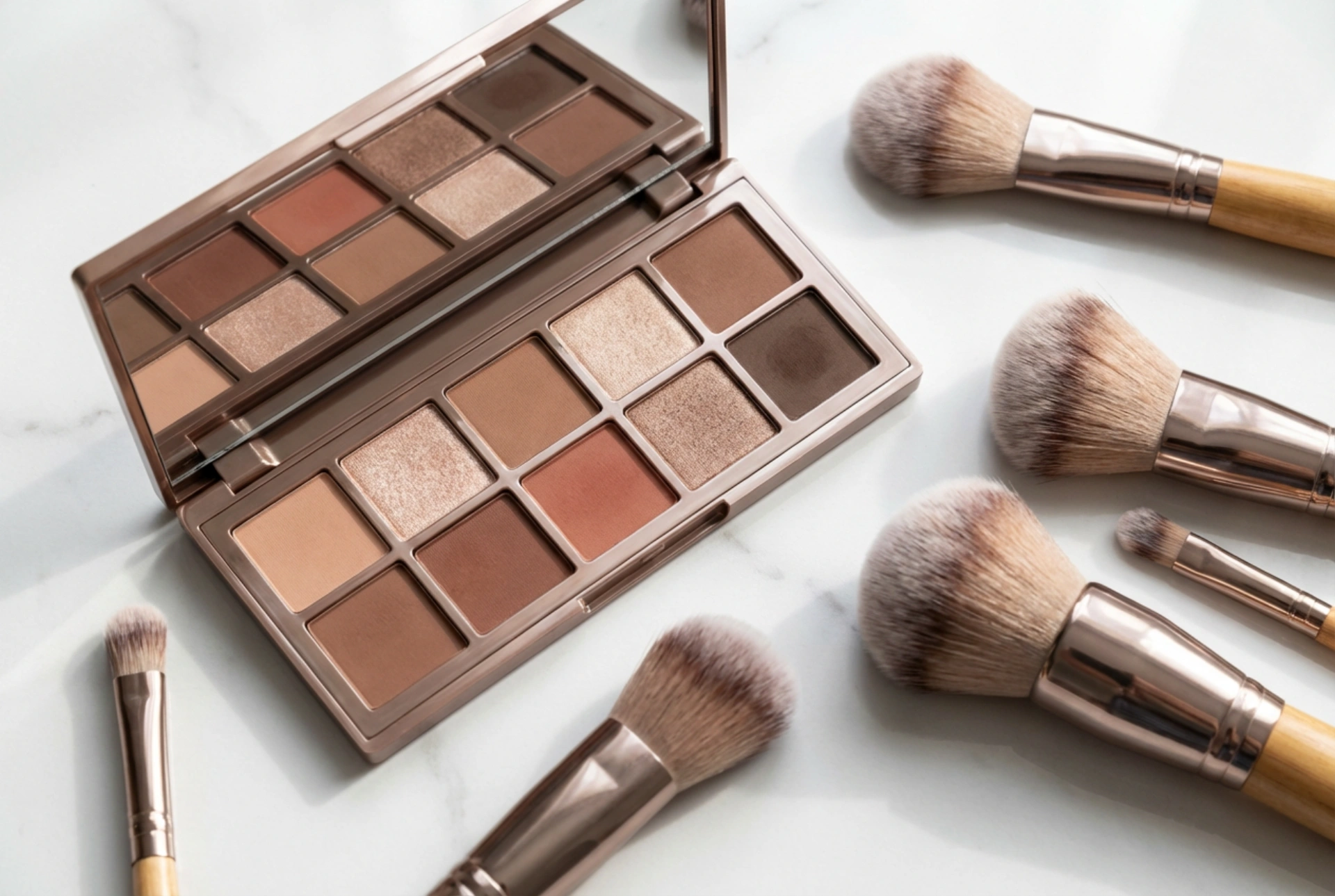


A beautifully curated vanity displaying an open eyeshadow palette with harmonious earthy tones and soft, clean makeup brushes under gentle morning light highlights the true joy of beauty preparation. Choosing an eyeshadow palette is much more than an aesthetic indulgence; it is a practical investment in your daily styling routine. The right combination of shades can enhance your natural eye colour, complement your skin tone, and allow you to transition effortlessly from a subtle daytime look to a sophisticated evening appearance. Understanding how to navigate the vast array of colour stories, textures, and finishes is the first step towards mastering seamless makeup application.
Understanding Eyeshadow Finishes and Textures
Before selecting a palette, it is essential to familiarise yourself with the various finishes and textures available, as each plays a distinct role in structuring an eye look. Matte shadows are completely devoid of shine or shimmer. They are fundamental for creating depth, defining the crease, and acting as a smooth base for other textures. A high-quality matte shadow should feel velvety to the touch and blend out without leaving harsh lines or patches.
Shimmer and satin shadows contain light-reflecting particles that add dimension and brightness to the eyes. Satins offer a soft, subtle sheen that is incredibly forgiving on mature skin, while shimmers provide a more pronounced, luminous effect ideal for the mobile lid or the inner corners of the eyes. Metallic and glitter textures offer maximum reflection, perfect for adding a focal point to your makeup. A balanced palette should ideally feature a thoughtful mix of these textures, allowing you to build contrast and interest within a single look.
Choosing the Right Palette for Your Skin Undertone
Selecting the most flattering palette relies heavily on colour theory and understanding your personal skin undertone. Skin undertones generally fall into three categories: cool, warm, and neutral. Identifying where you fit on this spectrum will help you choose shades that harmonise naturally with your complexion rather than clashing with it.
- Cool Undertones: If your skin has pink, red, or bluish undertones, look for palettes featuring cool tones. Soft greys, taupes, icy pinks, plums, and classic navy shades will complement your skin beautifully, creating a clean and elegant contrast.
- Warm Undertones: If your skin has golden, yellow, or peach undertones, warm-toned palettes are highly flattering. Rich terracotta, warm bronze, gold, copper, and olive green shades will enhance the natural warmth of your complexion, giving a sun-kissed, radiant effect.
- Neutral Undertones: If you have a mixture of both warm and cool tones, you are fortunate to have a neutral undertone. This allows you to experiment with almost any palette. Balanced neutral sets featuring soft browns, warm beige, and cool charcoal shades offer incredible versatility.
How to Construct a Cohesive Eye Look
Creating a cohesive eyeshadow look does not require professional artistry skills; instead, it relies on a simple, structured approach to shade placement. When looking at your chosen palette, you can generally categorise the colours into four functional groups to help guide your application.
First, identify the base shade, which should be a light matte colour close to your natural skin tone. Applying this all over the eyelid from the lash line to the brow bone creates a smooth, dry canvas that makes subsequent blending much easier. Next is the transition shade, which is slightly darker than your skin tone. Applied in the crease with a soft, sweeping motion, the transition shade acts as a bridge, ensuring that darker colours blend seamlessly into the skin without harsh edges.
The third element is the depth shade, a deeper tone used to define the outer corner of the eye or the lash line. By carefully pressing this shade into the outer V-shape of the eye and blending inward, you create structure and dimension. Finally, the accent shade—typically a shimmer or a bright satin—is pressed onto the centre of the lid or the inner corner to catch the light and make the eyes appear larger and more awake.
The Importance of High-Quality Tools
Even the most exceptional eyeshadow palette requires the right tools to achieve a polished finish. Relying solely on the small applicators often included in compacts can make blending difficult and result in a patchy appearance. Investing in a few basic, high-quality synthetic makeup brushes will dramatically improve your application technique and the longevity of your makeup.
A fluffy blending brush is arguably the most important tool in your collection; its soft, tapered bristles are designed to diffuse harsh lines and distribute transition shades evenly. A flat shader brush is perfect for packing colour onto the lid, especially when working with shimmers or metallics, as it minimises fallout. Lastly, a small, angled brush or a pencil brush is ideal for detailed work, such as defining the lower lash line or applying deep accent colours precisely. Keeping your brushes clean is equally vital, as leftover product can muddy your colours and affect the smooth transition of shades.