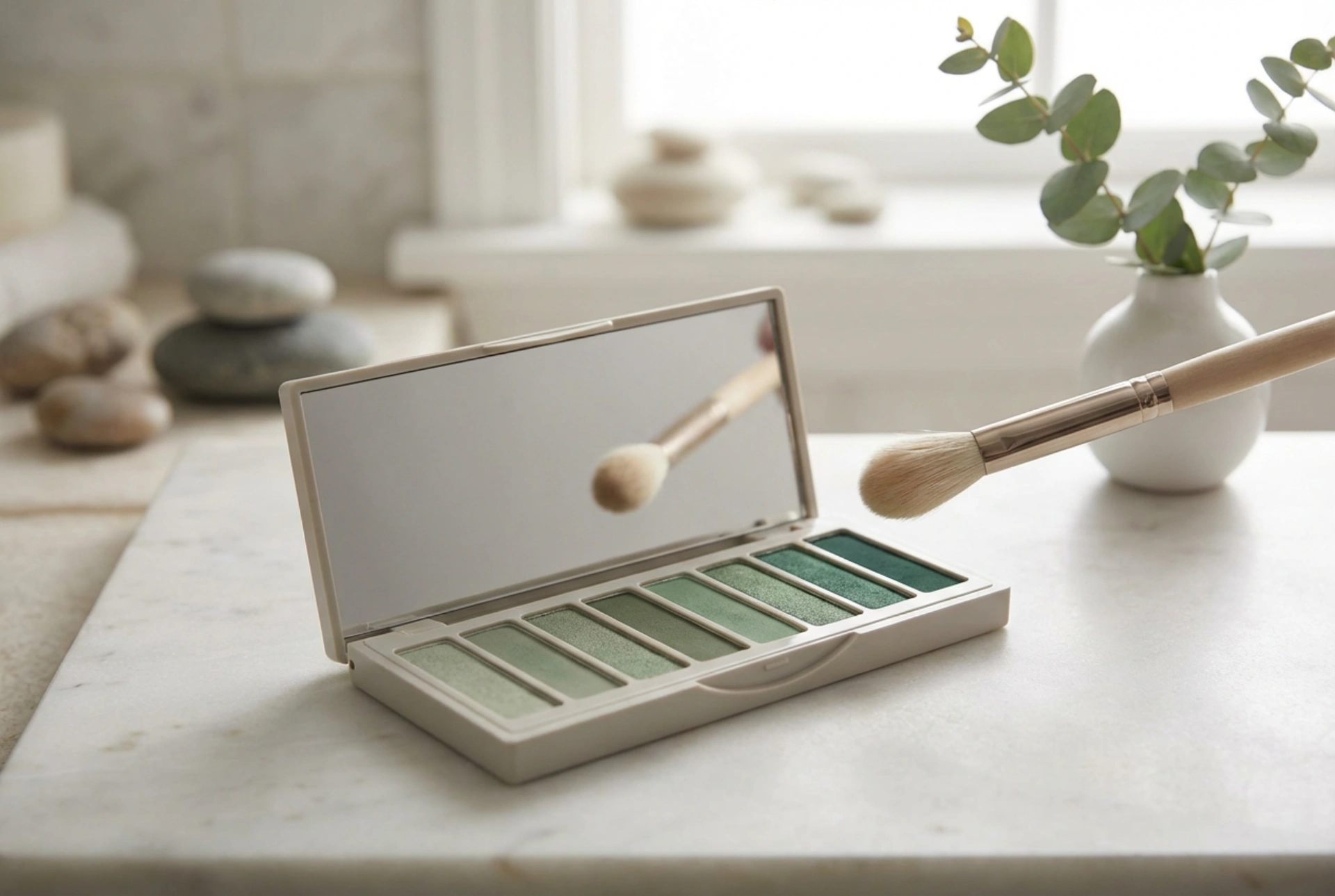


Green eyeshadow has long transitioned from a daring runway trend into a versatile staple of the modern makeup enthusiast’s collection. An elegant, open eyeshadow palette showcasing a curated range of green tones – from the softest wisps of sage to the rich depths of forest green and emerald – offers endless creative possibilities. Capturing these nuanced pigments and textures under soft, diffused natural light reveals the true artistry behind colour transitioning. With a clean blending brush in hand, anyone can master the delicate balance of layering and blending these earthy, jewelled hues to create sophisticated eye makeup that enhances natural beauty.
Demystifying Green Undertones
Before picking up a brush, it is essential to understand the diverse spectrum of the green colour family. Green is not a one-size-fits-all shade; it is highly adaptable, ranging from warm, yellow-based tones to cool, blue-based pigments. Warm greens, such as olive, moss, and khaki, feature rich golden or brown undertones, making them exceptionally flattering for warm skin tones. On the other hand, cool greens, including mint, sage, emerald, and jade, carry icy or blue undertones that beautifully complement cool and neutral skin tones.
When selecting a palette, look for a curated selection that provides a balance of matte transition shades, satin mid-tones, and high-shine metallic or shimmer finishes. Having a mix of textures is crucial for building dimension. Mattes provide the necessary structure and depth in the crease, while shimmers and metallics capture light on the eyelid, creating an eye-opening effect that prevents the green tones from looking flat or muddy.
Harmonious Colour Combinations for Wearable Looks
The key to wearing green eyeshadow with confidence lies in pairing it with the right supporting shades. For a subtle, daytime look, soft sage green pairs beautifully with warm taupes, soft beiges, and cream tones. Applying a matte beige across the lid as a base, sweeping sage into the crease, and finishing with a touch of champagne shimmer in the inner corner creates an understated yet fresh appearance.
For those wishing to embrace richer tones, combining deep emerald or forest green with warm bronzes, coppers, and rich chocolates adds instant warmth and sophistication. Gold is a natural partner for forest green, as the warm metallic sheen elevates the depth of the dark green. If you prefer a cooler aesthetic, pairing mint or jade with slate grey, charcoal, or cool-toned silver offers a striking, modern contrast that remains sophisticated and balanced.
How to Build Seamless Transitions: A Step-by-Step Technique
Creating a flawless gradient with green eyeshadow requires a systematic approach to layering. Without proper structure, vibrant shades can easily become overpowering or difficult to blend. Following a step-by-step method ensures a smooth transition of colour from the lash line up to the brow bone:
- Preparation: Begin by applying a neutral eye primer or a light layer of concealer across the entire eyelid. Dusting a translucent powder over the top ensures a smooth, dry surface, allowing the green pigments to glide on and blend effortlessly without patchiness.
- The Transition Shade: Select a light, neutral shade that is slightly darker than your natural skin tone – such as a soft peach, warm beige, or light taupe. Sweep this shade gently back and forth through the crease using a fluffy blending brush to establish a soft buffer zone.
- Introducing the Green: Dip a clean blending brush into your chosen mid-tone green, such as a soft olive or sage. Apply this shade just below the transition colour, focusing on the outer half of the crease and blending inwards. Keep the movements light and circular to merge the two shades seamlessly.
- Building Depth: To add structure and define the outer corner of the eye, use a smaller, denser crease brush with a deeper green, like forest or pine. Press the colour into the outer "V" of the eyelid, then gently sweep it into the outer crease, ensuring no harsh lines remain.
- The Focal Point: Finish the transition by pressing a shimmery mint, emerald, or gold shadow onto the centre of the eyelid using a flat shader brush or your fingertip. This concentrates the light-reflecting pigments exactly where the eyelid naturally curves, creating beautiful dimension.
Essential Tools and Blending Mastery
Achieving a professional-looking transition depends largely on the tools you use and your physical technique. A clean, tapered blending brush is the most critical tool for this process. The long, soft bristles allow for maximum dispersion of product, ensuring that even highly pigmented greens are diffused into a soft, smoke-like finish. It is always wise to keep a completely clean, product-free blending brush on hand solely for softening edges once all colours have been applied.
When working with pigmented green shadows, remember the golden rule of makeup application: start with a very small amount of product and build up gradually. Tap your brush gently before it touches your eyelid to remove any excess pigment, reducing the risk of fallout under the eyes. Hold the makeup brush near the end of the handle rather than close to the bristles; this reduces the amount of pressure applied to the delicate skin of the eyelid, resulting in a much softer, more natural gradient.
Balancing the Rest of Your Makeup
To ensure your green eye look remains sophisticated and harmonious, the rest of your makeup should play a supporting role. Because green is a statement colour, keeping the cheeks and lips neutral prevents the overall look from feeling cluttered. Soft peach, nude, or dusty rose blushes work beautifully, complementing the warmth or coolness of the chosen green without competing for attention. Complete the look with a swipe of neutral lip gloss or a satin nude lipstick, allowing your beautifully blended eye transition to remain the elegant focal point of your beauty routine.