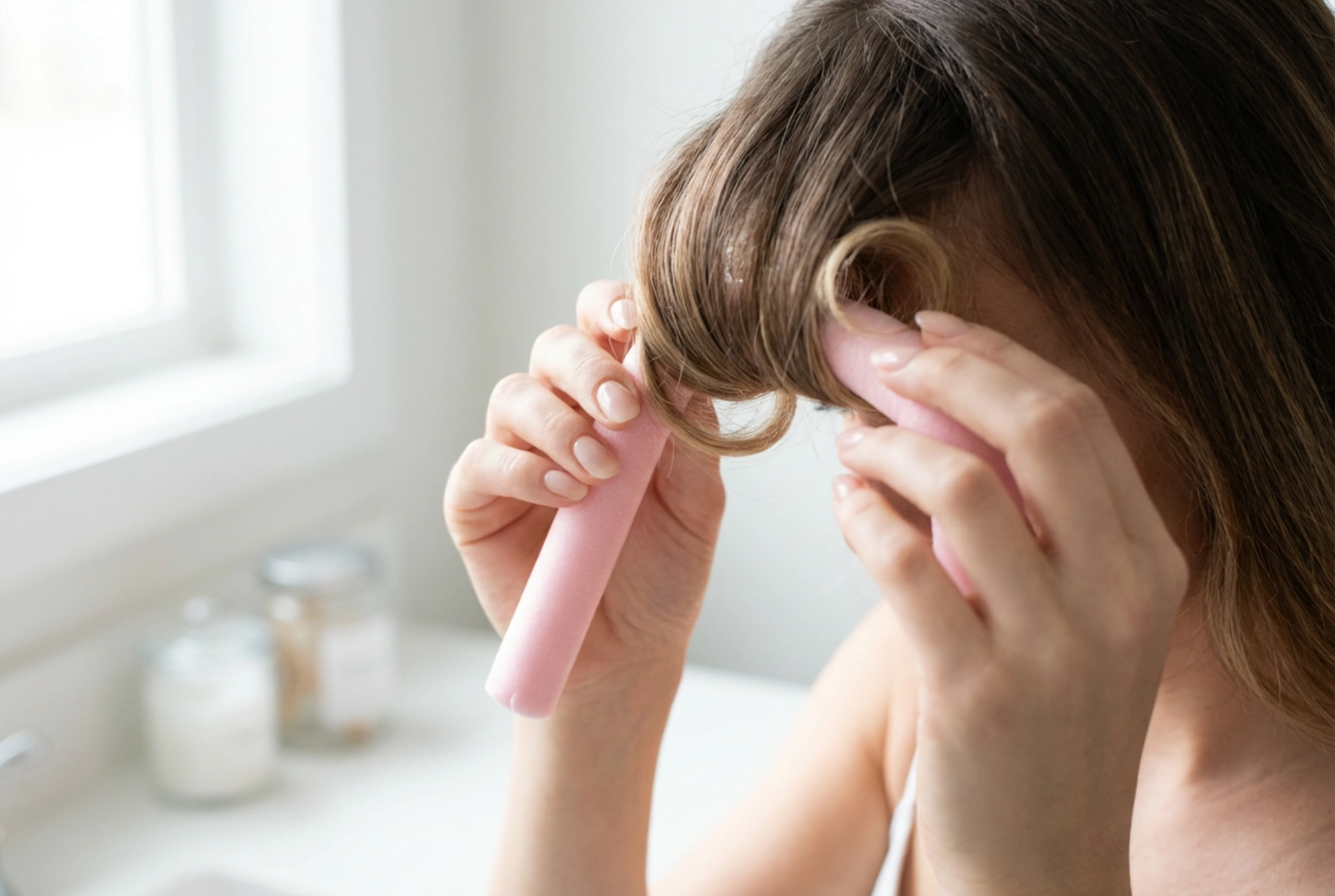


Achieving the perfect fringe can often feel like a daily styling challenge. However, one of the most reliable and gentle methods to secure beautiful volume and a soft shape is by using hair rollers. As seen when gently removing a pastel roller from the hair, the result is an effortless, soft curl right at the roots that frames the face beautifully. This classic styling technique avoids the harsh heat of straighteners, offering a natural bounce that lasts throughout the day.
The Benefits of Using Rollers for Fringe Styling
Using rollers on your fringe is an excellent way to create natural volume without risking heat damage. Unlike flat irons or curling wands, which can flatten the hair or create harsh, unnatural bends, rollers gently coax the hair into a smooth, rounded shape. This method is particularly beneficial for those with fine or delicate hair around the hairline, where minimising thermal styling is key to maintaining hair health.
Furthermore, rollers provide excellent root lift. By lifting the hair directly upwards from the scalp before wrapping it, you create tension that translates into lasting height once the hair dries or cools. This structural support keeps your fringe from falling flat against your forehead, helping it to stay fresh and voluminous for longer.
How to Select the Right Roller for Your Fringe
The key to successful fringe styling lies in choosing the correct tool. The diameter of the roller directly influences the final look, and different materials offer varying levels of control and finish.
- Velcro Rollers: These are highly popular for dry or slightly damp styling. The self-grip texture holds the hair firmly in place without the need for clips, which can sometimes leave unsightly creases. They are ideal for creating quick volume and a soft, natural curve.
- Foam Rollers: Softer and lighter, these are excellent if you prefer to leave your rollers in for an extended period, such as whilst getting ready or applying make-up. However, they may require pins to stay secure.
- Roller Size: As a general rule, larger rollers (around 40mm to 50mm in diameter) are perfect for long, sweeping bangs or curtain fringes, as they provide lift rather than curl. Smaller rollers (20mm to 30mm) are better suited for shorter, blunt fringes that require a distinct curve.
Step-by-Step Styling Technique
For a flawless result, follow this simple routine to roll and style your fringe correctly:
1. Prepare the Hair
Start with clean, slightly damp or freshly blown-dry hair. If your hair is dry, you can lightly mist your fringe with a styling water or a lightweight volumising spray to give the hair some hold. Avoid heavy styling creams that might weigh the delicate fringe down.
2. Section and Tension
Comb your fringe forward, separating it from the rest of your hair. Lift the section straight up from the scalp at a 90-degree angle. This upward tension is crucial for creating that coveted root lift.
3. Roll and Secure
Place the roller at the ends of your hair. Gently wrap the ends around the roller, ensuring they lie flat and smooth. Roll downwards towards your forehead, keeping the tension consistent. Secure the roller closely at the roots. If using velcro rollers, they should stay in place independently; otherwise, use a creaseless clip to secure it.
4. Set and Cool
Apply a gentle stream of warm air from your hairdryer for a few seconds to set the shape. Crucially, allow the hair to cool completely on the roller. It is the cooling process that locks the volume and shape into place.
5. Gentle Removal
When removing the roller, do not pull or yank it straight down. Instead, gently slide it upwards and backwards, following the direction of the curl. This preserves the lift at the roots and prevents unwanted frizz.
Troubleshooting Common Fringe Styling Mistakes
Even with the simplest techniques, minor errors can affect the final look of your fringe. Here are a few common pitfalls to watch out for and how to avoid them:
- Styling soaking wet hair: Attempting to use velcro rollers on soaking wet hair can lead to tangles and extremely long drying times. Always ensure the hair is at least eighty percent dry before rolling.
- Creating a harsh dent: If using clips to secure your rollers, make sure they are placed strategically at the base of the roller or use specialised creaseless clips to prevent sharp lines in your styled fringe.
- Using too much product: Heavy serums or heavy-hold sprays can make the fringe look greasy or stiff. Opt for lightweight formulas designed specifically for volume and flexible movement.
Maintaining Your Fringe Throughout the Day
To ensure your styled fringe retains its bounce, finish with a light mist of flexible-hold hairspray or a texturising spray. Shake the fringe gently with your fingers to separate the strands and create a modern, lived-in texture. Avoid touching your fringe too frequently during the day, as the natural oils from your hands can weigh the hair down and cause it to lose its shape.