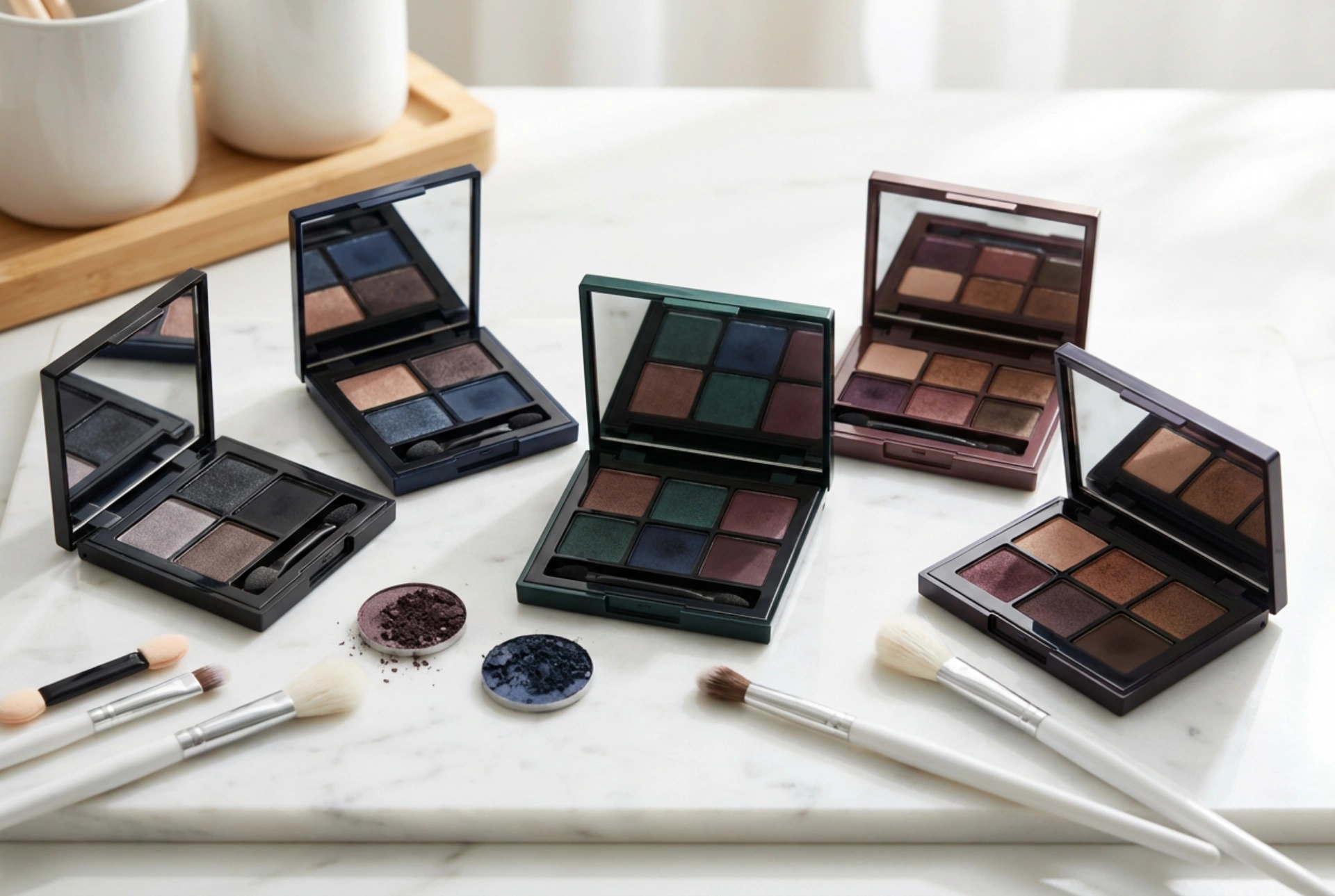


Dark eyes possess a captivating, natural depth that offers a wonderfully versatile canvas for cosmetic creativity. When looking at a flat lay of open eyeshadow palettes filled with rich, deep, and smoky tones, it becomes clear that the secret to a striking look lies in understanding how to select and coordinate these velvety textures. Soft, natural light beautifully highlights the intense colour payoff of modern pigments, demonstrating how the right choice of shades can elevate dark eyes from subtle to truly mesmerizing. Whether you have deep brown, dark hazel, or almost black eyes, selecting the correct tones and mastering the application intensity can completely transform your daily makeup routine.
The Principles of Colour Theory for Dark Eyes
To make dark eyes truly stand out, it is helpful to look at basic colour theory. Because dark eyes contain rich, warm undertones, they can harmonise beautifully with a wide array of shades, but certain colour families will provide a more striking contrast than others.
- Warm Bronzes and Golds: These shades mirror the natural golden flecks often found in dark brown eyes, creating a harmonious, glowing effect that is ideal for both daytime and evening wear.
- Deep Plums and Purples: Purple sits opposite yellow and warm tones on the colour wheel. Using rich plum, aubergine, or violet shadows will instantly make the warm tones in dark eyes look brighter and more vivid.
- Forest Greens and Teals: Jewel tones offer a sophisticated contrast. A touch of deep olive or forest green on the eyelids adds an earthy richness that beautifully complements dark eyes.
- Classic Earthy Neutrals: Soft taupes, warm terracottas, and deep chocolate browns are essential for creating seamless transitions and adding structure to the eye shape without overwhelming the natural eye colour.
Selecting the Perfect Textures and Finishes
The finish of an eyeshadow is just as important as its colour. Combining different textures creates dimension, preventing deep makeup from looking flat or heavy. Velvety mattes are indispensable for defining the crease and establishing the structural shape of the eye. They absorb light, which allows you to create shadows and depth exactly where you need them.
On the other hand, shimmer, satin, and metallic pigments are perfect for capturing and reflecting light. Placing a soft satin shade on the centre of the eyelid or a touch of metallic champagne in the inner corner can instantly open up the eye area, making dark eyes appear larger and more luminous. When working with highly pigmented, deep shades, choosing finely milled powders with a velvety texture ensures smooth blending and minimizes the risk of fallout under the eyes.
Balancing Intensity: From Day to Night
Achieving the right level of intensity is key to a polished look. For daytime wear, the goal is often to enhance the natural shape of the eyes using soft, muted colours. This can be achieved by applying a neutral transition shade through the crease and adding a subtle wash of satin bronze across the lid. The look remains sophisticated and fresh without appearing too heavy in natural light.
For evening wear, you can easily increase the intensity by layering deeper shades. The smoky eye technique is particularly flattering for dark eyes. Instead of relying solely on heavy black shadows, which can sometimes make the eyes look smaller, try building the smoke effect using deep charcoal, rich espresso, or midnight blue. This approach preserves the warmth of your dark eyes while adding a dramatic, mysterious allure.
A Step-by-Step Guide to Enhancing Dark Eyes
Creating a balanced, professional-looking eye makeup design involves a systematic approach to layering and blending. Follow these simple steps to achieve a beautifully defined look:
Step 1: Prep and Prime
Begin by preparing the eyelid to ensure a smooth, long-lasting application. Applying a thin layer of eye primer or a lightweight concealer helps to neutralise any discolouration on the eyelid and provides a velvety base for the pigments to adhere to.
Step 2: Define the Crease
Using a fluffy blending brush, sweep a warm neutral transition shade (such as a soft peach or light terracotta) along the crease of the eyelid. Use windshield-wiper motions to diffuse the edges, creating a soft gradient of colour that will help deeper shades blend seamlessly.
Step 3: Build Depth
With a slightly smaller, tapered brush, apply a medium-toned shadow, like a warm bronze or rich plum, to the outer corner of the eye. Gently blend this shade into the crease, forming a soft 'V' shape. This step adds dimension and accentuates the natural contour of the eye.
Step 4: Add the Focal Colour
Apply your chosen lid shade—such as a shimmering copper or a velvety forest green—directly onto the mobile part of the eyelid. Press the pigment gently onto the skin with a flat brush rather than sweeping it, as this technique maximises the colour payoff and minimises fallout.
Step 5: Highlight and Brighten
To keep the eyes looking bright and awake, apply a light, reflective shade (like cream, soft gold, or pale champagne) to the inner corners of the eyes and just beneath the arch of the brow bone. This simple step creates a beautiful contrast with the deeper shades on the lid.
Practical Tips for a Flawless Finish
Working with intense, deep pigments requires a bit of patience and the right techniques. To ensure your makeup looks clean and professional, keep a few practical tips in mind. Always tap excess product off your makeup brush before applying it to your eyelids; this significantly reduces the amount of shadow that falls onto your cheeks.
When blending, use clean brushes for the final transitions. If you use the same brush for applying dark pigment and blending, you may end up spreading the dark colour too high towards the brow bone, which can make the makeup look muddy. Lastly, remember to balance your overall look. If you have chosen an intense, smoky eye design with rich, dark colours, keep the rest of your makeup relatively soft with neutral cheeks and a natural lip tone to maintain a harmonious and sophisticated aesthetic.