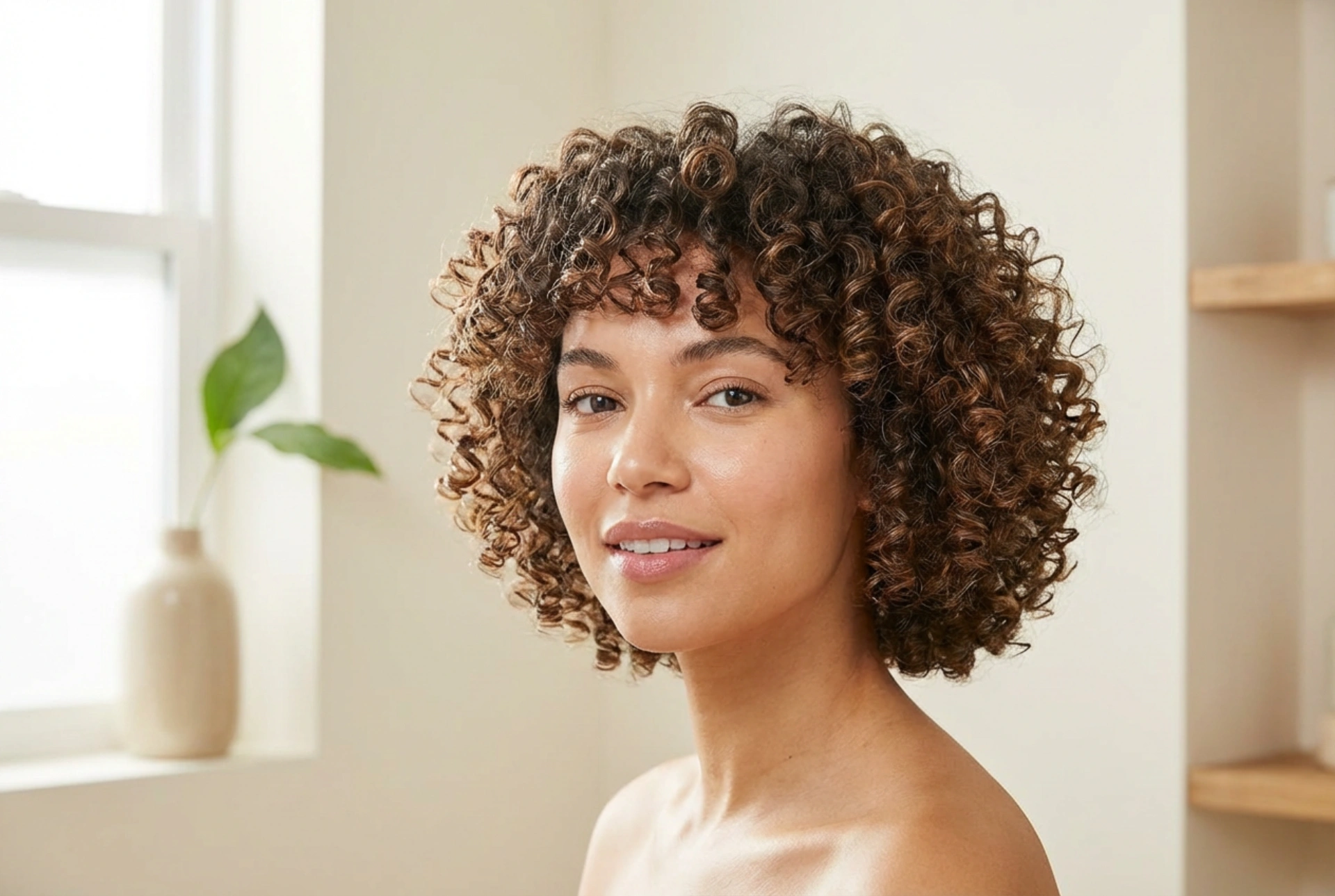


Short curly hair has a unique charm that exudes confidence, playfulness, and a sense of effortless style. When curls are healthy and well-defined, they frame the face beautifully, bouncing naturally with every movement. However, achieving those vibrant, perfectly defined short curls without the dreaded frizz can sometimes feel like a daily challenge. The key to unlocking the true potential of short textured hair lies in a consistent home-care routine that prioritises deep hydration, gentle styling techniques, and the correct application of finishing products. By understanding how your natural curl pattern behaves, you can easily maintain a soft, frizz-free texture and an elegant shine without relying on complicated salon treatments.
The Foundation of Curl Definition: Deep Hydration
The journey to beautiful, springy curls always begins in the shower. Curly hair is naturally prone to dryness because the natural oils produced by the scalp struggle to travel down the spiral shape of the hair shaft. This dryness is often more visible in shorter cuts, where the shape of the style relies heavily on the natural buoyancy of each individual curl. To combat this, it is essential to use a gentle, sulphate-free shampoo that cleanses without stripping away essential moisture.
Following your cleanse, a rich, nourishing conditioner is vital. While the conditioner is still in your hair, use your fingers or a wide-tooth comb to gently detangle any knots. This is the safest way to detangle curls without causing breakage or disrupting the natural curl clumps. For short hair, focus the conditioner mainly on the mid-lengths and ends, avoiding the roots to prevent weighing down the volume. A weekly deep conditioning treatment can also provide an extra boost of moisture, helping to keep the hair cuticle smooth and receptive to styling products.
Defining the Pattern: Styling Techniques for Short Curls
To achieve maximum definition, styling products should always be applied to soaking wet hair. This helps to lock in moisture before frizz has a chance to form as the hair begins to air-dry. Leave-in conditioners and curl creams are excellent for providing the initial layer of hydration and smoothing the hair cuticle.
Once your leave-in conditioner is evenly distributed, you can use the classic "scrunching" method. Cup your hair in the palms of your hands, squeeze gently upwards towards the scalp, and release. This encourages your natural curl pattern to form defined clumps. For areas that require extra definition, such as the curls framing the face, you can try finger-coiling. Simply take small sections of wet hair, apply a small amount of styling product, and wrap them around your finger to encourage a neat, uniform coil. This technique helps to tame rebellious sections and ensures a balanced, cohesive look all over your head.
Taming the Frizz: Smart Drying Methods
How you dry your hair plays a crucial role in preventing frizz. Rubbing your hair with a traditional terry cloth towel is one of the most common mistakes in curl care, as the rough texture of the fabric raises the hair cuticle and causes friction, leading to immediate frizz. Instead, gently squeeze excess water out of your curls using a microfibre towel or a soft cotton t-shirt. This method, often referred to as "plopping" or "micro-plopping," absorbs water gently while keeping the curl clumps intact.
When it comes to drying, air-drying is the gentlest option, but if you prefer to use a hair dryer, a diffuser attachment is absolutely essential. A diffuser disperses the airflow over a wider area, preventing the hot air from disrupting your curls. To use it effectively, set your dryer to low heat and low speed. Tilt your head to the side or forward, place a section of curls gently into the diffuser bowl, and hold it near your scalp for a few seconds before moving to the next section. Avoid moving the dryer constantly or touching your curls with your fingers while they are drying, as this is a major cause of unwanted frizz.
Securing the Hold: Styling Gels and the Cast
To ensure your defined curls last throughout the day, you need a product that offers reliable hold. Styling gels, jellies, or custards are ideal for this purpose. When applied to wet hair, these products create a light, protective barrier around each curl clump as it dries. This barrier, often called a "gel cast," feels slightly stiff once the hair is completely dry, which is entirely normal and actually protects the curls from humidity and wind.
Once your hair is one hundred per cent dry, you can easily break this cast to reveal soft, touchable curls. Dispense a tiny drop of lightweight hair oil or serum onto your palms, rub your hands together, and gently scrunch your curls. This action breaks the stiff gel barrier without creating frizz, leaving you with beautifully soft, bouncy curls that retain their shape and definition for hours.
Protecting Your Curls Overnight
Maintaining short curly hair also involves protecting your curls while you sleep. The friction caused by moving your head against a standard cotton pillowcase can lead to tangles, frizz, and moisture loss overnight. Switching to a silk or satin pillowcase is a simple yet highly effective way to protect your hair. The smooth surface allows your curls to glide gently across the fabric without friction. Alternatively, you can wrap your hair in a silk or satin scarf, which keeps the curls snugly secured and beautifully intact until morning, making your next-day styling routine incredibly quick and effortless.