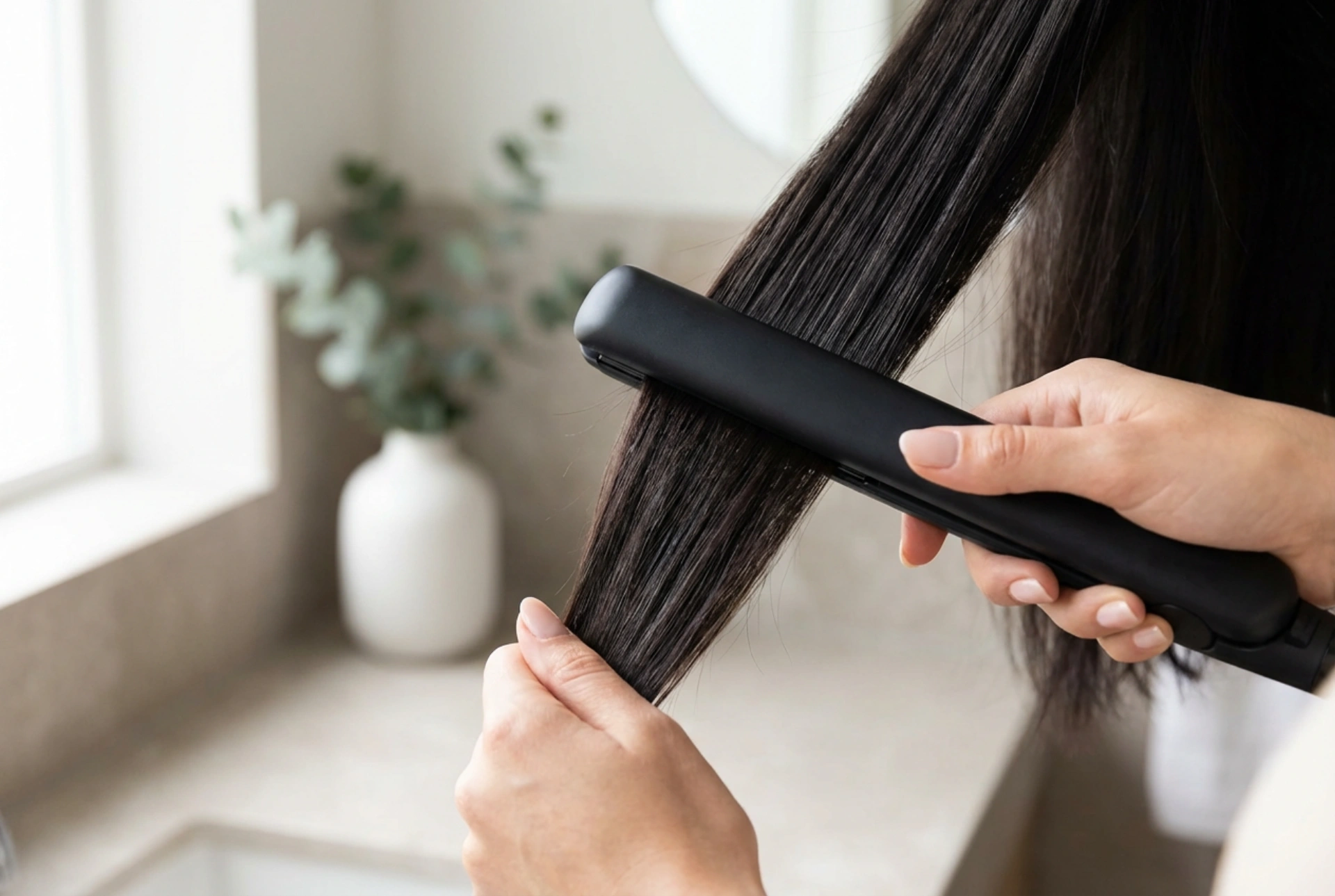


Achieving a sleek, glossy finish on voluminous locks requires the right tools and a systematic approach. When looking at a close-up of hands gliding a hair straightener through a thick section of dark, lustrous hair, it is clear that smooth, refined styling is a craft. For individuals with dense or coarse hair types, the choice of styling tool directly influences both the health of the hair and the time spent in front of the mirror. Understanding how different plate materials and design features impact styling speed can transform your daily beauty routine.
The Core Elements: Selecting the Right Plates
The plates of a hair straightener are the most critical component when dealing with thick hair. Because dense hair requires consistent heat to smooth out its natural texture, the material of the plates determines how evenly heat is distributed and how smoothly the tool glides through the strands.
Ceramic Plates vs. Titanium Plates
Ceramic plates are highly popular for their gentle heat distribution. They heat up evenly from the inside out, minimising the risk of hot spots that could damage the hair cuticle. For thick hair that is slightly dry or prone to frizz, ceramic is an excellent, safe choice that preserves natural moisture.
On the other hand, titanium plates are known for their rapid heat transfer and high durability. Titanium is a lightweight metal that heats up much faster than ceramic and maintains a highly stable temperature. This rapid transfer allows for quicker styling, making titanium particularly suitable for very thick, coarse, or stubborn hair types that usually require multiple passes with a standard tool.
Plate Width and Surface Area
To optimise styling speed, the width of the plates must match the density of the hair. Standard hair straighteners usually feature plates that are one inch wide. While these are versatile, they can make styling thick hair a lengthy process.
- Wide Plates (1.5 to 2 inches): These are highly recommended for thick or long hair. The larger surface area allows you to style wider sections of hair at once, significantly reducing the overall styling time.
- Bevelled Edges: Plates with rounded or bevelled edges offer greater versatility, allowing you to create soft waves or curls in thick hair without snagging.
Temperature Regulation and Heat Consistency
Thick hair inherently possesses a stronger structure and a thicker cuticle layer, which means it often requires a slightly higher temperature to reshape compared to fine hair. However, consistency of temperature is far more important than extreme heat.
Variable Temperature Controls
Avoid tools that offer only a single, high heat setting. A professional-grade straightener should feature precise, variable temperature controls. This allows you to start at a lower, safer temperature and gradually increase it only if the hair section does not respond. For most thick hair types, a temperature range between 180°C and 210°C is highly effective without causing unnecessary thermal stress.
Advanced Heat Sensors
High-quality straighteners incorporate advanced sensors across the plates to monitor heat levels hundreds of times per minute. This technology prevents heat drop-offs as the tool glides through cold hair, ensuring that the first pass is just as effective as the last. This consistent performance ensures that you do not have to repeat sections, saving time and protecting the hair structure.
Practical Techniques for Styling Thick Hair
Even with the most efficient tools, proper technique is essential to achieve a salon-quality finish at home. Preparing and sectioning the hair systematically will ensure optimal results and a faster process.
The Power of Proper Sectioning
Attempting to straighten large, random clumps of thick hair will result in uneven heat distribution and incomplete styling. To avoid this, divide your hair into at least four clean sections using styling clips. Work with small sub-sections that are no wider than the plate of your straightener. This ensures that every strand receives uniform heat, giving you a sleek finish on the first glide.
The Chase Method
For an exceptionally smooth result, use the chase method. This involves placing a fine-tooth comb directly in front of the straightener as you glide it down the hair section. The comb detangles and aligns the individual hairs just before the heat is applied, ensuring a flawless glide and eliminating the need for repeated passes.
Aftercare and Heat Protection
Always ensure your hair is completely dry before applying any direct heat from a straightener, as styling damp hair can lead to structural damage. Applying a lightweight heat protection spray beforehand creates an invisible barrier, shielding the delicate cuticle from direct thermal contact. Finish with a few drops of a nourishing hair oil to lock in moisture and enhance natural gloss.