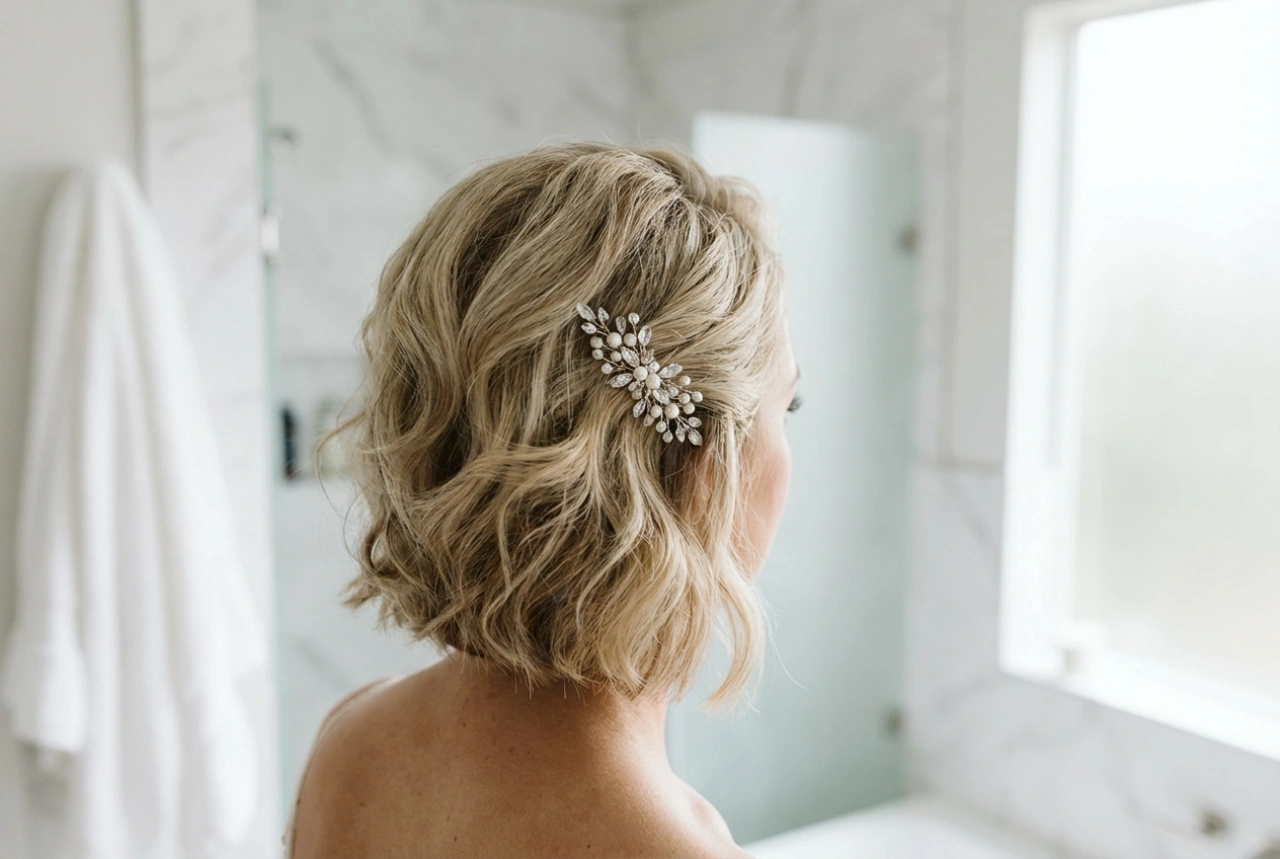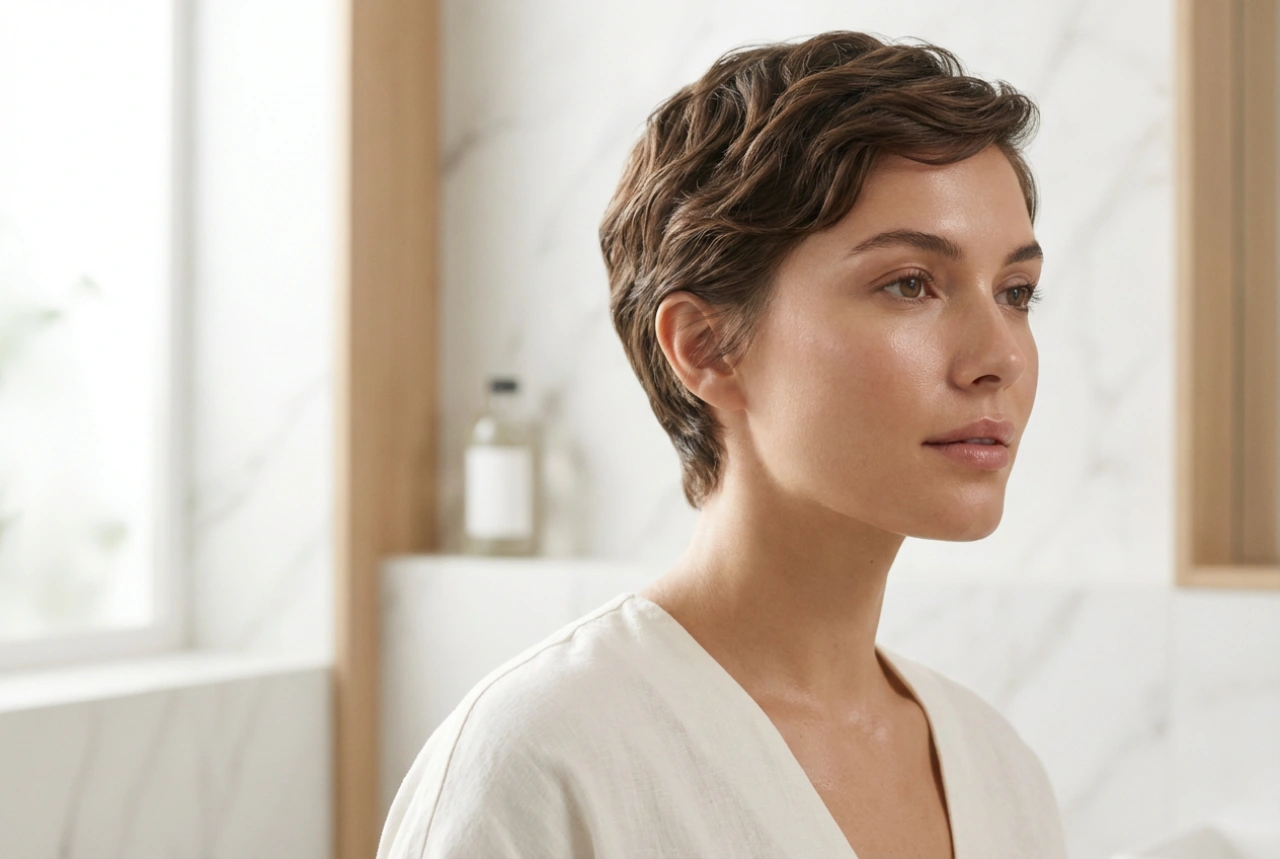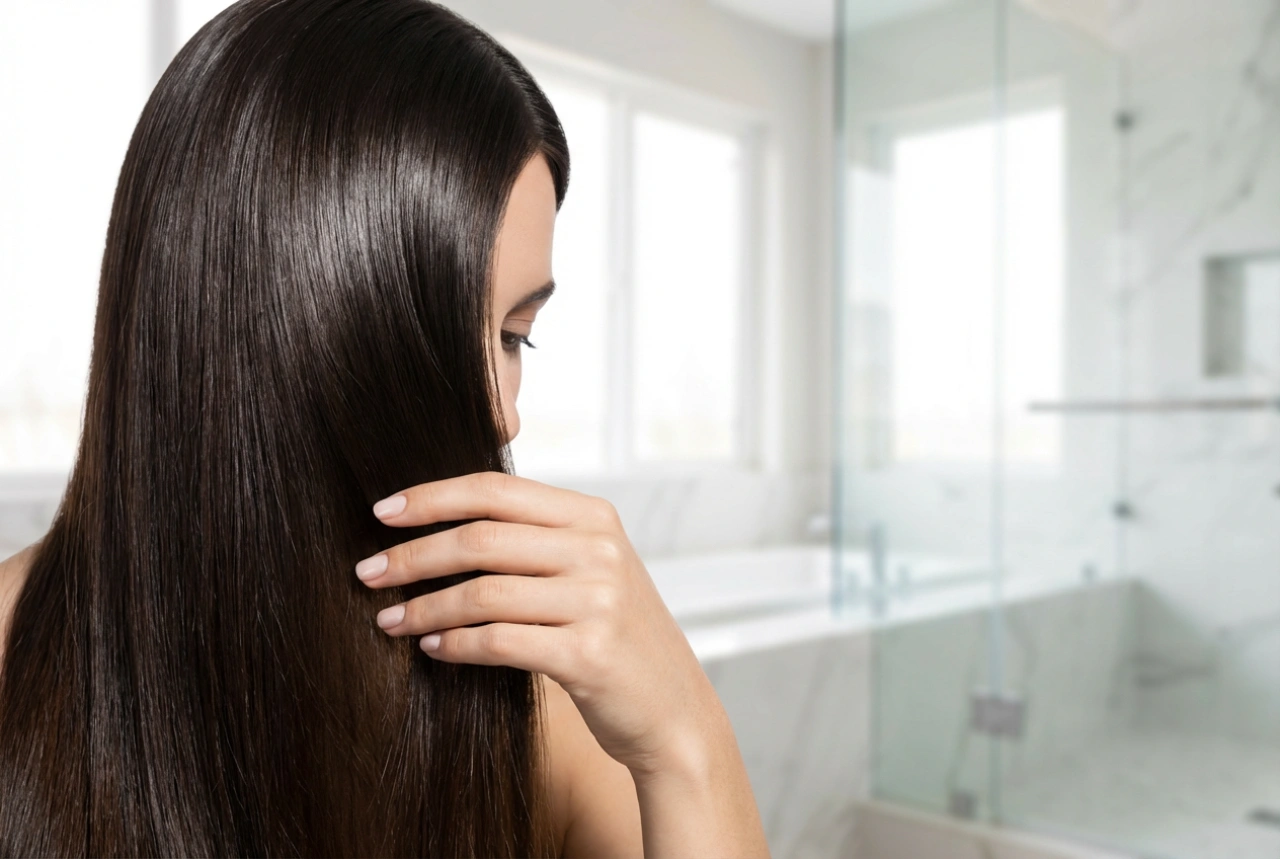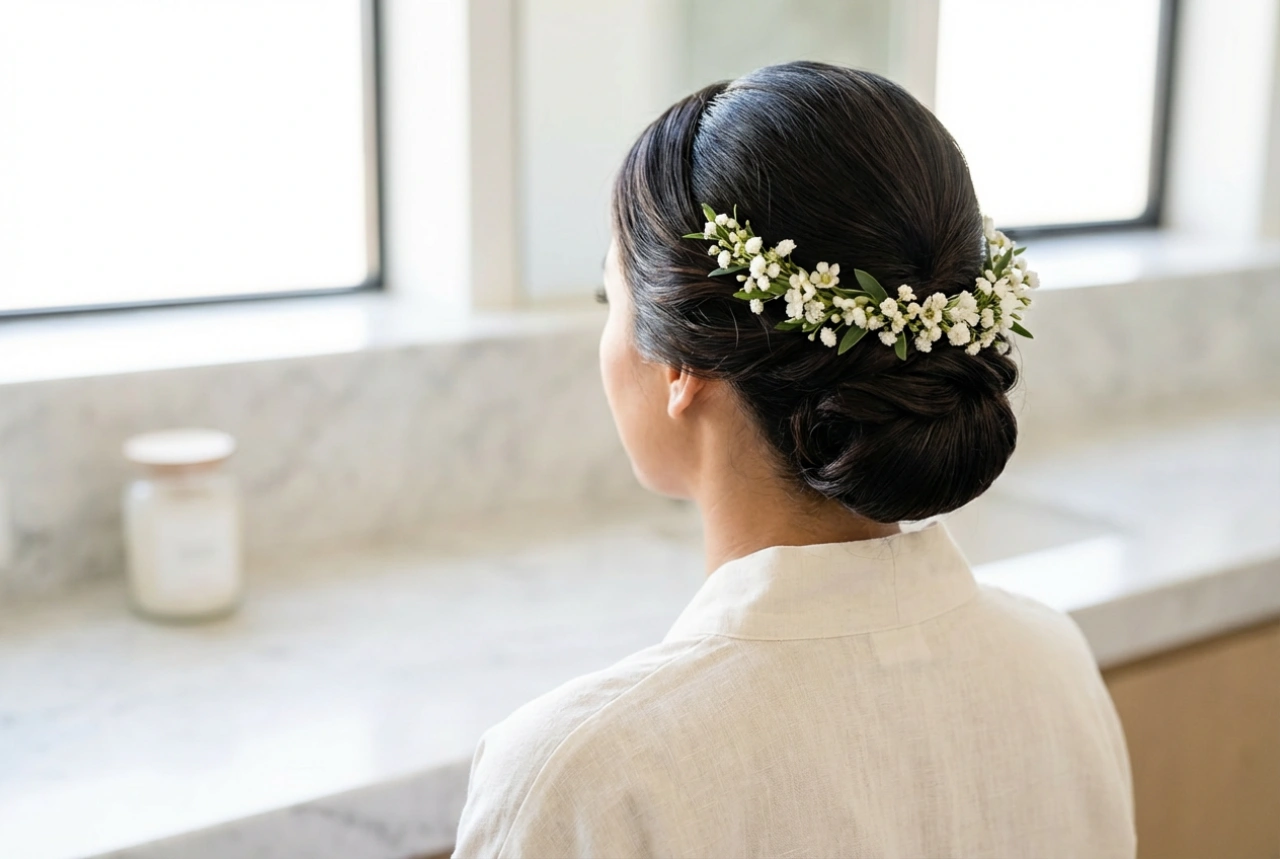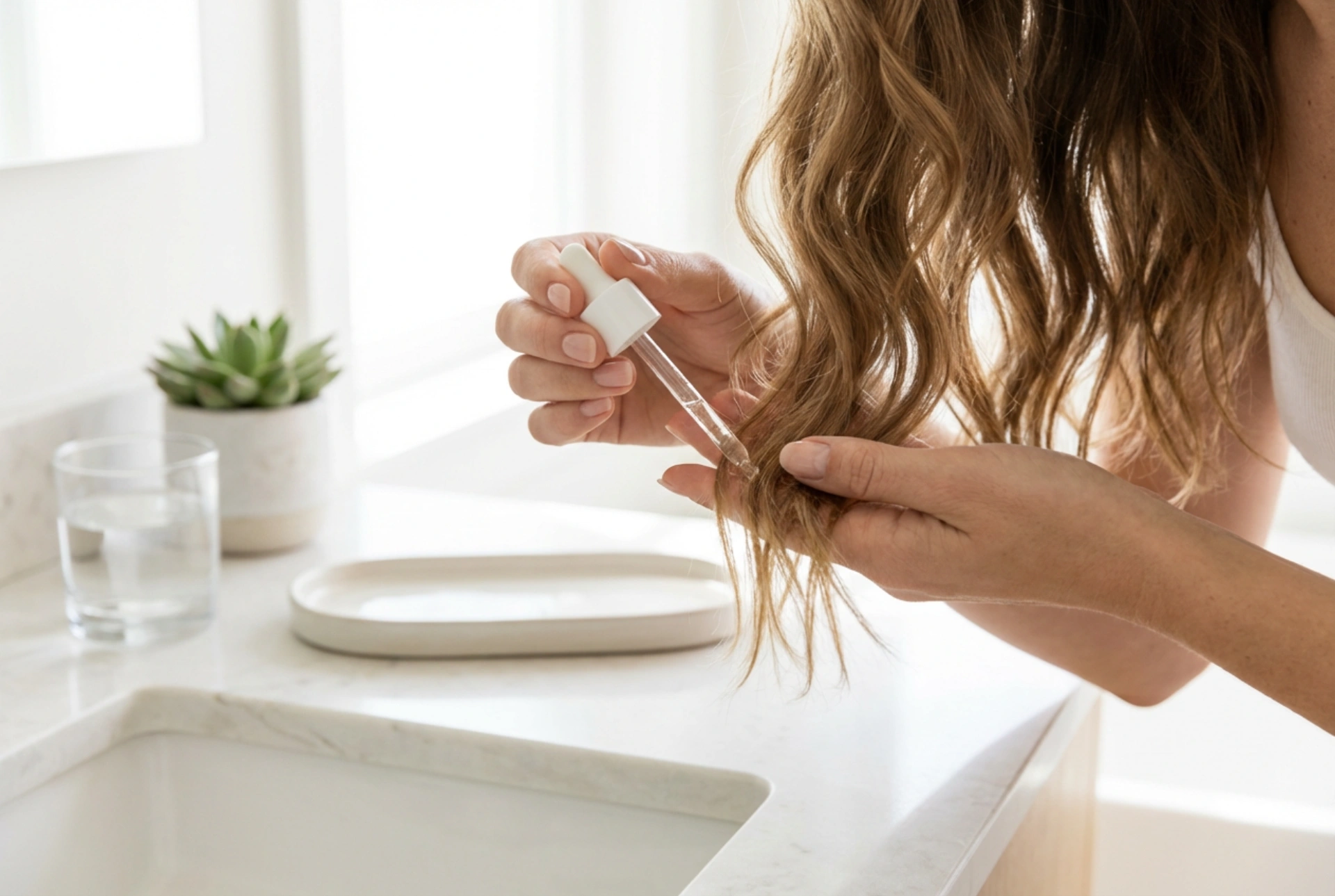


Achieving a sleek, salon-worthy hairstyle at home often involves the use of heated tools such as straighteners, curling wands, and hair dryers. While these devices help create elegant, polished looks, they also subject our delicate hair strands to high levels of thermal stress. Just like the gentle, mindful care depicted on a minimalist vanity setting where a clear serum is carefully worked through healthy brown locks, thermal protection should be an essential, non-negotiable step in every styling routine. Understanding how to properly select, apply, and dose your heat protectant can make a profound difference in maintaining the natural strength, shine, and vitality of your hair.
The Science Behind Heat Damage and Thermal Protection
To understand why thermal protection is necessary, it is helpful to look at the structure of the hair itself. Each hair strand consists of an outer protective layer called the cuticle, which is made up of overlapping microscopic scales, and an inner core known as the cortex, which contains moisture and structural proteins. When high temperatures from styling tools are applied directly to unprotected hair, several damaging processes occur simultaneously.
Firstly, extreme heat causes the natural moisture inside the cortex to heat up rapidly, turning into steam. This sudden expansion can cause the hair shaft to rupture, leading to structural weak spots. Secondly, high temperatures weaken the keratin proteins that give hair its strength and elasticity, making it brittle and highly susceptible to breakage. Finally, heat lifts and damages the delicate cuticle scales, leaving the hair feeling rough, porous, and prone to tangling.
A quality heat protectant acts as a physical shield between your hair and the hot styling tool. These products typically contain ingredients that distribute heat more evenly along the hair shaft, preventing localized hot spots that cause severe burns. Additionally, they form a protective, breathable barrier that seals in natural moisture, smooths down the cuticle scales, and reduces friction during styling. The result is hair that remains strong, smooth, and resilient, even after regular blow-drying or straightening.
Choosing the Right Formula for Your Hair Type
Not all heat protectants are created equal, and selecting the right formulation is key to achieving the best results without weighing down your hair. Different hair types have unique needs when it comes to moisture, weight, and application method.
- Lightweight Sprays: Ideal for fine, thin, or easily weighed-down hair. These water- or alcohol-based formulas deliver fine, even misting that protects without adding heaviness, ensuring your hair retains its natural volume and bounce.
- Creams and Lotions: Best suited for thick, coarse, curly, or extremely dry hair. These richer formulations provide intense hydration and help control frizz while shielding the hair from high temperatures. They are excellent for smoothing coarser textures during blow-drying.
- Serums and Oils: Perfect for normal to dry hair, or as a finishing touch for frizzy ends. When choosing a thermal serum, a clear, lightweight consistency works beautifully to add instant gloss and smoothness while protecting the hair from mechanical styling.
Step-by-Step Guide to Applying Heat Protection
Proper application is just as important as choosing the right product. Failing to distribute the formula evenly can leave certain sections of your hair completely unprotected, leading to localized damage. Follow these simple steps for maximum coverage and effectiveness:
1. Prepare Your Hair
Start with clean, damp hair. After washing, gently squeeze out excess water with a soft microfibre towel. Avoid rubbing the hair aggressively, as wet hair is in its most vulnerable and fragile state. Most thermal protectants are designed to be applied to damp hair, as this allows the product to distribute more easily and penetrate the hair shaft effectively.
2. Section the Hair
Dividing your hair into manageable sections is the secret to thorough application. Divide your hair into at least four sections: two in the front and two in the back. Secure each section with clips. This ensures that you can reach the inner layers of your hair, which are often missed when simply spraying or applying product to the outer canopy.
3. Apply with Care
If using a spray, hold the bottle about twenty to thirty centimetres away from your head to ensure a fine, even mist. Spray each section from the mid-lengths down to the ends, as these are the oldest and most vulnerable parts of the hair. If using a cream or serum, rub the product between your palms first to warm it up, then gently slide your hands down the hair strands, focusing on the ends.
4. Comb Through
Use a wide-tooth comb or a wet-detangling brush to gently comb through each section after applying the product. This crucial step ensures that every single strand is evenly coated from root to tip, eliminating any concentrated patches of product and leaving no areas unprotected.
How Much Product Should You Actually Use?
When it comes to beauty products, more is not always better. Using too much heat protectant can leave your hair looking greasy, limp, and heavy, while using too little will leave your strands vulnerable to thermal damage. Finding the perfect balance depends heavily on your hair length and density.
For lightweight sprays, five to eight spritzes are generally sufficient for medium-length hair. Ensure you spray evenly across all sections. For cream-based formulas, a pea-sized amount is perfect for fine or short hair, while a five-pence coin-sized amount is suitable for thicker, longer locks. If you are using a clear protective serum, start with just one or two drops, emulsify it thoroughly in your hands, and apply it to the ends, adding a tiny amount more only if absolutely necessary.
Best Practices for Safe Heat Styling
While heat protectants are incredibly effective, they are not a licence to use styling tools carelessly. To keep your hair in optimal condition, always observe safe styling habits. Never use straighteners or curling wands on wet or even slightly damp hair; this can cause the water inside the hair to boil instantly, causing irreparable damage. Ensure your hair is completely dry before introducing hot plates. Additionally, always use the lowest effective temperature setting on your tools. Fine or processed hair rarely needs more than 150 to 170 degrees Celsius, while thicker textures can be styled effectively at 180 to 190 degrees Celsius. Minimising the frequency of heat styling and letting your hair air-dry whenever possible will also go a long way in preserving its natural beauty.