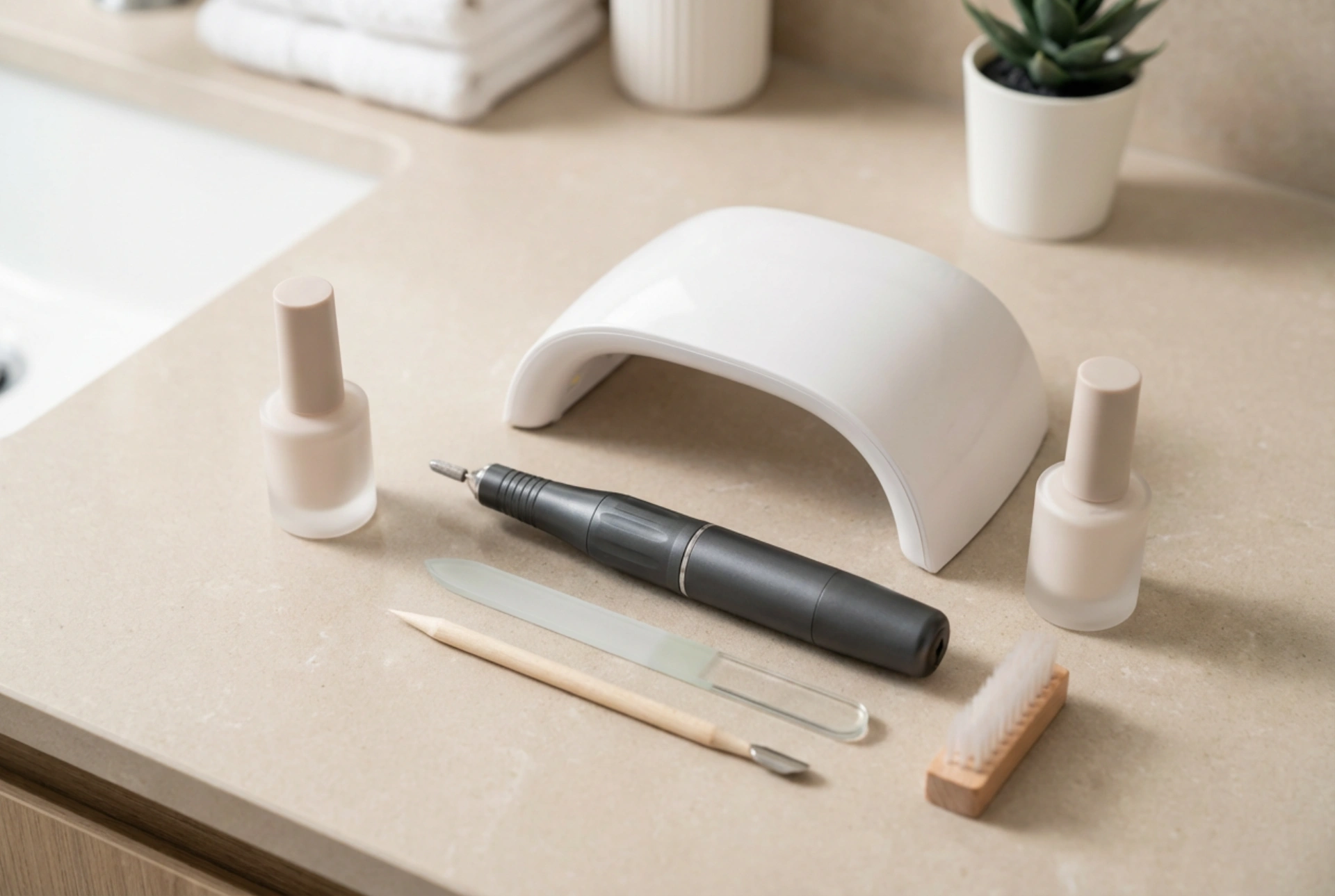


A curated flatlay of essential at-home nail care tools—featuring a modern UV/LED lamp, an electric file, and sleek polish bottles—highlights how simple it is to set up a professional-feeling manicure corner at home. While high-quality nail polishes and creative designs often get the most attention, the true secret to a long-lasting, neat manicure lies in the preparation and the tools you use. Investing in the right nail styling machines can significantly transform your routine, saving time and offering precise results that rival professional standards. However, with so many gadgets available on the market, it is important to understand which machines are truly beneficial and how to use them safely.
The Core of Curing: Choosing the Right UV/LED Lamp
For anyone transitioning to semi-permanent or gel manicures, a curing lamp is the absolute foundation of the setup. These devices emit specific wavelengths of light that trigger a chemical reaction in the gel polish, transforming it from a liquid layer into a durable, glossy coating. Modern lamps generally utilise dual light source technology, combining both UV and LED diodes. This is highly advantageous because it allows you to cure almost any type of gel or hybrid product currently available, eliminating compatibility issues.
When selecting a lamp for home use, pay close attention to power and design. A device with a power rating of at least 48 watts is usually recommended, as it ensures quick and even curing, reducing the risk of under-cured product which can lead to skin irritation or premature lifting. An open-bottom design or a removable magnetic base is also incredibly practical, making it easy to clean the interior and comfortable to use for pedicures. Sensor-activated lights that turn on automatically when you insert your hand add a layer of convenience to your routine.
The Electric Nail File: Efficiency and Precision in Prep
An electric nail file, often referred to as a nail drill, is a game-changer for removing old hybrid or gel overlays and precisely prepping the nail plate. Manual filing can be time-consuming and physically tiring, whereas an electric file handles the bulk of the work in a fraction of the time. However, because these machines operate at high speeds, they require a gentle hand and a basic understanding of how they work to prevent damage to the natural nail plate.
Key features to look for in a home-use electric file include adjustable speed controls—ideally up to 30,000 RPM—and a twist-lock handpiece that allows you to change attachments easily. It is also beneficial to choose a model with low vibration to maintain steady control. The magic of the electric file lies in its interchangeable bits. Ceramic bits are excellent for safely removing gel or acrylic layers without generating excess heat. Diamond bits, with their fine grit, are perfect for gently lifting and clearing away dry cuticles from the nail plate, creating a clean, professional canvas for your polish.
Essential Manual Tools: The Unsung Heroes of Nail Care
While machines offer speed and efficiency, they cannot completely replace manual tools. A well-rounded home manicure station relies heavily on a few key manual instruments to achieve a refined finish. Classic nail files with a grit of 180 or 240 are essential for shaping the free edge of natural nails safely. A soft buffer block is also crucial for gently removing the natural shine from the nail plate, ensuring optimal adhesion for the base coat without thinning the nail itself.
Cuticle care also requires a careful balance of tools. A high-quality metal cuticle pusher or biodegradable wooden orange sticks are invaluable for gently pushing back the cuticle fold. A pair of sharp, ergonomic cuticle nippers can be used to trim away loose, dead skin, though this step should always be approached with caution to avoid cutting living tissue. Finally, a soft dust brush is essential to sweep away fine particles created during filing, ensuring no debris gets trapped under your polish coats.
How to Set Up a Safe and Clean Home Nail Space
The environment where you perform your nail styling plays a significant role in both the quality of your manicure and your overall safety. As seen in minimalist flatlays, a clean, clutter-free, and well-lit surface is ideal. Working near a source of natural light or under a bright desk lamp ensures you can see fine details clearly, reducing the risk of filing too deep or applying polish unevenly. It is also wise to work in a well-ventilated area to minimise the inhalation of dust and mild cosmetic aromas.
Hygiene should always be a top priority. Unlike in a commercial salon, you may only be styling your own nails, but sanitising your tools is still vital. Metal implements like nippers, pushers, and drill bits should be washed and treated with a cosmetic disinfectant after every single use. Keep your machines dust-free by wiping them down with a soft microfiber cloth. Proper storage, such as keeping your lamp and electric file in a dedicated organiser or drawer, protects them from accidental drops and maintains their performance over time.