

Removing fine facial hair, often called 'peach fuzz', has become a popular step in many beauty routines for achieving exceptionally smooth skin and a flawless makeup application. Using a facial razor, a practice sometimes referred to as at-home dermaplaning, can provide gentle exfoliation and instantly brighter-looking skin. The key to success lies in choosing the right tool and mastering the correct technique to avoid any redness or irritation, ensuring a serene and effective experience.
Understanding Women's Facial Razors
It's crucial to distinguish facial razors from the multi-blade razors designed for the body. Women's facial razors are specifically engineered for the delicate skin of the face. They typically feature a single, fine blade, often with safety guards, set in a long, easy-to-handle wand. This design allows for precision and control when removing vellus hair (peach fuzz) and the outermost layer of dead skin cells. Unlike body razors, they are not intended for coarse hair and should be used with a much lighter touch.
How to Choose the Right Facial Razor
When selecting a facial razor, consider a few key factors. Look for blades made from high-quality stainless steel, as they are durable and less likely to cause irritation. The handle should be ergonomic, providing a comfortable and secure grip to prevent slipping. Many razors come with a protective cap, which is essential for keeping the blade clean and safe between uses. You can choose between fully disposable razors or reusable models with replaceable heads. For beginners, a razor with built-in safety guards can offer extra peace of mind by minimising the risk of nicks.
A Step-by-Step Guide to Irritation-Free Facial Shaving
Proper preparation and technique are paramount for a smooth, safe outcome. Follow these steps for the best results.
Preparing Your Skin
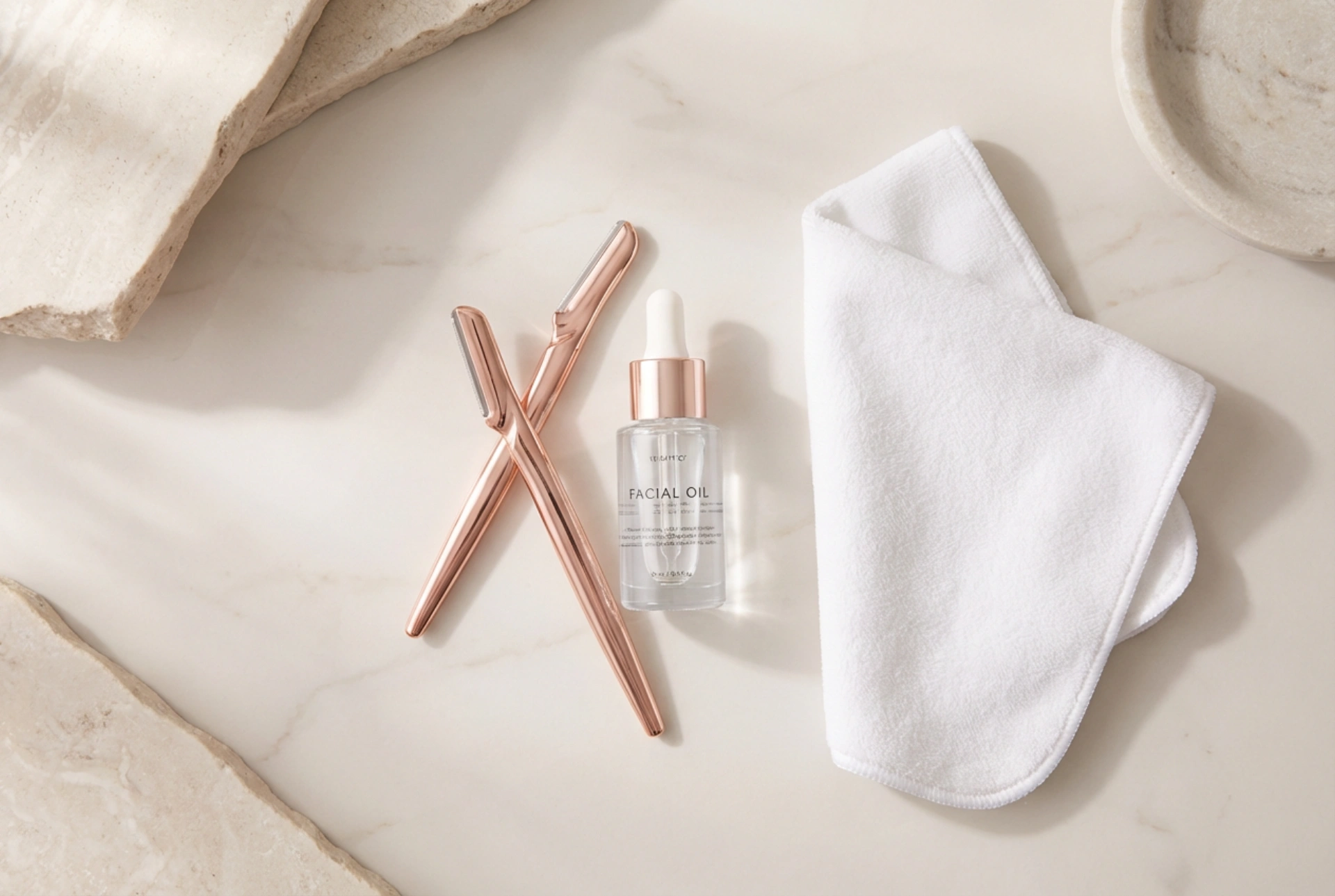
Always begin with a clean canvas. Wash your face with a gentle cleanser to remove any makeup, dirt, and excess oil, then pat it completely dry with a soft towel. While some prefer to shave on completely dry skin, applying a very thin layer of a non-comedogenic facial oil or a lightweight serum can provide a bit of slip and help the razor glide more smoothly, reducing friction. Let the product absorb for a minute before you begin.
The Correct Shaving Technique
The way you hold and move the razor is critical. Hold the skin taut with your free hand to create a flat, even surface. Position the razor at an approximate 45-degree angle to the skin. Using very light pressure, make short, gentle, downward strokes in the direction of hair growth. Avoid going over the same area multiple times within one session to prevent over-exfoliation and potential irritation. Be especially careful around bony areas and delicate contours like the nose, upper lip, and eyebrows.
Aftercare: The Key to Calm, Glowing Skin
Once you've finished, your skin will be freshly exfoliated and more receptive to skincare products, but also more sensitive. Rinse your face with cool water or gently wipe away any loose hairs and skin cells with a soft, damp cloth. Follow up immediately with a hydrating and soothing serum or moisturiser containing ingredients like hyaluronic acid, glycerin, or ceramides. It's best to avoid using potent active ingredients, such as retinoids or exfoliating acids (AHA/BHA), for at least 24 hours after shaving. Finally, always clean your razor thoroughly with rubbing alcohol after each use and store it in a dry place with its protective cap on to maintain hygiene and blade integrity.