

Using an electric nail file, or e-file, can elevate the look of your manicure, providing a level of precision and cleanliness that is difficult to achieve with manual tools. It is particularly effective for detailed cuticle work, resulting in a flawless nail frame. However, mastering this tool requires knowledge and a gentle hand to ensure the health and safety of your nails and surrounding skin. This guide will walk you through the essential aspects of using an e-file for cuticles, from choosing the right components to adopting the correct technique for a beautiful, damage-free finish.
Choosing the Right Bits for Cuticle Work
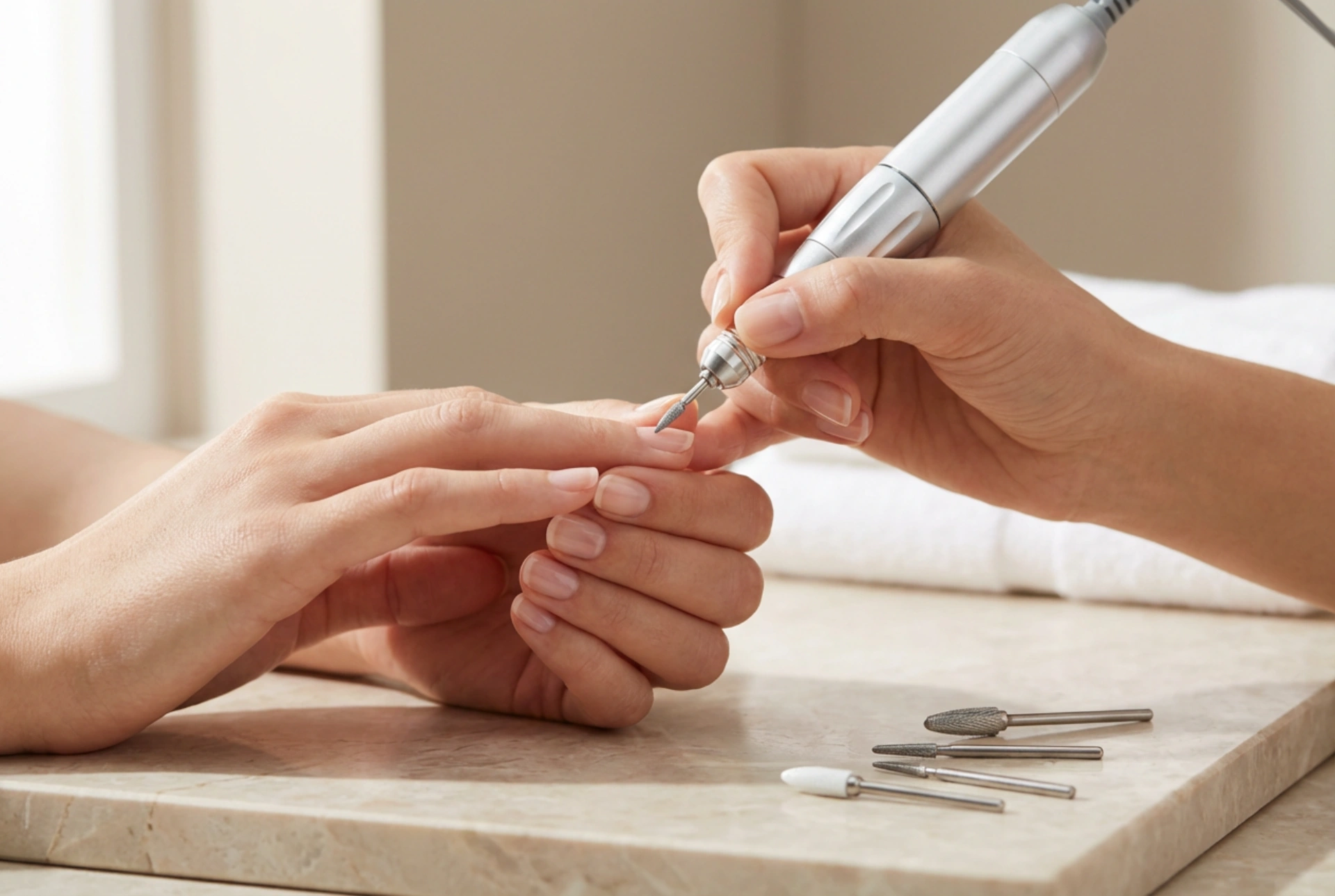
The attachments used with an e-file are called 'bits' or 'burs'. For the delicate cuticle area, it is crucial to use bits made from fine materials, such as diamond-dusted or carbide bits with a fine grit. Using a bit that is too coarse can easily cause abrasion and damage to the nail plate and skin. Each shape has a specific purpose in the cuticle refinement process.
Common Cuticle Bits and Their Functions
- Flame Bit: This is arguably the most popular bit for cuticle work. Its tapered, pointed shape is perfect for gently lifting the eponychium (the living skin at the base of the nail) and cleaning the lateral folds and the area under the proximal nail fold. It allows for precise cleaning of non-living tissue from the nail plate.
- Ball Bit: Available in various sizes, a small ball bit is used after the cuticle has been lifted. Its purpose is to gently buff away the lifted, dry cuticle tissue. The rounded shape helps to smooth the skin around the nail without sharp edges, preventing nicks.
- Needle or Cone Bit: These very fine, pointed bits are used for highly detailed work, such as cleaning deep into the sidewalls or precisely defining the cuticle line. They require an extremely light touch and are often used by more experienced individuals.
- Cylinder or Barrel Bit: A small, fine-grit cylinder bit can be used to smooth the skin of the lateral folds, but it should never touch the natural nail plate, as its flat surface can easily cause damage or create 'rings of fire'.
Always start with the finest grit available and only move to a slightly coarser one if absolutely necessary. For beginners, a fine-grit diamond flame bit and a small ball bit are an excellent starting combination.
Understanding Speed (RPM) and Direction
Controlling the speed and rotation direction of your e-file is fundamental to safe cuticle work. Speed is measured in RPM (Revolutions Per Minute). For the delicate cuticle area, a low speed is non-negotiable.
Recommended Speed and Direction Settings
- Speed (RPM): For cuticle work, a speed between 5,000 and 10,000 RPM is generally recommended. Starting at the lower end of this range is wisest until you feel comfortable and confident. High speeds generate heat, increase the risk of injury, and can quickly remove too much tissue or nail plate.
- Direction (Forward/Reverse): The direction of the bit's rotation is crucial for control. You should always work against the direction of rotation. This means the bit 'bites' into the skin or nail surface gently rather than skipping over it. A general rule is to use the 'Forward' (FWD) setting when working on the right side of the nail (moving right to left) and the 'Reverse' (REV) setting when working on the left side (moving left to right). This assumes you are right-handed. The principle remains the same for left-handed users but the directions may be switched. Always stop the e-file completely before changing the direction of rotation.
A Step-by-Step Guide to Safe Cuticle Refinement
Patience and a methodical approach are key. Always work on clean, completely dry hands, as e-filing on damp skin can cause tearing and is less effective. This process is known as a dry or hardware manicure.
Step 1: Preparation
Begin by gently pushing back the cuticles with a wooden stick or a metal pusher. This initial step helps to lift the non-living tissue (the true cuticle) that has grown out onto the nail plate, making it visible and accessible for the e-file.
Step 2: Lifting and Cleaning
Select a fine flame or needle bit. Set your e-file to a low speed (around 5,000-7,000 RPM). Holding the handpiece like a pencil for maximum control, rest your hand on a stable surface. Gently place the side of the bit onto the nail plate near the cuticle line and sweep it from one side towards the centre. Keep the bit as parallel to the nail as possible to avoid digging in. Lift the bit, switch the e-file's direction, and repeat the process on the other side of the nail. The goal is to lift the dry cuticle and clean any residue from the nail plate without applying pressure.
Step 3: Removing the Lifted Cuticle
Switch to a small ball bit. Keeping the speed low, use the side of the bit to gently buff the white, lifted skin. Use short, light, brushing motions. Do not hold the bit in one place for more than a second to prevent heat build-up. The dry skin should turn into a fine dust, revealing a clean and neat cuticle line. Be careful not to touch the living eponychium.
Step 4: Finishing
Once you are satisfied, use a soft brush to dust away all the particles. The final and most important step is to rehydrate the area. Apply a nourishing cuticle oil to the skin around the nail and massage it in thoroughly. This will soothe the skin and keep it healthy and flexible.
Common Mistakes to Avoid
To ensure your nails remain healthy, be mindful of these common errors:
- Using excessive speed or pressure: This is the number one cause of damage, leading to pain, heat, and thinning of the nail plate. Let the bit do the work.
- Using the wrong bit: Never use coarse bits meant for product removal on the natural nail or cuticle area.
- Holding the bit at an incorrect angle: Holding the bit perpendicular to the nail or using the tip to dig can create divots and weak spots. Always keep it as flat as possible.
- Over-working the area: Know when to stop. The goal is to remove only the non-living, translucent tissue on the nail plate, not the living skin that protects the nail matrix.
- Not practising: Before working on your own nails, practise on a silicone practice hand or a nail tip to get a feel for the pressure, angle, and speed required.
By following these guidelines, you can safely incorporate an e-file into your manicure routine for a truly professional and polished result. Patience and practice are the keys to mastering the technique and achieving beautifully maintained cuticles.