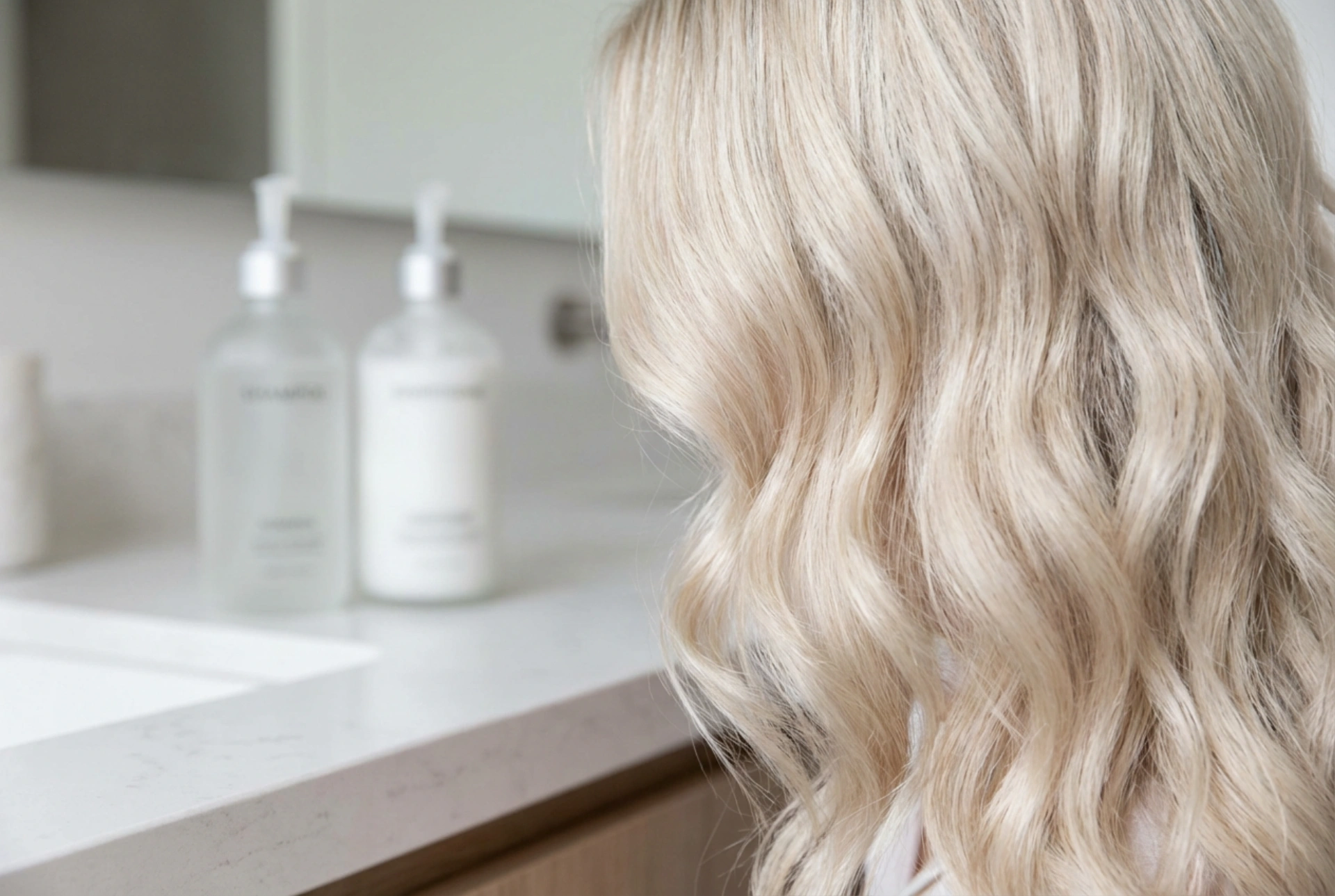


Bleached hair can be incredibly beautiful, offering a luminous and striking look. However, the chemical process required to achieve that lightened shade leaves the hair in a vulnerable state. The hair's protective outer layer, the cuticle, is lifted, making strands more porous, prone to moisture loss, and susceptible to damage. Choosing the right professional-grade shampoo is the foundational step in restoring its health, protecting its integrity, and sealing the cuticle for a smooth, reflective finish.
Understanding the Needs of Bleached Hair
The bleaching process fundamentally alters the structure of your hair. It works by opening up the hair cuticle to penetrate the cortex and dissolve the natural melanin pigments. This action, while effective for lightening, compromises the hair's structural integrity. Consequently, bleached hair often exhibits several distinct characteristics:
- Increased Porosity: With the cuticles lifted, the hair acts like a sponge, rapidly absorbing moisture but losing it just as quickly. This leads to a cycle of dryness and brittleness.
- Weakened Structure: The process breaks down some of the protein bonds (disulphide bonds) that give hair its strength and elasticity, making it more prone to snapping and split ends.
- Rough Texture: Raised cuticles create a rough, uneven surface, which prevents light from reflecting evenly, leading to a dull appearance. It also causes strands to snag and tangle easily.
- pH Imbalance: Bleaching agents are highly alkaline, which significantly raises the hair's natural acidic pH. This alkaline state keeps the cuticles open and in a state of stress.
A specialised shampoo must address all these issues by providing gentle cleansing, intensive nourishment, and targeted repair to counteract the effects of the chemical service.
Key Ingredients for Protection and Repair
When selecting a shampoo for bleached hair, scrutinising the ingredient list is crucial. Look for formulas packed with restorative and hydrating components that will replenish what the bleaching process has stripped away.
Proteins and Amino Acids
Since hair is primarily made of protein (keratin), replenishing lost proteins is essential for rebuilding its strength. Look for hydrolysed proteins like keratin, silk, wheat, or soy protein. The term 'hydrolysed' means the protein molecules have been broken down into smaller units that can more easily penetrate the hair shaft to patch up gaps and reinforce its internal structure. Amino acids are the building blocks of protein and also provide excellent strengthening benefits.
Moisturising Agents (Humectants)
To combat the chronic dryness of bleached hair, you need powerful humectants. These ingredients attract moisture from the environment and bind it to the hair shaft. Key examples include panthenol (pro-vitamin B5), glycerin, and hyaluronic acid. They help to infuse the hair with much-needed hydration, improving its flexibility and reducing brittleness.
Sealing Emollients and Oils
Once the hair is hydrated, that moisture needs to be locked in. This is the job of emollients, which form a protective, smoothing layer over the hair shaft. This coating flattens the cuticle, reduces moisture loss, and imparts a soft, silky feel. Look for natural oils and butters like argan oil, jojoba oil, coconut oil, or shea butter. Certain types of silicones can also be effective at sealing the cuticle and providing slip and shine, although some people prefer to avoid them.
The Importance of an Acidic pH for Cuticle Sealing
Perhaps one of the most overlooked yet critical aspects of a post-bleaching shampoo is its pH level. As mentioned, the bleaching process is alkaline. To counteract this and return the hair to its happy, healthy state, you need products with an acidic pH (typically between 4.0 and 5.5). Using a pH-balanced or acidic shampoo encourages the raised cuticles to contract, lie flat, and close. A sealed cuticle is the secret to shiny, smooth, and manageable hair. It not only looks healthier but is also better protected from further damage, colour fading, and frizz.
What to Avoid in a Shampoo for Lightened Hair
Just as important as what is in your shampoo is what is not. Certain common ingredients can be too harsh for fragile, bleached hair, stripping it of its natural oils and causing further dryness and damage.
- Harsh Sulphates: Strong cleansing agents like Sodium Lauryl Sulfate (SLS) and Sodium Laureth Sulfate (SLES) can create a rich lather but may be too stripping for compromised hair. Opt for shampoos labelled 'sulphate-free' or those that use milder surfactants derived from coconut or corn.
- High Concentrations of Salt: Sodium chloride (table salt) is often used as a thickener in shampoos, but in high amounts, it can be dehydrating for both the hair and scalp.
- Drying Alcohols: While some alcohols (like cetyl or stearyl alcohol) are fatty and beneficial, short-chain alcohols like alcohol denat, SD alcohol, or isopropyl alcohol can be very drying if present in high concentrations.
By carefully selecting a shampoo that is both gentle and packed with restorative ingredients, you provide the essential first step in caring for your beautiful bleached hair. It's about cleansing without stripping, hydrating deeply, and, most importantly, sealing that cuticle to lock in health and shine.