

Combing through damp hair can often feel like a battle against knots and tangles, potentially leading to frustration and breakage. The key to effortless detangling lies not just in the tools you use, but in the products that prepare your hair for combing. A good detangling conditioner is fundamental to a gentle grooming routine, transforming tangled strands into smooth, manageable locks. Understanding how to use it correctly can make all the difference in maintaining the health and integrity of your hair.
Why Does Hair Tangle?
Hair tangles, or knots, form when individual strands wrap around each other and become intertwined. Several factors contribute to this common issue, and understanding them is the first step towards prevention.
Hair Structure and Condition
The outermost layer of the hair shaft is called the cuticle, which is made of overlapping scales. When hair is healthy and hydrated, these scales lie flat, allowing strands to glide past each other smoothly. However, when hair is dry, damaged, or has been chemically treated (such as with colour or perms), the cuticles can become raised and rough. These raised edges are more likely to snag on neighbouring strands, leading to tangles.
Friction and External Factors
Everyday activities create friction that encourages knotting. This can include rubbing against a pillow at night, exposure to wind, or even the way you wash your hair. Fine hair is often more prone to tangling due to its delicate structure, while very curly or long hair can also easily become intertwined simply due to its length and shape.
The Role of a Detangling Conditioner
A detangling conditioner is specifically formulated to address the primary causes of knots. Its main purpose is to smooth the hair's surface and provide 'slip', which is a lubricating effect that helps strands separate without friction or resistance.
How It Works
These conditioners work by depositing a thin film of conditioning agents onto the hair shaft. Ingredients such as fatty alcohols, lightweight oils, and certain polymers adhere to the hair, effectively filling in gaps on the cuticle and sealing it down. This process achieves two main goals:
- Reduces Friction: By creating a smoother surface, the conditioner minimises the ability of hair strands to catch on one another. This is the 'slip' you feel when you run your fingers through conditioned hair.
- Reduces Static: Dry hair is prone to static electricity, which can cause strands to repel each other and create a flyaway, tangled mess. Conditioners help to neutralise this static charge, making hair calmer and easier to manage.
How to Properly Use a Detangling Conditioner
Applying conditioner might seem straightforward, but a specific technique can dramatically improve its detangling effectiveness and prevent damage during the process.
Step 1: Gentle Cleansing
Start with a gentle shampoo. Instead of vigorously scrubbing and piling your hair on top of your head, which can create tangles, focus on massaging the shampoo into your scalp with your fingertips. Let the suds run down the lengths of your hair as you rinse.
Step 2: Apply the Conditioner Strategically
After rinsing out the shampoo, gently squeeze excess water from your hair. This prevents the conditioner from becoming too diluted. Apply a generous amount of detangling conditioner, focusing primarily on the mid-lengths and ends where hair is oldest and most prone to dryness and knots. Avoid applying too much directly to the roots, as this can weigh hair down and make the scalp feel greasy.
Step 3: The Detangling Process
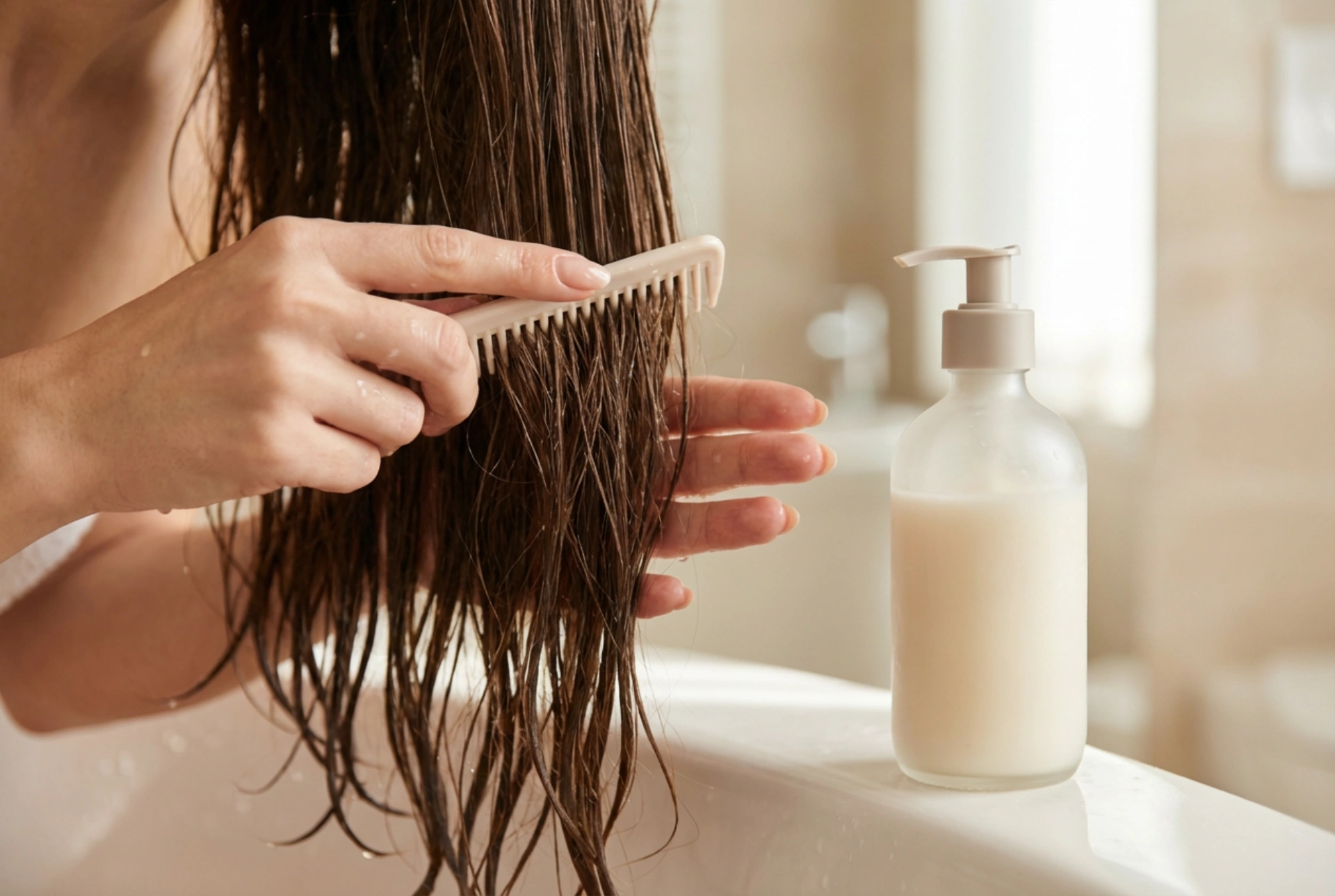
This is the most crucial step. While the conditioner is still in your hair, use your fingers or a wide-tooth comb to begin detangling. Always start from the tips of your hair and work your way up towards the roots in small sections. This method prevents you from pulling a knot tighter or creating a larger tangle. If you encounter a stubborn knot, apply a little more conditioner directly to it and gently work it apart with your fingers.
Step 4: Rinsing and Aftercare
Once your hair is fully detangled, rinse it thoroughly with lukewarm or cool water. A cool rinse can help to further seal the hair cuticle. After stepping out of the shower, avoid rubbing your hair with a rough towel. Instead, gently pat and squeeze it with a soft microfibre towel or an old t-shirt to absorb moisture without causing friction.
Additional Tips for Tangle-Free Hair
Beyond your washing routine, a few simple habits can help keep your hair smooth and manageable.
- Protect Your Hair While Sleeping: Sleep on a silk or satin pillowcase to reduce friction overnight. Alternatively, loosely tie your hair in a braid or a high bun.
- Choose the Right Tools: A wide-tooth comb is the best tool for detangling wet hair, which is at its most fragile. For dry hair, a brush designed for detangling can be effective.
- Regular Trims: Get your hair trimmed every 6-8 weeks to remove split ends. Split ends can travel up the hair shaft and contribute to tangling and breakage.
- Protect from the Elements: On windy days, secure your hair in a braid, bun, or under a hat to prevent it from whipping around and forming knots.