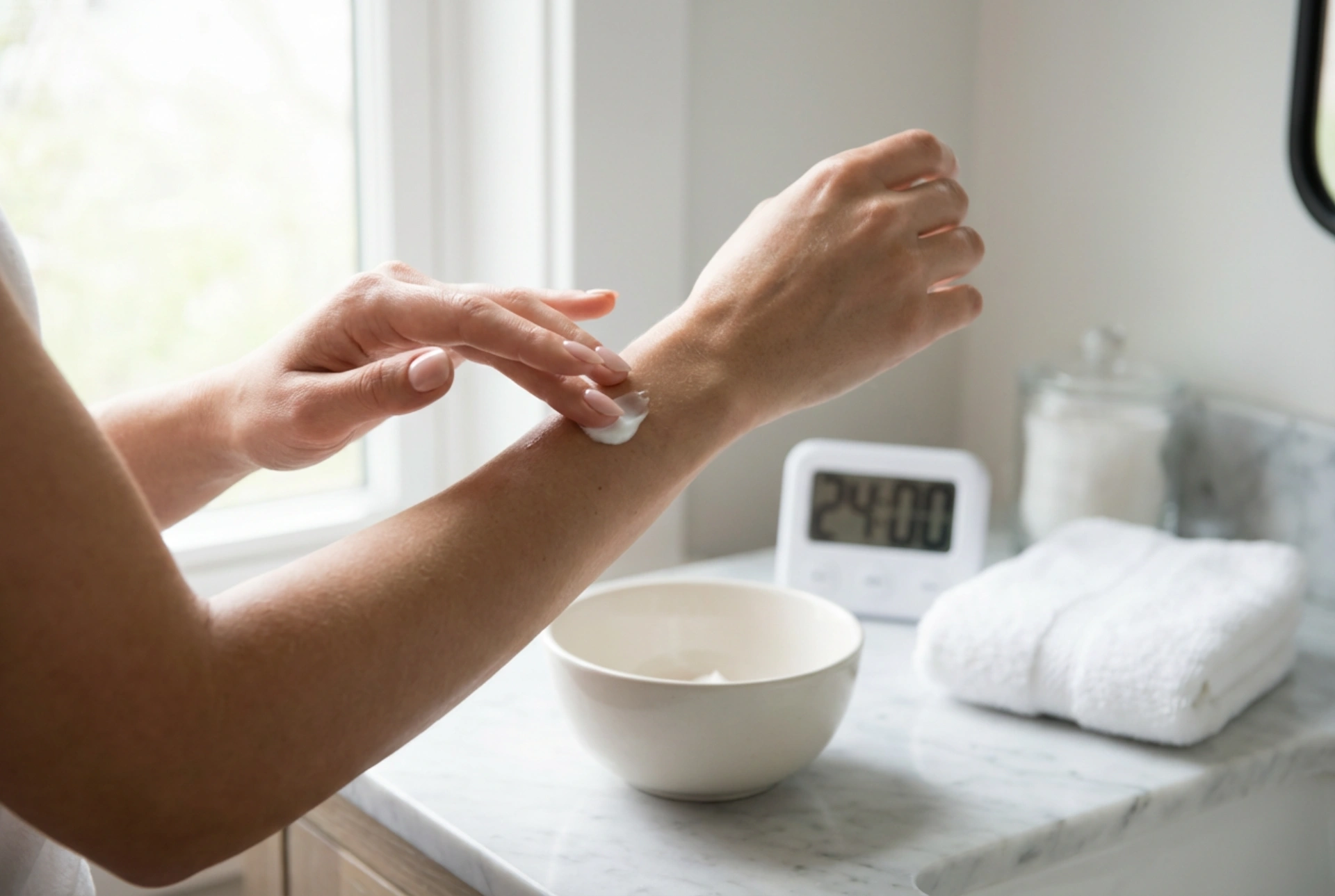


Depilatory creams have long been a favoured choice for those seeking a quick, painless, and highly convenient method of hair removal at home. Unlike shaving, which cuts the hair at the skin's surface, these creams work by gently dissolving the keratin structure of the hair just below the surface, leading to smoother results that last significantly longer. However, because these formulations rely on active cosmetic ingredients to break down hair, integrating them safely into your personal beauty ritual requires a mindful and methodical approach. A perfect example of this care is the initial patch test, where a small amount of generic white cream is applied to a sensitive area like the inner forearm, allowing you to monitor how your skin responds before proceeding with a full application.
The Importance of a Sensitivity Patch Test
Before applying any hair removal cream to larger areas of the body, conducting a sensitivity or patch test is an indispensable safety measure. Every individual's skin chemistry is unique, and even products formulated for sensitive skin types can occasionally trigger unexpected reactions. A patch test acts as a precautionary trial, helping you identify any potential sensitivity to the active ingredients without risking widespread discomfort.
To perform the test correctly, select a small, discreet area of skin, such as the inner forearm or the bend of the elbow. Ensure the skin is completely clean, dry, and free from any lotions, oils, or deodorants. Apply a thin layer of the cream to a tiny patch of hair. Leave it on for the minimum recommended duration indicated in the product instructions, then gently wipe it away with a damp cloth or a soft cotton pad. Rinse the area thoroughly with lukewarm water and pat it dry with a clean towel.
The key to a successful sensitivity test is patience. You must observe the tested patch of skin for at least 24 hours. If any redness, itching, burning sensation, or swelling occurs during this timeframe, it is a clear sign that the product is not suited to your skin, and you should refrain from using it. If your skin remains perfectly calm and clear after 24 hours, you can proceed with confidence.
Mastering Application Time and Precision
One of the most common mistakes made during home depilation is mismanaging the contact time. The active compounds within depilatory creams require a very specific window of time to effectively weaken the hair shaft without disrupting the delicate moisture barrier of the skin. Exceeding the recommended application limit does not lead to cleaner hair removal; instead, it significantly increases the likelihood of localised irritation and dryness.
When you are ready to begin, it is highly recommended to use a simple timer or a mobile alarm to track the minutes precisely. Start counting the duration from the moment the cream is fully applied to the target area. Most standard depilatory products require between three to ten minutes to work effectively, depending on the thickness of the hair and the specific formula. Never guess or estimate the time. If the instructions state a maximum limit of eight minutes, ensure the cream is completely removed before that threshold is reached, even if some stubborn hairs remain. Safety and skin integrity should always take precedence over complete hair removal in a single session.
The Correct Technique for Cream Removal and Rinsing
Once the designated time has elapsed, the removal process must be handled with utmost gentleness to avoid mechanical irritation. Many home depilation kits include a small plastic spatula designed to slide along the skin, gently lifting away the dissolved hair and cream. If a spatula is not provided, or if you find it too harsh for your skin, a damp, soft washcloth works beautifully as an alternative.
Always sweep the spatula or cloth in a gentle upward motion, following the natural direction of hair growth where possible, or gliding smoothly against it without applying heavy pressure. Avoid rubbing the skin vigorously, as the outer layer of the epidermis is temporarily softened and highly sensitive during this stage.
Immediately after lifting the bulk of the cream, rinse the area thoroughly with abundant cool or lukewarm water. Do not use hot water, as heat can exacerbate any underlying sensitivity. Ensure every trace of the cosmetic cream is completely washed away; any residue left behind may continue to interact with the skin, leading to post-depilation discomfort. Avoid using soaps, shower gels, or exfoliating scrubs immediately after rinsing, as these can strip away remaining natural oils and irritate the freshly depilated skin.
Soothing Post-Depilation Care for Radiant Skin
The final step in a successful hair removal routine is restoring balance and hydration to the skin. Gently pat the treated area dry with a fresh, clean towel—avoiding any rough rubbing motions. At this stage, your skin will greatly benefit from a soothing, fragrance-free moisturiser or a pure aloe vera gel, which helps to calm the skin barrier and replenish lost moisture.
For the first 24 hours following hair removal, it is wise to treat the skin with extra care. Avoid applying alcohol-based body lotions, heavily scented perfumes, self-tanning products, or chemical deodorants to the treated areas. Additionally, try to avoid tight-fitting synthetic clothing that might cause friction, and skip hot baths, saunas, and direct sun exposure. By giving your skin a brief period to rest and recover, you ensure a beautifully smooth, comfortable, and radiant result.