

Achieving smooth skin in sensitive areas requires a gentle approach and carefully selected products. The delicate nature of intimate skin means that traditional hair removal methods can sometimes lead to irritation, redness, or discomfort. A dedicated hair removal cream designed for sensitive areas offers a painless and efficient alternative, allowing for a comfortable personal care routine at home. Understanding how to choose and apply these products safely is the key to maintaining soft, healthy-looking skin.
Understanding how intimate hair removal creams work
Hair removal creams, also known as depilatory creams, work by breaking down the keratin structure of the hair just below the skin's surface. This allows the hair to be easily wiped away. Unlike shaving, which cuts the hair at an angle and can leave sharp edges, depilatory creams dissolve the hair, resulting in a softer regrowth and reducing the likelihood of developing uncomfortable stubble.
For intimate areas, the formulation of these creams is specifically adjusted. They contain milder active ingredients and are often enriched with soothing agents to protect the highly sensitive skin barrier. When used correctly, they offer a smooth finish that lasts longer than shaving, without the risk of cuts or nicks.
How to select the right product for sensitive areas
When browsing for a suitable product, it is crucial to look for formulations specifically labeled for sensitive skin or intimate use. Standard depilatory creams designed for legs or body hair are often too strong and can cause unwanted reactions on more delicate areas. Here are key factors to consider when choosing a cream:
- Gentle Formulations: Opt for products that contain nourishing ingredients such as aloe vera, chamomile, or natural oils, which help to soothe the skin during the process.
- Fragrance-Free Options: Added fragrances are a common source of irritation. Choosing a fragrance-free or hypoallergenic cream minimises the risk of skin sensitivity.
- Texture and Consistency: A thicker cream is often easier to apply precisely, ensuring it stays only where intended and does not run onto highly sensitive mucosal areas.
Step-by-step application guide for safe results
Prioritising safety and correct application technique ensures a comfortable experience and beautiful results. Before starting, always read the manufacturer's instructions thoroughly, as application times can vary between different formulations.
1. The essential patch test
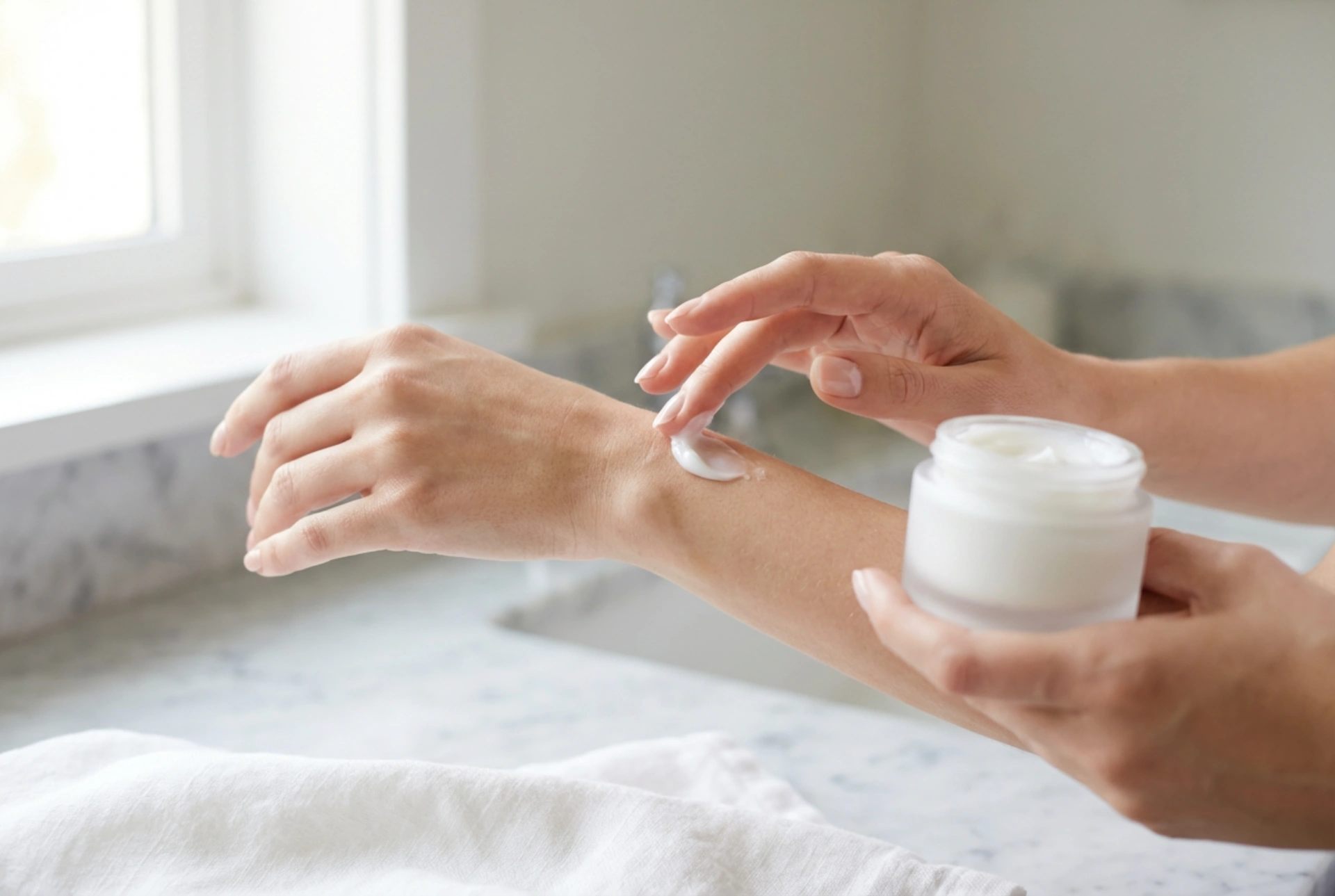
Even if a product is labeled as gentle, conducting a patch test is an absolute must. Apply a small amount of the cream to a small, less sensitive part of the area you wish to treat. Leave it on for the recommended time, rinse it off completely, and wait 24 hours. If no redness, itching, or irritation occurs, the product is safe to use.
2. Preparing the skin
Ensure the skin is clean and completely dry before application. Avoid taking a hot bath right before depilation, as this can make the skin more sensitive. Do not apply the cream to broken, irritated, or sunburned skin.
3. Applying the cream
Using your hand or the spatula provided, apply an even, thick layer of cream over the hair you wish to remove. Ensure the hair is fully covered. It is vital to apply the product only to the external areas and avoid any contact with internal, mucosal regions.
4. Timing and removal
Leave the cream on for the exact time specified in the instructions. Never exceed the maximum recommended time, even if some hair remains. Use a soft damp cloth or the provided spatula to gently test a small area. If the hair comes away easily, gently remove the rest of the cream. Rinse the area thoroughly with lukewarm water, ensuring no product residue is left behind.
Post-depilation care and maintenance
After rinsing, gently pat the skin dry with a clean, soft towel without rubbing. To keep the skin calm and hydrated, apply a mild, alcohol-free moisturising lotion or a soothing gel. Avoid wearing tight synthetic underwear immediately after depilation; instead, opt for loose, breathable cotton garments to prevent friction and allow the skin to recover in comfort.