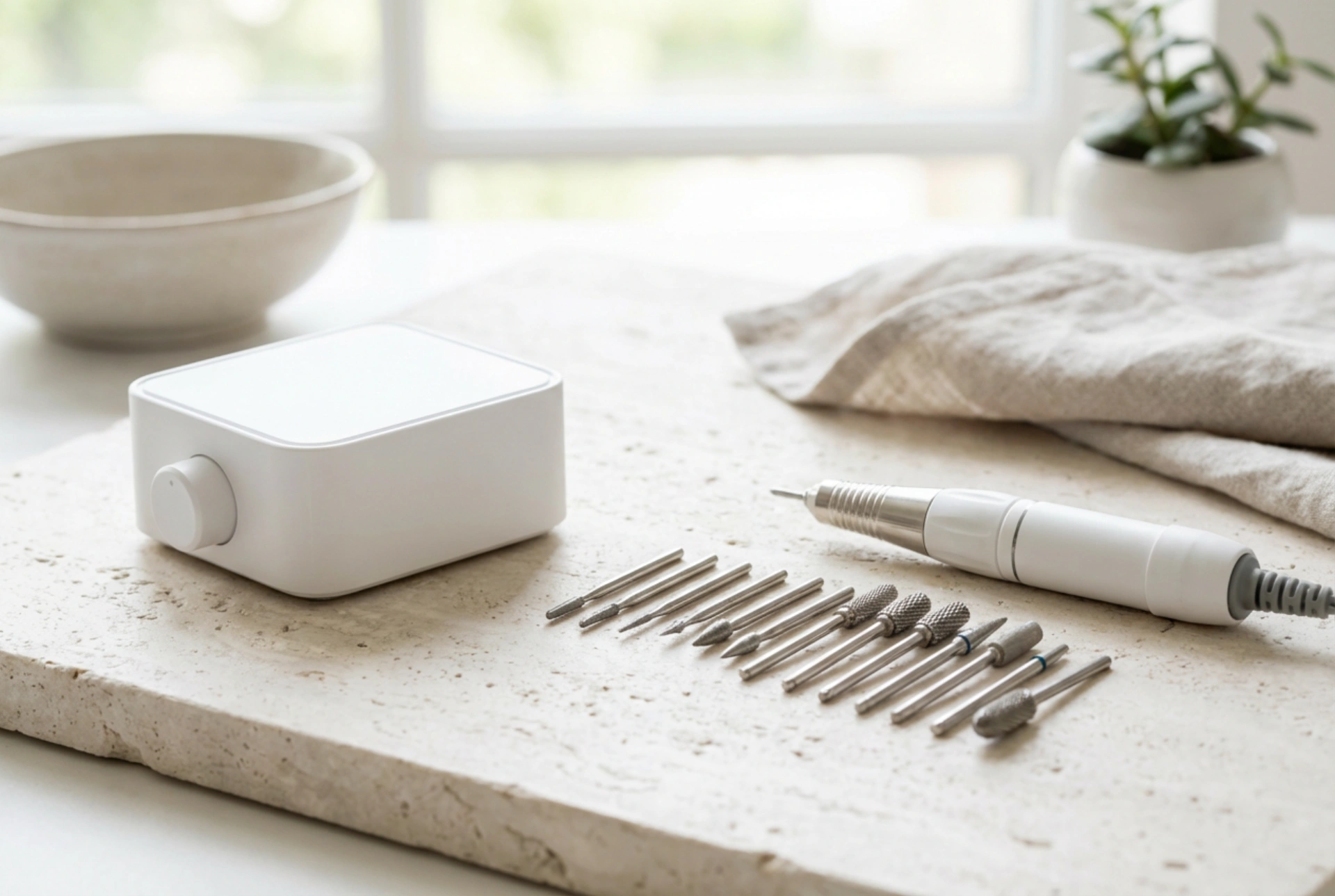


Achieving a flawless manicure or pedicure requires not only patience but also the right tools to ensure precision and elegance. A modern, professional nail drill – often referred to as an e-file – has become an essential device for beauty enthusiasts looking to elevate their nail care routine. When presented in a clean, minimalist setting alongside a variety of specialised attachments, these high-tech devices represent the perfect blend of efficiency and precision. However, to fully appreciate their benefits, one must understand their key technical parameters, the specific functions of various drill bits, and the fundamental rules of safe operation.
Key Technical Parameters of a Nail Drill
Before purchasing or operating a nail drill, it is important to understand the technical specifications that determine its performance and suitability for different tasks. A high-quality device ensures smooth operation without overheating or causing discomfort.
- Rotational Speed (RPM): Measured in rotations per minute, this parameter typically ranges from 0 to 30,000 or even 35,000 RPM. For delicate work around the cuticles, lower speeds (around 5,000 to 10,000 RPM) are ideal, while removing gel overlays requires higher speeds.
- Power Output (Wattage): A reliable nail drill should have a power output of at least 35 to 45 Watts. Lower wattage devices may stall under pressure, leading to uneven results and potential damage to the machine.
- Torque: Often overlooked, torque determines the strength of the rotation under load. High torque ensures that the drill maintains its speed even when encountering resistance on tougher surfaces.
- Ergonomics and Vibration: The handpiece should be lightweight, comfortable to hold, and, most importantly, generate minimal vibration. Excessive vibration can cause hand fatigue and reduce precision during intricate work.
Understanding Nail Drill Bits: Materials and Shapes
The performance of a nail drill relies heavily on the drill bits attached to the handpiece. Different materials and shapes serve distinct purposes in the nail preparation and styling process.
Common Materials
Drill bits are crafted from several materials, each offering unique benefits for surface refinement and cuticle care:
- Diamond Bits: Coated with fine diamond dust, these are perfect for delicate work, such as gently smoothing hardened skin around the nail folds and cleaning the nail plate.
- Ceramic Bits: Made from high-quality zirconium oxide, ceramic bits do not transfer heat easily, making them very comfortable for the user. They are excellent for removing gel polish and smoothing surfaces.
- Carbide Bits: Known for their durability, carbide bits feature small flutes that shave away product rather than grinding it. They are ideal for thinning bulk material quickly and efficiently.
Essential Shapes
Choosing the right shape determines how safely and effectively you can work on specific areas of the nail:
- Flame and Needle Bits: Perfect for lifting and cleaning the cuticle area, allowing for precise preparation of the nail plate.
- Cylinder and Cone Bits: Ideal for shortening nails, refining the overall shape, and smoothing out product overlays.
- Ball Bits: Designed specifically for safely removing loosened cuticles and smoothing the lateral nail folds without harming the surrounding skin.
Fundamental Rules of Safe Operation
While a nail drill is highly efficient, safety should always remain the top priority. Incorrect usage can lead to thinning of the natural nail plate or discomfort due to heat buildup. Adhering to a few basic principles ensures a safe and comfortable experience.
First and foremost, never apply downward pressure. The drill bit should glide gently over the surface, letting the rotation of the machine do the work. Keeping the bit in constant motion is equally crucial; holding the rotating bit in one spot for even a second can create friction heat, which causes a stinging sensation.
Furthermore, always adjust the rotational direction according to the hand you are working with. Most professional devices feature a forward and reverse switch. The direction of the rotation should always run counter to the movement of your hand to prevent the bit from slipping across the nail plate. Lastly, keeping the workspace clean by using a dust collector and regularly sanitising all drill bits is essential for maintaining proper hygiene standards at home.