

Every daily beauty routine aims to achieve healthy, lustrous, and flowing hair that reflects natural light beautifully. While the styling products we apply play a significant role, the tools we use and how we handle them are equally crucial. A hair dryer is a staple in most households, yet many of us do not fully understand how its specifications, particularly wattage and airflow settings, affect the health of our hair. Using the wrong settings or incorrect technique can lead to moisture loss, dullness, and brittleness. By mastering the settings of your styling tool, you can dry your hair efficiently while preserving its natural vitality, strength, and shine.
Decoding Hair Dryer Wattage: What You Need to Know
When choosing a new hair dryer, the wattage is often the most prominent number displayed. In simple terms, wattage measures the electrical power of the dryer motor. A higher wattage means the motor works faster and produces more wind power and heat, which translates to a quicker drying time. However, a common misconception is that more power always equals better results. For everyday home use, highly powerful professional-grade dryers are not always necessary and, if used incorrectly, can cause unnecessary heat stress to the hair shaft. Understanding that wattage is about airflow efficiency rather than just raw heat is the first step toward protecting your hair from daily styling damage. The goal is to find a balance where the airflow is strong enough to push water off the hair surface without relying on extreme, scorching temperatures that strip away natural protective oils.
How to Choose the Ideal Wattage for Your Hair Type
Not all hair types require the same amount of power. Selecting the correct wattage depends heavily on your hair texture, thickness, and overall condition. Using a dryer that is too powerful on delicate hair can lead to tangles and structural damage, while an underpowered dryer on thick hair will prolong the drying process, exposing the hair to heat for too long.
- Fine, Thin, or Damaged Hair (1200 to 1500 Watts): Delicate strands do not need intense wind or high heat to dry. A lower wattage dryer is gentler and prevents the hair from blowing around excessively, which can cause friction, knotting, and breakage. This range is also perfect for dry or colour-treated hair that requires extra care.
- Normal, Medium-Thick, or Wavy Hair (1600 to 1800 Watts): This is the standard range for most hair types. It offers a perfect balance of drying speed and safety, allowing you to achieve a smooth finish at home without risking heat-induced damage.
- Thick, Coarse, or Curly Hair (1900 to 2200 Watts): Thick and coarse hair retains water much longer, making a higher wattage dryer highly beneficial. The strong airflow cuts down drying time significantly, which actually reduces the overall time your hair is exposed to heat.
The Art of Controlling Temperature and Airflow
While wattage determines the potential of your hair dryer, the temperature and airflow speed controls are the tools you use to customise the process. Modern hair dryers typically feature multiple speed and heat settings, and knowing how to adjust these during a single styling session is key to maintaining healthy hair. High heat should be reserved for the initial drying phase when the hair is soaking wet, or for shaping specific sections during styling. As the hair dries, you should gradually lower the heat setting. Applying intense heat to dry or nearly dry hair can cause the water molecules trapped inside the hair structure to expand rapidly, which weakens the hair shaft and leads to splits. Airflow speed should also be adjusted based on your styling goals. High speed is excellent for rough drying, while medium to low speeds are ideal for detailed styling with a brush, as they allow for greater precision and less frizz.
The Magic of the Cool Shot Button
Many people overlook the cool shot button on their hair dryer, viewing it as an unnecessary feature. In reality, it is one of the most valuable tools for achieving a smooth, shiny finish. Heat opens up the hair cuticle, which is necessary for reshaping and drying. However, to lock in the style and restore shine, the cuticle must be closed. Blasting each section of your hair with cool air for a few seconds at the end of your drying routine instantly seals the cuticle layer. This flat, smooth surface reflects light much better, giving your hair a lustrous, healthy appearance while preventing humidity from entering the hair shaft and causing frizz throughout the day.
Practical Tips for Safe and Gentle Blow-Drying
To ensure your hair remains vibrant and undamaged, incorporate these best practices into your routine:
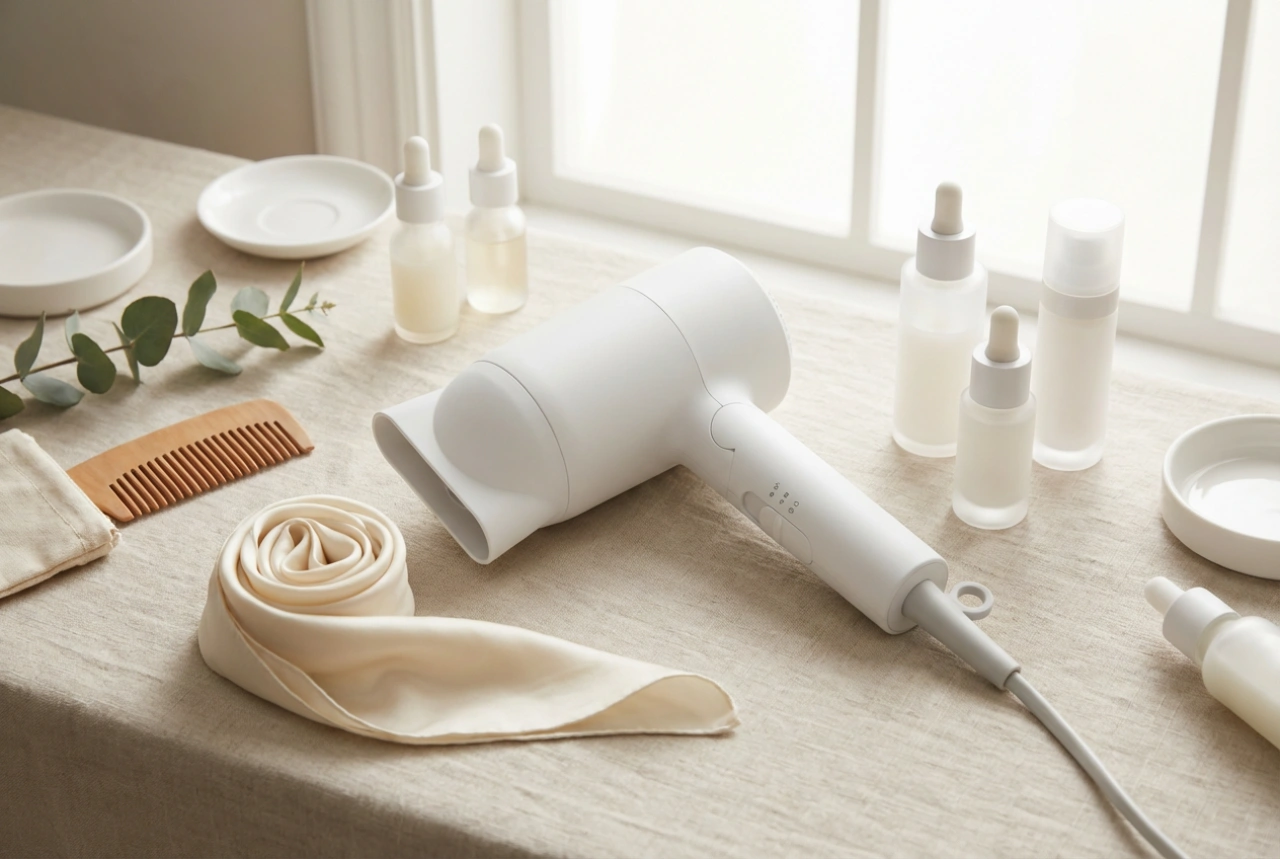
- Pre-dry with a towel first: Never blow-dry soaking wet hair. Gently blot your hair with a microfiber towel to remove excess water before turning on the dryer. This reduces the overall heat exposure time.
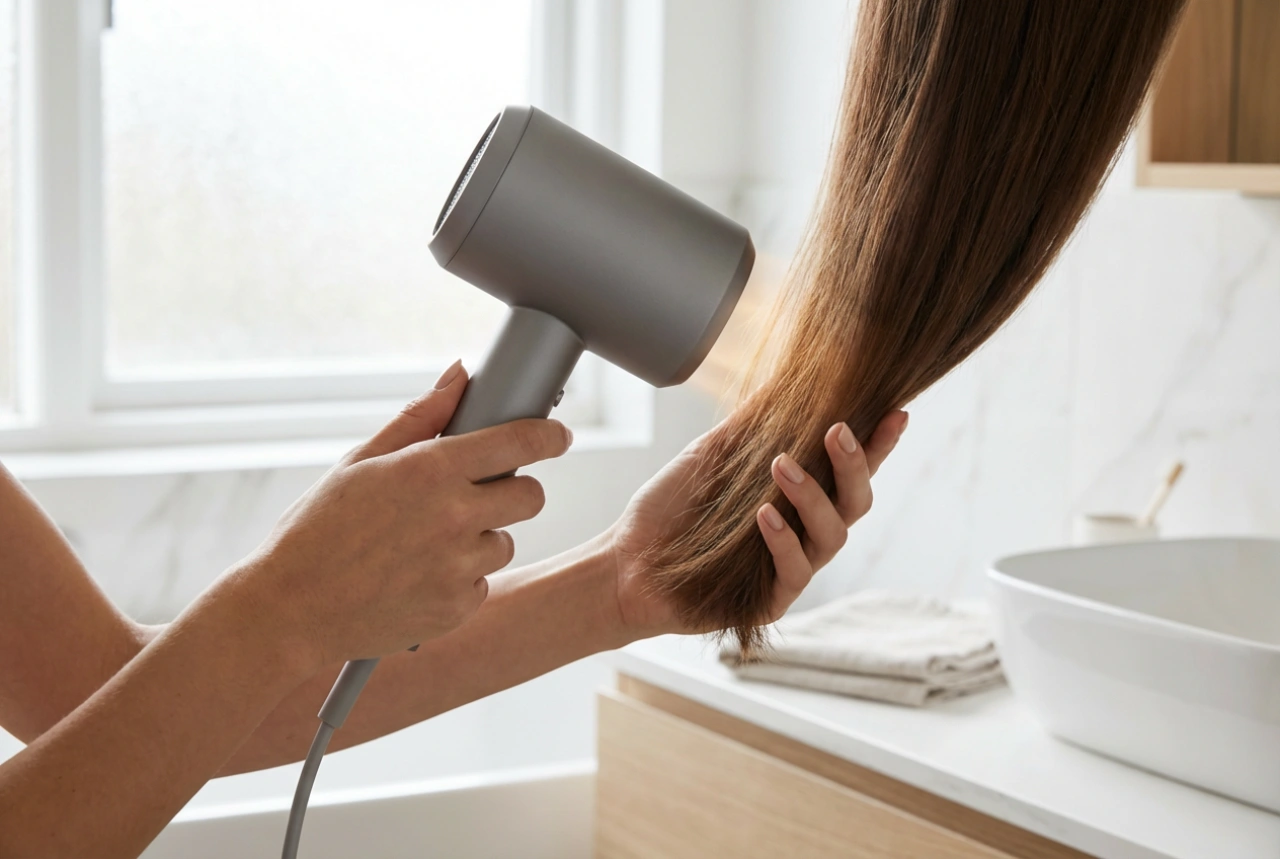
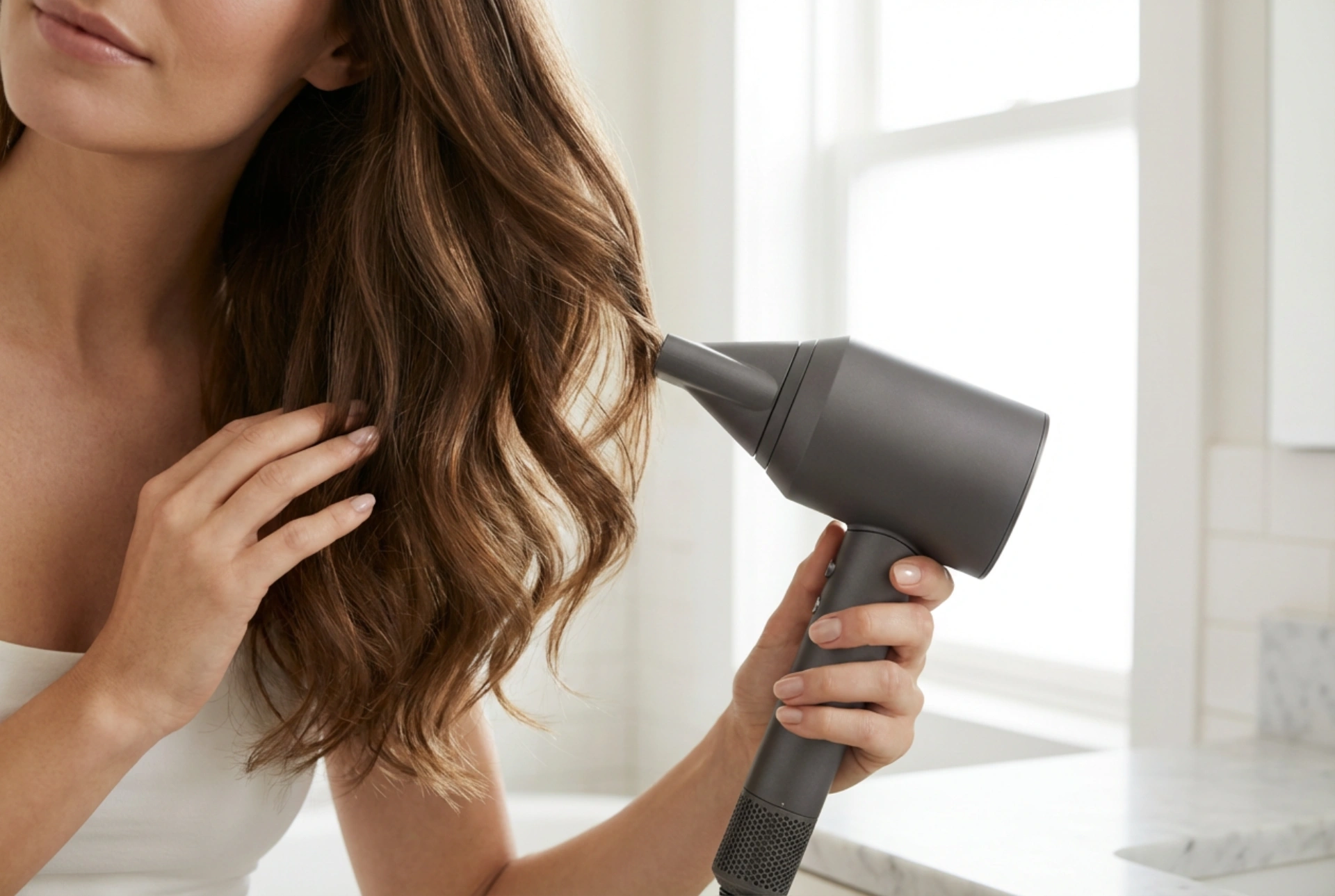
- Maintain a safe distance: Keep the nozzle of the hair dryer at least 15 to 20 centimetres away from your head. Holding the dryer too close can instantly overheat the hair fibres.
- Always point the nozzle downwards: Direct the airflow from the roots down to the ends. This follows the natural direction of the hair cuticles, helping them lie flat for a smoother and shinier finish.
- Keep the dryer moving: Avoid focusing the airflow on a single spot for more than a couple of seconds. Continuous movement prevents localised heat buildup.