

A flawless hybrid manicure, with its glossy finish and impressive durability, is a true symbol of elegance. Achieving that perfect, long-lasting result at home, however, can be challenging. Two of the most common issues that can spoil an otherwise beautiful manicure are flooded cuticles and air pockets, which cause the polish to lift prematurely. Mastering the right preparation and application technique is the key to ensuring your nails look professionally done and remain impeccable for weeks. With a little patience and precision, you can avoid these pitfalls and enjoy a stunning manicure every time.
The Foundation: Proper Nail and Cuticle Preparation
The longevity of your hybrid manicure begins long before you open a bottle of colour. Meticulous preparation of the nail plate is non-negotiable for ensuring optimal adhesion and a clean finish. Skipping these steps is the primary reason for lifting and a messy nail edge.
Step 1: Cuticle Care
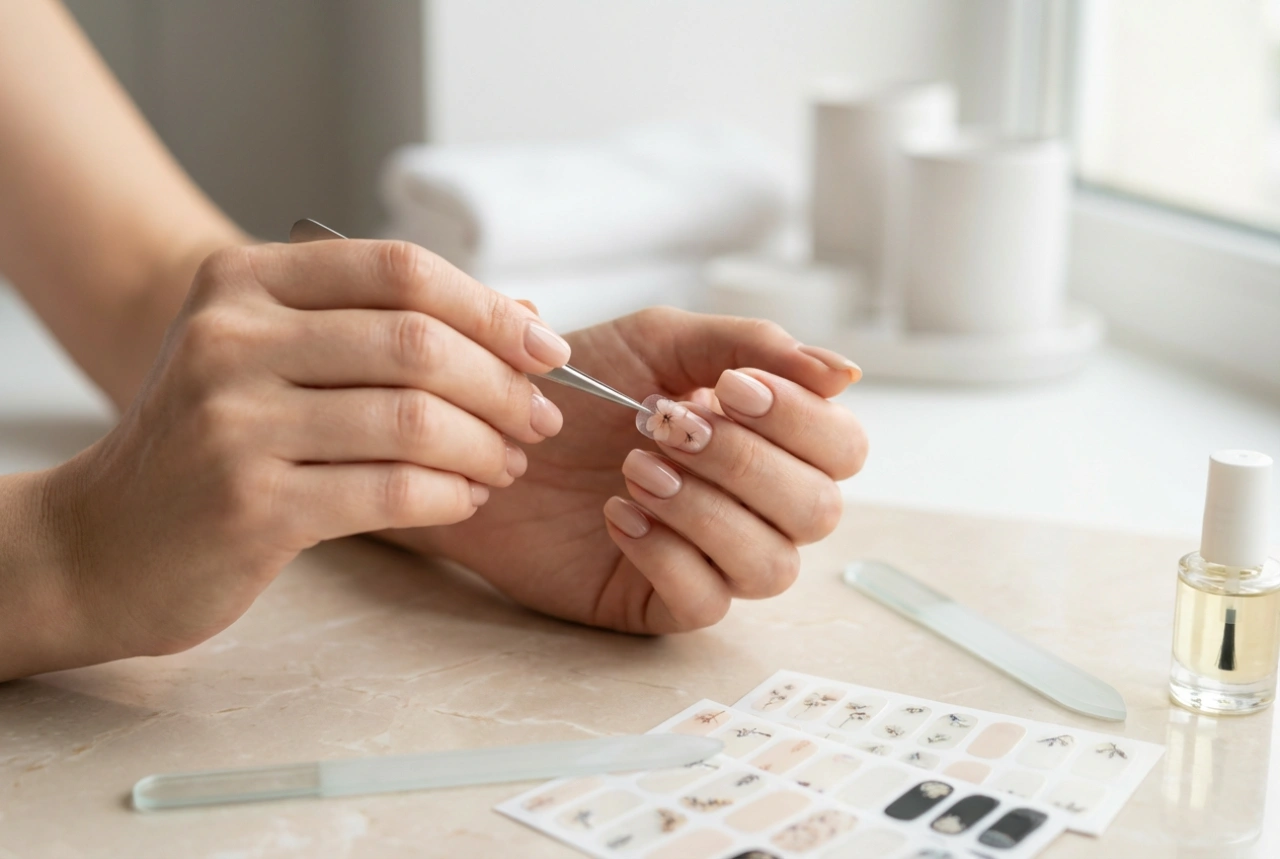
Start by gently pushing back your cuticles. Use a wooden stick or a metal cuticle pusher to carefully ease the skin away from the nail plate. The goal is not to remove the main cuticle line (the eponychium), but rather the transparent layer of dead skin that grows on the nail surface. This invisible layer, if not removed, will prevent the polish from adhering properly. After pushing the cuticles back, you can use the sharper end of the pusher or a special tool to gently scrape this residue away. Avoid cutting the live cuticle tissue, as this can lead to irritation and damage.
Step 2: Shaping and Buffing
Once your cuticles are neat, shape your nails to your desired length and form using a nail file. Afterwards, take a soft buffer block (around 180-240 grit) and gently buff the entire surface of each nail. The aim is to remove the natural shine and create a slightly matte, porous texture. This provides a better grip for the base coat. Be gentle; you are not trying to file down the nail, only to rough up the very top layer. Pay special attention to the areas near the cuticles and side walls.
Step 3: Cleansing and Dehydrating
After buffing, your nails will be covered in fine dust. It is crucial to remove this, along with any natural oils. Use a lint-free wipe saturated with a specialised nail cleaner or isopropyl alcohol. Thoroughly wipe each nail, making sure to get into the sides and along the cuticle line. From this point on, avoid touching your nails with your fingers, as this will transfer oils back onto the prepared surface.
Application Technique: The Key to a Flawless Finish
With a perfectly prepped base, your focus can shift to the application itself. Precision and control are paramount to prevent the gel polish from touching the skin, which is the direct cause of flooded cuticles and subsequent lifting.
Apply Thin Layers
One of the golden rules of hybrid manicures is to always apply products in very thin, even layers. This applies to the base coat, the colour coats, and the top coat. Thick layers do not cure properly under the lamp, leading to a weak structure, wrinkling, and a higher likelihood of flooding the surrounding skin. It is always better to apply three thin coats of colour than two thick ones.
Leave a Tiny Gap
This is the most critical technique for preventing flooded cuticles. When applying your polish, intentionally leave a very small gap—about half a millimetre to a millimetre—between the product and the cuticle and side walls. The brush should never touch the skin. Start your brushstroke slightly away from the cuticle, push it gently towards the cuticle line (but not touching it), and then pull it towards the tip of the nail. This creates a clean, controlled border. If you accidentally apply polish onto the skin, clean it up immediately *before* curing. Use a small, clean brush or a wooden stick dipped in cleaner to precisely wipe away the mistake.
Cap the Free Edge
To seal your manicure and prevent chipping from the tip, remember to 'cap the free edge'. After applying each coat (base, colour, and top), run the brush lightly along the very tip of your nail. This wraps the product around the edge, creating a protective seal that significantly improves the durability of your manicure.
Understanding and Preventing Air Pockets (Lifting)
Air pockets, also known as lifting, occur when the hybrid polish begins to detach from the nail plate, usually starting near the cuticle area. This not only looks untidy but can also allow moisture to get trapped underneath, which is best avoided. Lifting is almost always caused by one of two things:
- Improper Preparation: Any oil, dust, or cuticle residue left on the nail plate will create a barrier between the nail and the base coat, preventing a strong bond.
- Product on the Skin: When gel polish is cured on the skin, it creates a ledge. As your nail grows, the skin moves and pulls on this cured polish, causing it to lift away from the nail plate and taking the rest of the manicure with it.
By following the preparation and application steps meticulously—ensuring the nail is clean and the polish never touches the skin—you will dramatically reduce the risk of lifting.
Finishing Touches for Long-Lasting Results
Once your final top coat is fully cured, wipe off the sticky inhibition layer with a cleanser (unless you've used a 'no-wipe' top coat). Only now is it time for cuticle oil. Applying it earlier could compromise adhesion. Massage the oil into the skin around your nails to rehydrate them. For the first 24 hours, be gentle with your nails and avoid prolonged exposure to hot water. With practice, these techniques will become second nature, leaving you with a beautiful, durable, and professional-looking hybrid manicure every time.