

Taking care of our feet is an essential part of any beauty routine, yet they are often neglected until discomfort arises. Dry, cracked heels can be not only an aesthetic concern but also a source of discomfort. Establishing a simple, effective nighttime ritual can transform the skin on your feet, leaving them soft, smooth, and healthy-looking. The key lies in choosing a cream with the right ingredients and applying it consistently to allow it to work its magic overnight.
Understanding the Causes of Dry, Cracked Heels
Before diving into solutions, it's helpful to understand why heels might become dry and cracked in the first place. These common issues are often lifestyle and environment-related. Constant pressure from standing or walking, especially on hard surfaces, can contribute. Open-backed shoes, such as sandals or flip-flops, allow the fat pad under the heel to expand sideways, increasing the likelihood of cracks. Additionally, dry indoor air, from central heating in winter or air conditioning in summer, can sap moisture from the skin all over your body, including your feet.
Key Ingredients to Look for in a Foot Cream
Not all moisturisers are created equal, especially when it comes to the thick skin on the soles of the feet. An effective foot cream will contain a blend of ingredients that hydrate, soften, and protect the skin barrier. When you're choosing a product, look for these powerful components on the label.
Humectants: The Moisture Magnets
Humectants are ingredients that pull water from the air and deeper layers of the skin into the epidermis. They are crucial for deep hydration. The most effective ones for feet include:
- Urea: In lower concentrations (around 10%), urea is an excellent moisturiser. In higher concentrations, it also acts as a keratolytic, meaning it helps to break down the thick, dead skin, making it easier to remove.
- Glycerin: A classic, gentle, and effective humectant that helps the skin retain moisture.
Emollients: The Skin Softeners
Emollients work by filling in the gaps between skin cells, making the skin's surface feel softer and smoother. They provide immediate relief from feelings of tightness and roughness.
- Shea Butter & Cocoa Butter: These natural fats are rich in fatty acids and vitamins, providing intense nourishment and helping to repair the skin's barrier.
- Lanolin: This ingredient is highly effective at preventing water loss and softening tough skin, closely mimicking the skin's own lipids.
Occlusives: The Protective Seal
Occlusives form a physical barrier on the surface of the skin to prevent moisture from evaporating. They are essential for locking in the hydration provided by humectants and are best applied as the final step.
- Petrolatum: A highly effective occlusive that creates a powerful seal over the skin to lock in moisture.
- Dimethicone: A silicone-based ingredient that forms a breathable, non-greasy barrier, leaving skin feeling silky and smooth.
Gentle Exfoliants: For Renewal
To tackle thick, hardened skin, gentle exfoliating ingredients can be very beneficial. They help to slough away dead skin cells, allowing moisturisers to penetrate more effectively. Look for alpha-hydroxy acids (AHAs) like lactic acid or glycolic acid, which promote cell turnover for smoother skin.
Your Nightly Ritual for Softer Heels
Consistency is the most important factor in healing cracked heels. Dedicate a few minutes each evening to this simple but powerful routine for the best results.
Step 1: Soak and Soften
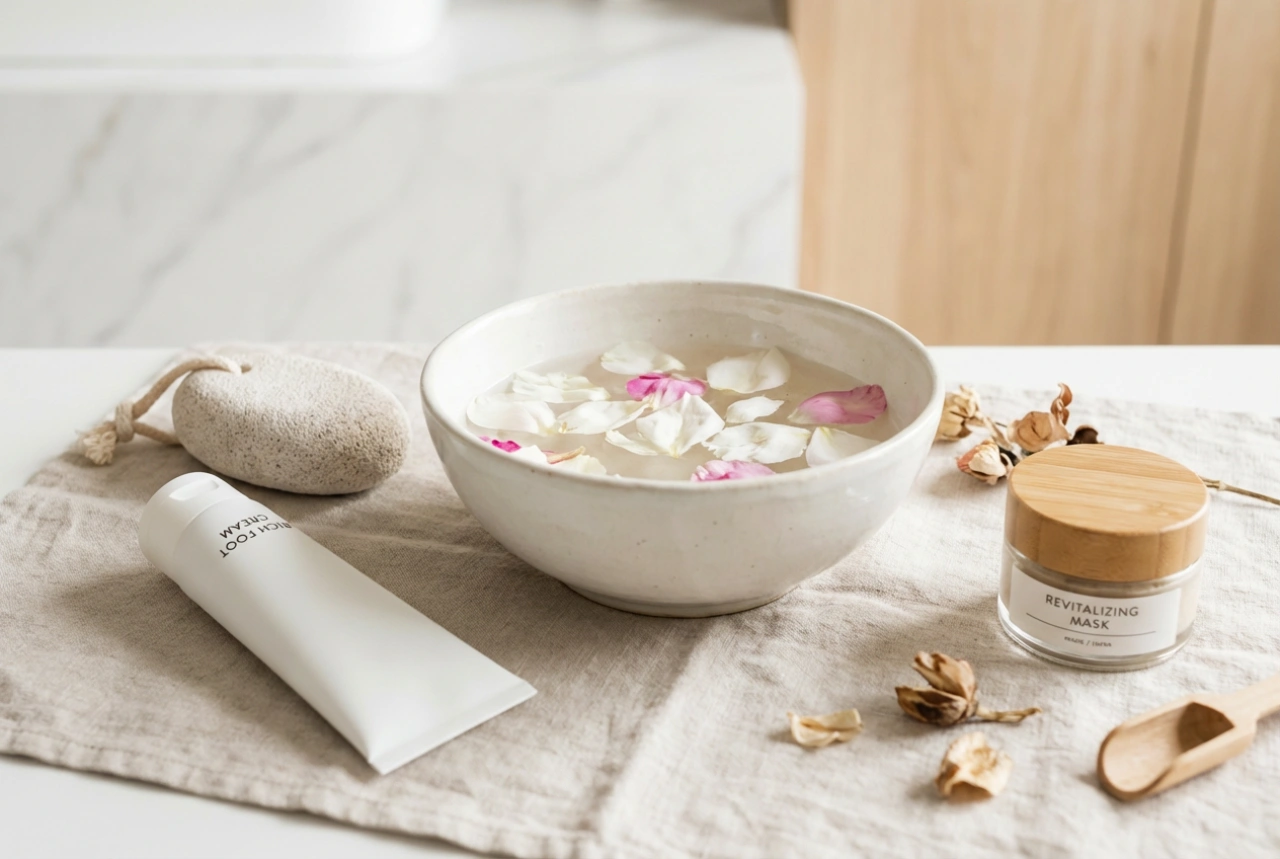
Begin by soaking your feet in warm (not hot) water for 10-15 minutes. This helps to soften the thick, calloused skin, preparing it for the next steps. You can add a handful of Epsom salts to the water for a soothing effect, but plain water works perfectly well.
Step 2: Gentle Exfoliation
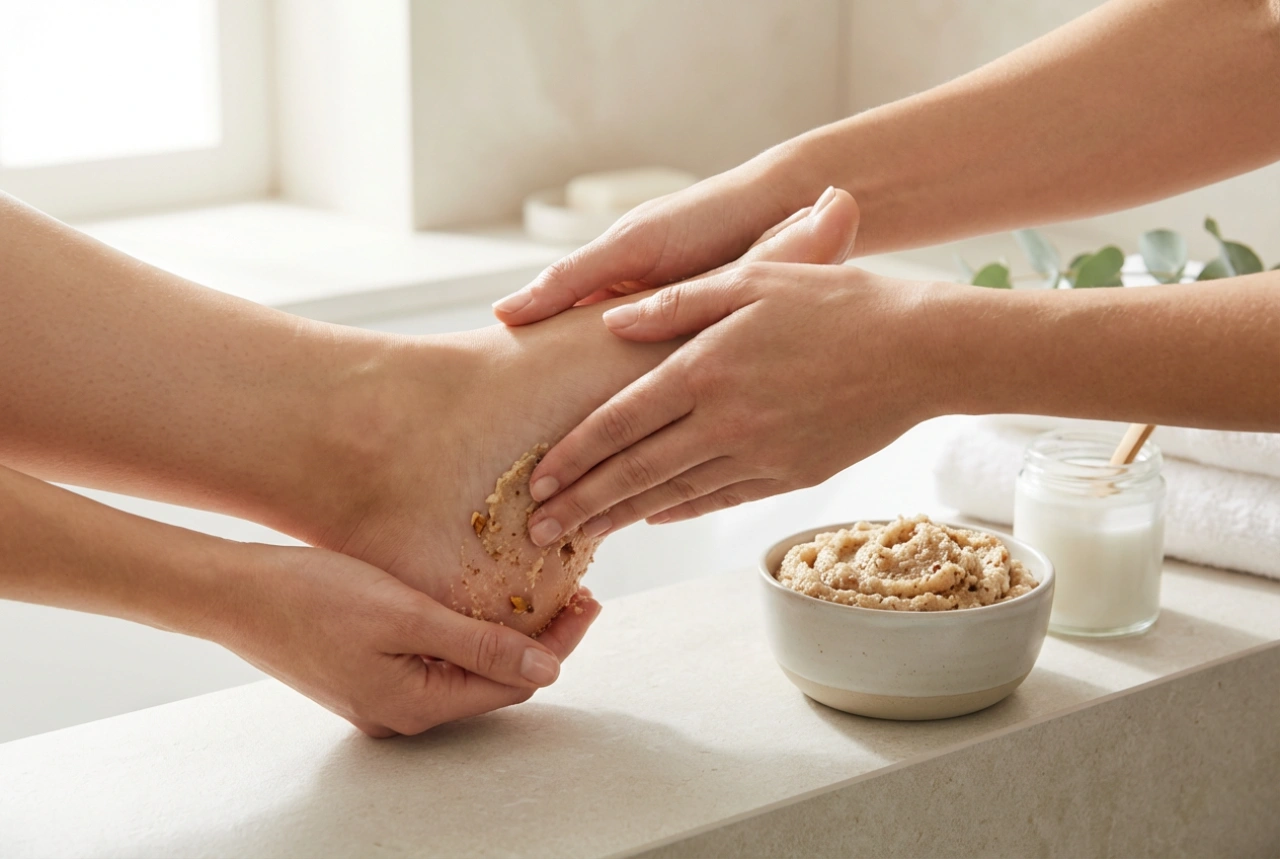
After soaking, pat your feet partially dry. While the skin is still damp and soft, use a pumice stone or a foot file to gently buff away the softened dead skin from your heels. Use light, even strokes and avoid being aggressive, as this can damage the healthy skin underneath. The goal is gentle removal, not vigorous scrubbing. Do this two to three times a week, not daily.
Step 3: Moisturise Generously
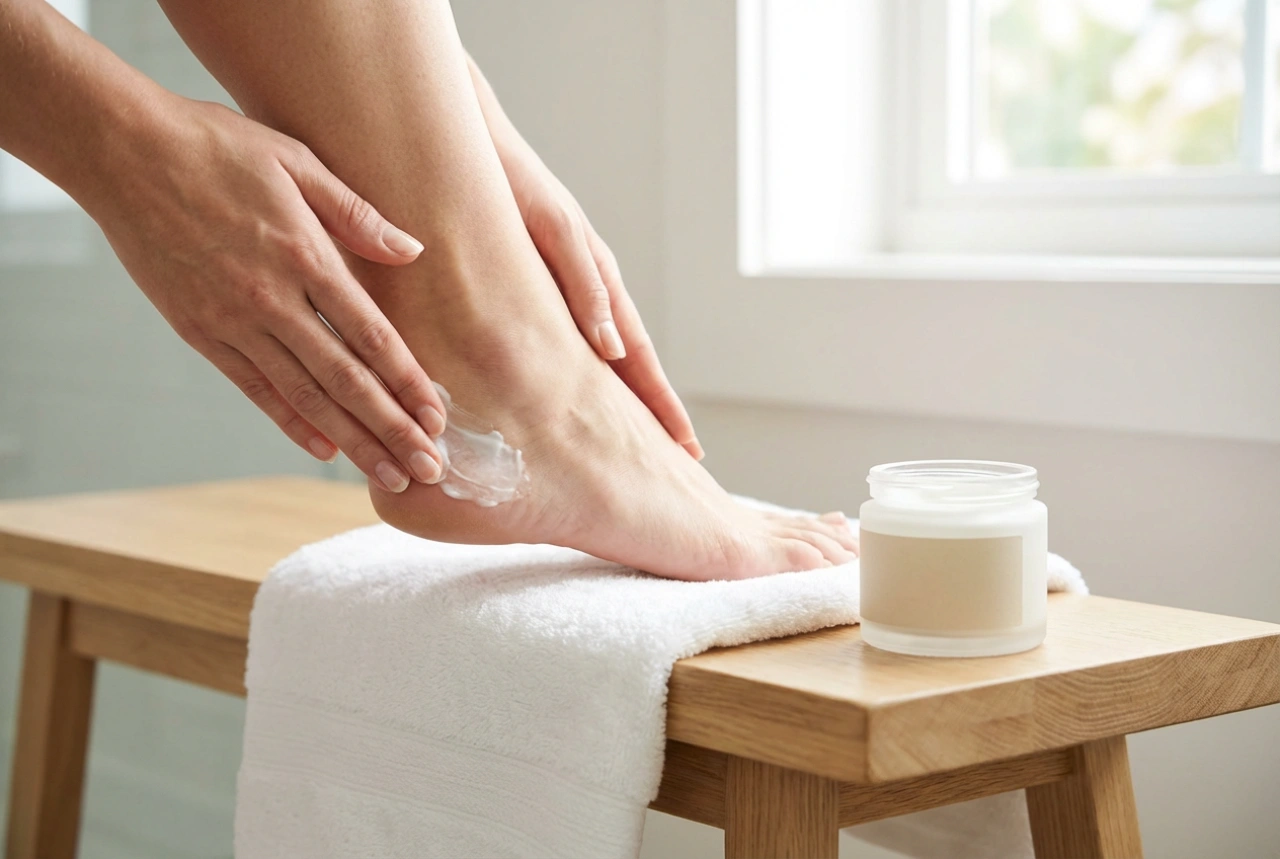
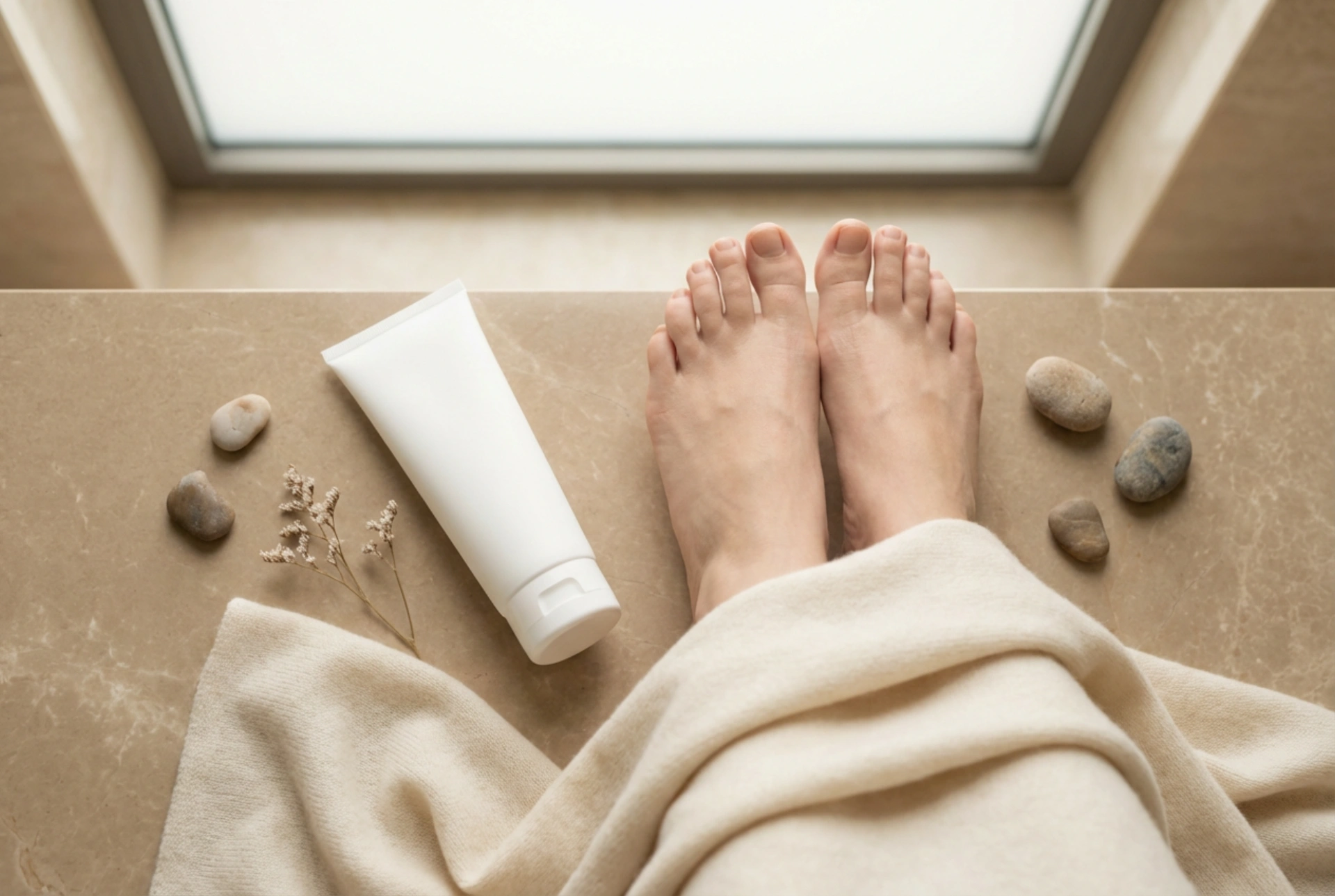
Once your feet are fully dry, apply a thick layer of your chosen foot cream. Don't be shy with the amount. Take a moment to massage it deeply into your heels, the balls of your feet, and any other dry patches. This not only helps the product absorb but also boosts circulation.
Step 4: Lock It In
To maximise the cream's effectiveness, put on a pair of clean cotton socks immediately after application. The socks will create a warm, occlusive environment that helps the cream penetrate deeply into the skin overnight. It also has the practical benefit of keeping your bedsheets clean.
Maintaining Smooth, Healthy Feet
Once you've restored softness to your heels, maintenance is key. Continue the nightly moisturising routine, even if you reduce the soaking and exfoliating to once a week. Simple daily habits, such as drinking plenty of water to stay hydrated from the inside out and choosing supportive, well-fitting footwear, will also contribute to the long-term health and comfort of your feet. With a little consistent care, you can keep your heels smooth and comfortable all year round.