

Our feet carry us through life, yet they are often the most neglected part of our beauty routine. This lack of attention can lead to dry, rough skin, especially on the heels and soles. Creating a consistent and gentle care plan can transform your feet, restoring their softness and comfort. With just a few simple steps, you can say goodbye to dryness and hello to beautifully smooth, healthy-looking feet that you'll be proud to show off.
Understanding Why Feet Get So Dry
The skin on our feet is unique. Unlike the skin on the rest of our body, it has no sebaceous (oil) glands, meaning it has no natural way to keep itself moisturised. Instead, it relies on thousands of sweat glands for hydration. When this isn't enough, the skin can quickly become dehydrated. Factors like constant pressure from standing and walking, friction from footwear, low humidity in the air, and even long, hot showers can strip away moisture, leading to the build-up of dry, hard skin.
A Step-by-Step Routine for Soft Feet
Consistency is the secret to resolving dry skin on your feet. By incorporating this simple routine into your weekly self-care, you will see a significant improvement in the texture and appearance of your skin.
Step 1: The Soothing Soak
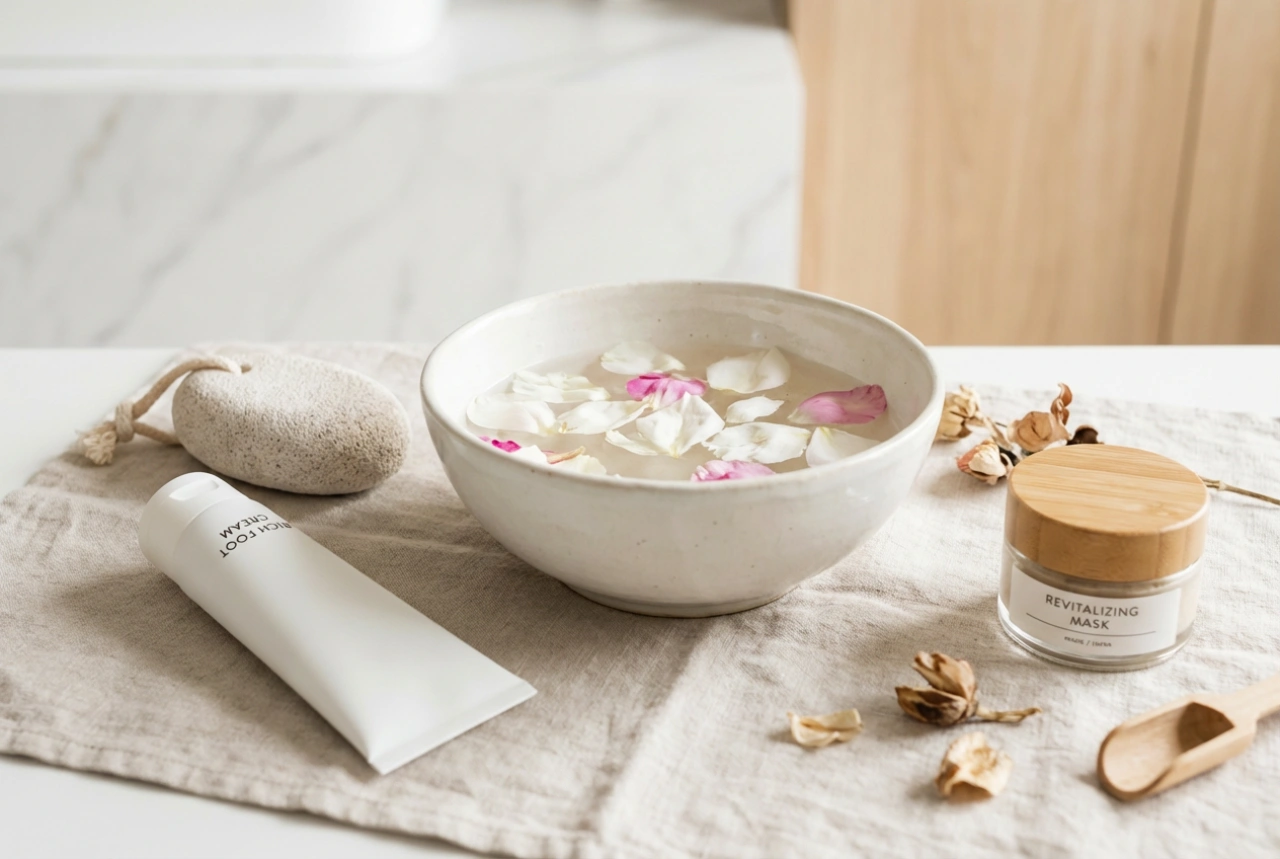
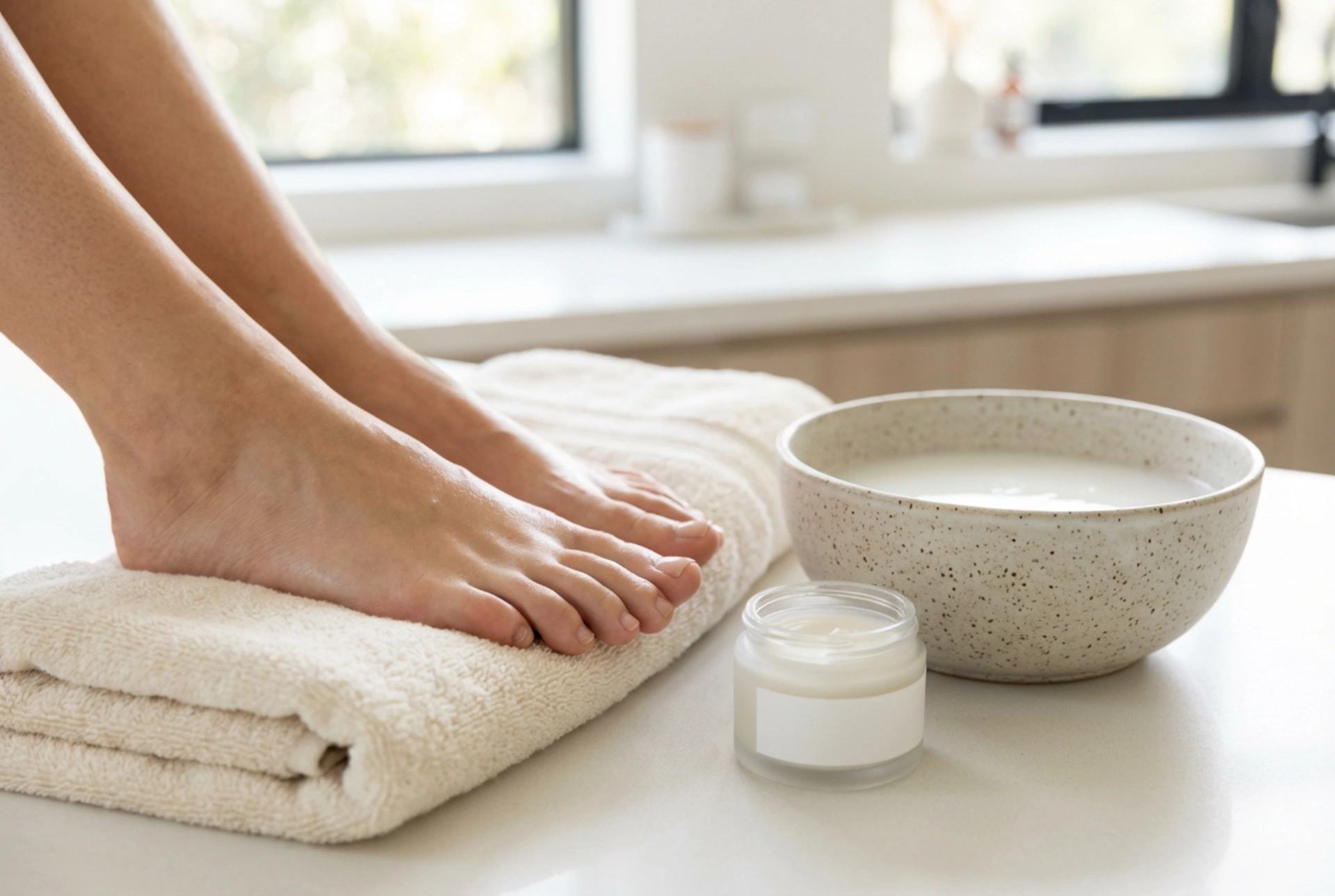
Begin by soaking your feet in warm water for 10 to 15 minutes. This initial step is crucial as it softens the tough, outer layers of dead skin, making them much easier to remove. Avoid using water that is too hot, as this can have the opposite effect and dry your skin out further. You can enhance your foot bath by adding a few drops of a gentle, nourishing bath oil or some Epsom salts to help soothe tired feet. After soaking, pat your feet gently with a soft towel, leaving them slightly damp.
Step 2: Gentle Exfoliation
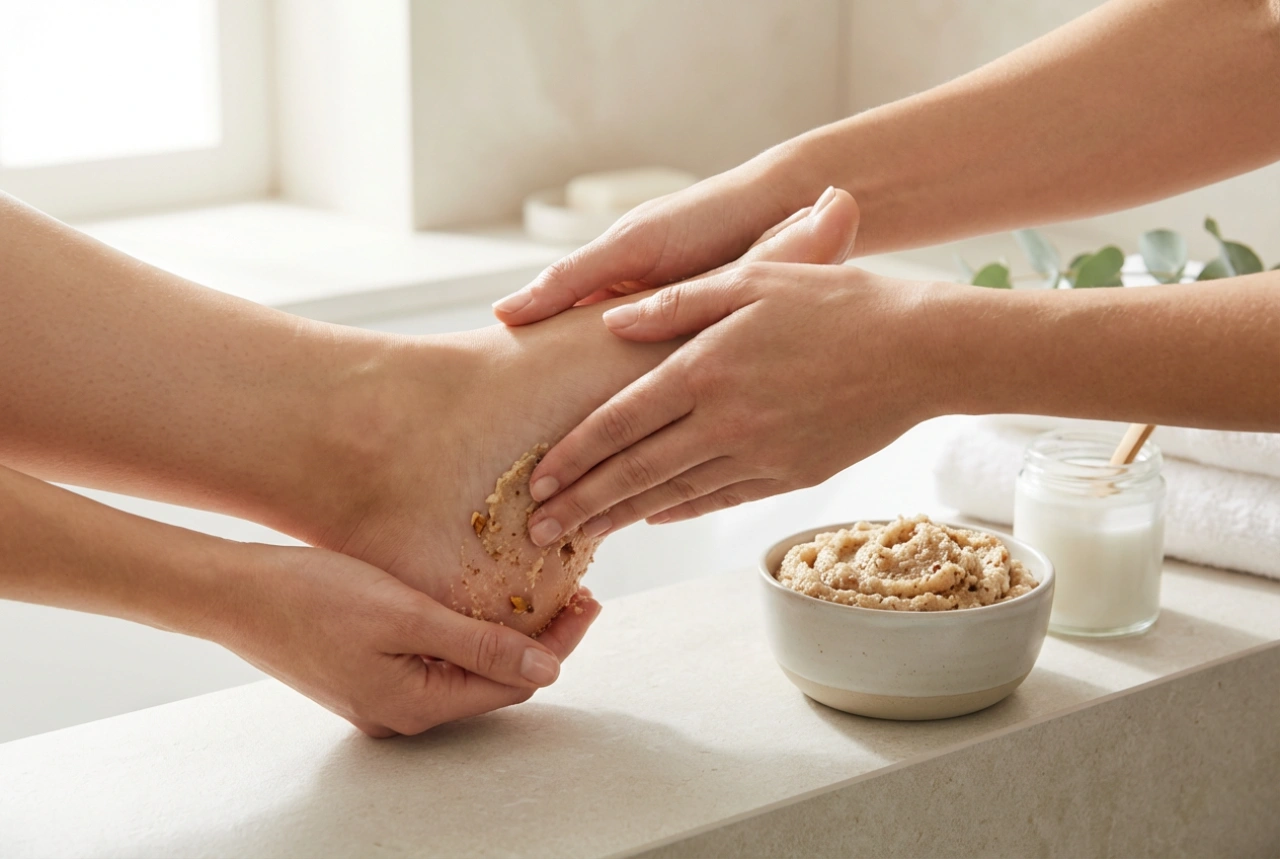
With your skin softened and damp, it's time to exfoliate. Use a pumice stone or a foot file to gently buff away the layers of dry, dead skin. Focus on areas where calluses tend to form, such as the heels, the balls of the feet, and the sides of your big toes. Use light to medium pressure and work in one direction or in gentle circular motions. It's important not to be too aggressive, as this can damage the healthy skin underneath and cause irritation. The goal is gradual improvement, not instant removal of all rough skin in one session.
Step 3: Deep Hydration
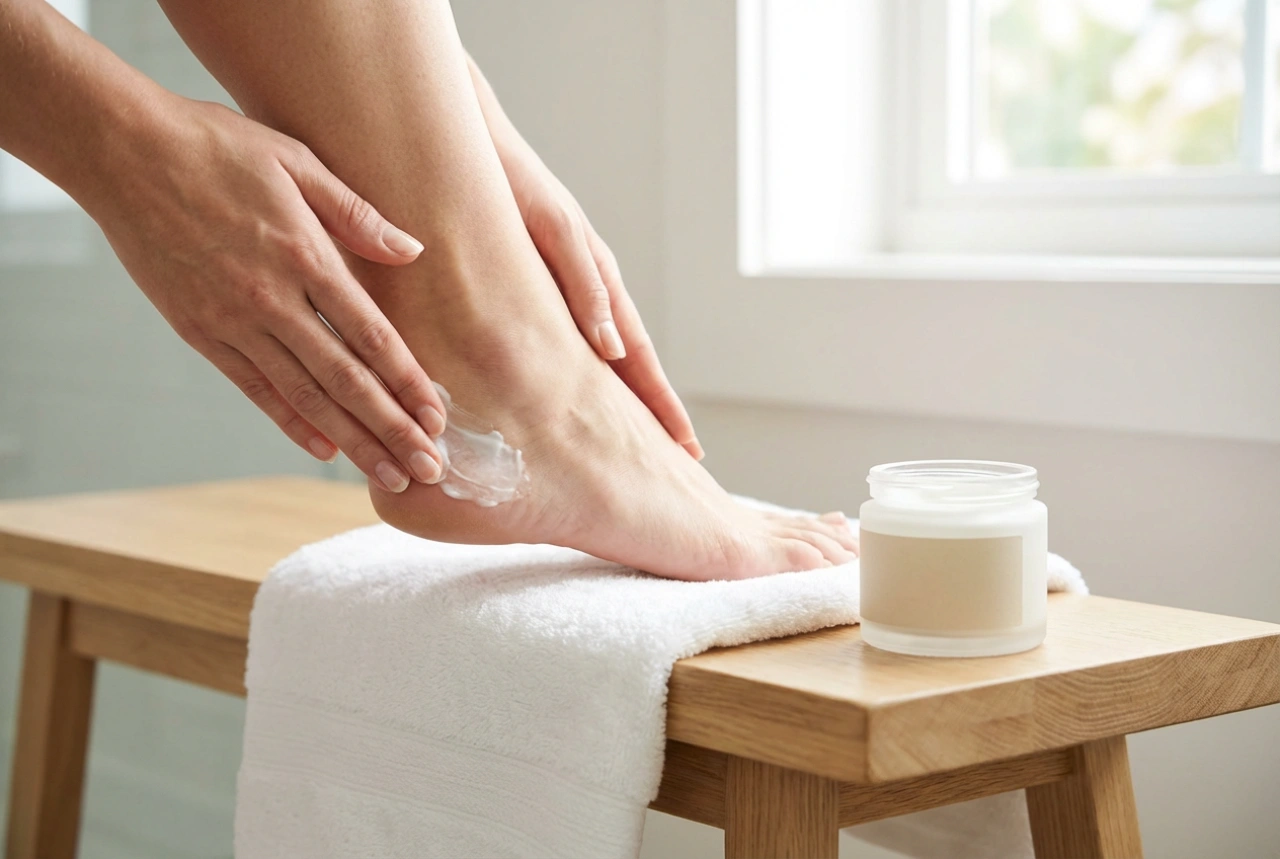
Immediately after exfoliating, while your skin is still slightly damp and pores are open, apply a generous amount of a rich foot cream. This is the most important step for combating dryness. Look for moisturisers containing ingredients known for their powerful hydrating and softening properties, such as urea, glycerin, shea butter, or ceramides. These ingredients help to draw moisture into the skin and lock it in, forming a protective barrier that prevents water loss. Massage the cream thoroughly into your feet, paying special attention to your heels and any other particularly dry patches.
Step 4: The Overnight Intensive Treatment
For an extra boost of hydration, especially if your feet are very dry, consider an overnight treatment. After applying a thick layer of your foot cream before bed, put on a pair of clean cotton socks. The socks will help to lock in the moisture and prevent the cream from rubbing off on your bedding. This intensive treatment allows the moisturiser to work deeply into your skin overnight, leaving you with noticeably softer and smoother feet in the morning.
Preventing Dryness and Protecting Your Heels
Once you have restored moisture to your feet, the focus should shift to prevention. Maintaining soft skin is easier than treating severe dryness.
Choose Your Footwear Wisely
The shoes you wear play a significant role in the health of your feet. Tight or ill-fitting shoes can cause friction and pressure, leading to calluses and hardened skin as your body's natural defence mechanism. Opt for comfortable, well-fitting footwear made from breathable materials to reduce pressure points and allow your skin to breathe.
Make Moisturising a Daily Habit
Don't reserve foot cream only for your exfoliation days. Get into the habit of moisturising your feet every day, preferably after your bath or shower when your skin is most receptive to hydration. A quick daily application takes less than a minute but makes a world of difference in preventing dryness from returning.
Focus on Heel Protection
The heels bear the most weight and are therefore highly susceptible to becoming thick, dry, and even cracked. In addition to daily moisturising, continue with the overnight sock treatment two or three times a week to provide continuous protection and deep hydration for this vulnerable area. This simple habit will help maintain the skin's elasticity and prevent painful cracks from forming.
By following this dedicated care plan, you can effectively manage and prevent dry skin on your feet. A little regular attention ensures your feet remain soft, comfortable, and healthy, ready to carry you wherever you need to go.