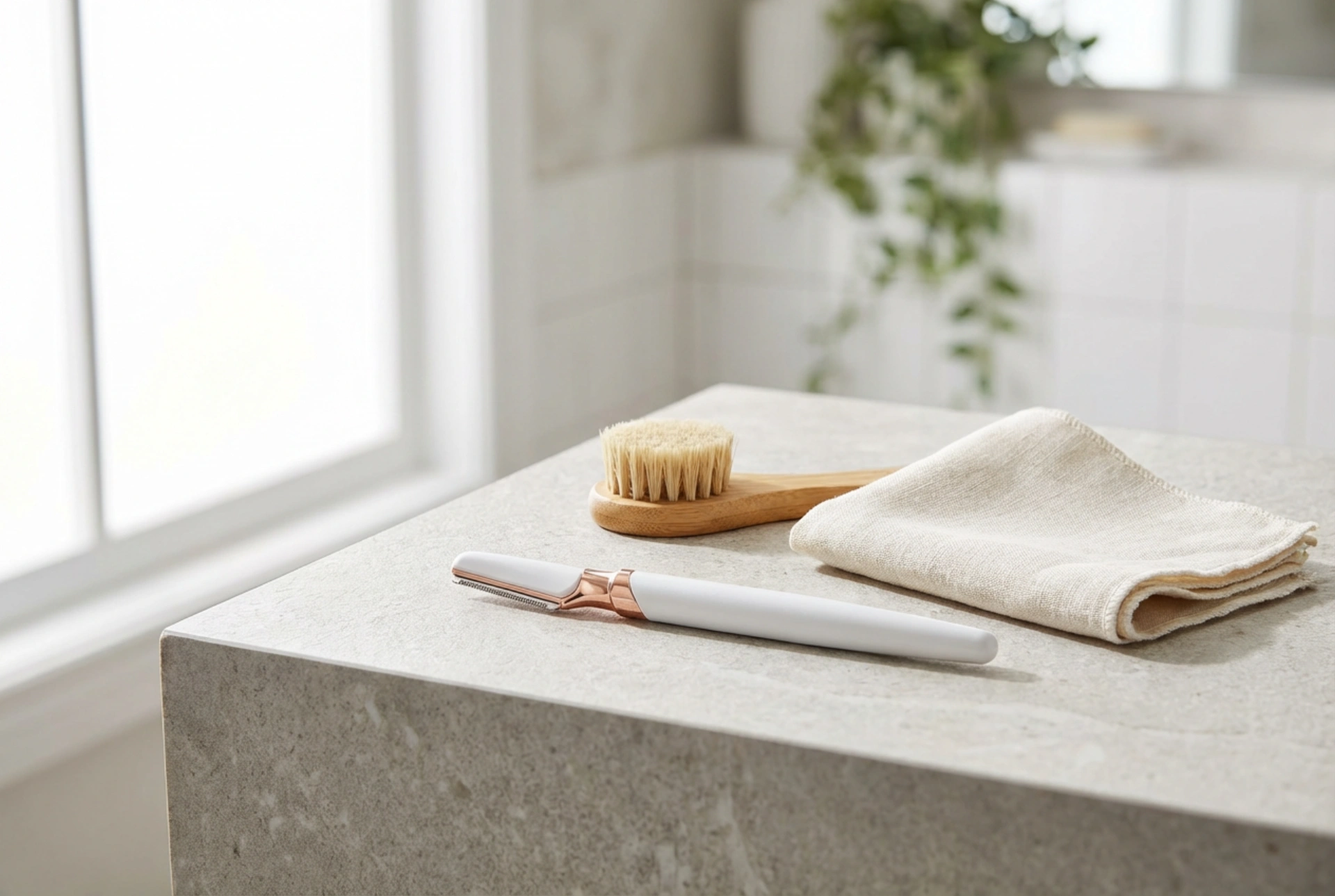


Using a facial razor, a practice sometimes known as 'dermaplaning at home', has become a popular step in many beauty routines. It's a method for removing fine facial hair, often called 'peach fuzz', and exfoliating the top layer of dead skin cells. The result? A smoother skin surface that can lead to a more flawless makeup application and a brighter complexion. Achieving these benefits safely and effectively requires the right technique and meticulous care for your tool, just as the pristine razor in a refined beauty setting suggests.
Preparing Your Skin for Shaving
Proper preparation is key to a successful and irritation-free experience. Always begin with a thoroughly cleansed face. Use a gentle cleanser to remove all makeup, dirt, and oil. It is crucial to decide whether to shave on dry or slightly lubricated skin. Many specialists recommend shaving on completely dry, clean skin for maximum exfoliation and hair removal. However, if you have sensitive skin, applying a very thin layer of a non-comedogenic facial oil or a lightweight gel can provide a bit of slip and reduce the risk of irritation. Never attempt to shave over active blemishes or irritated areas, as this can worsen the condition and spread bacteria.
The Correct Shaving Technique
The way you hold and move the razor is vital for safety and results. Hold the razor at a 45-degree angle to your skin. This angle is effective for removing hair and dead skin without being too aggressive. Use your free hand to pull the skin taut. This creates a smooth, firm surface, which helps prevent nicks and ensures an even shave. Use short, light, downward strokes, moving in the direction of hair growth. Think of it as gently scraping the surface rather than pressing down. Work in small sections, covering areas like the cheeks, the space above the upper lip, the forehead, and along the jawline. Avoid going over the same area multiple times in one session to prevent over-exfoliation and irritation.
Essential Post-Shaving Care
What you do after shaving is just as important as the process itself. Once you've finished, rinse your face with cool water to help soothe the skin and remove any lingering hairs or dead skin cells. Gently pat your face dry with a clean, soft towel. Your skin has just been exfoliated, so it will readily absorb products. This is the perfect time to apply a hydrating and calming serum, perhaps one containing hyaluronic acid or niacinamide. Follow up with a gentle, nourishing moisturiser to restore the skin's barrier. Avoid using products with harsh active ingredients like retinoids, vitamin C, or exfoliating acids (AHA/BHA) for at least 24 hours after shaving. Lastly, since your skin is more vulnerable to sun damage post-exfoliation, applying a broad-spectrum sunscreen is absolutely essential, even if you're staying indoors.
Maintaining Your Facial Razor
Proper hygiene prevents skin issues and extends the life of your tool. It is imperative to clean the blade after every single use.
Cleaning and Storing the Razor
First, gently wipe away any visible debris from the blade with a clean tissue or cotton pad. Next, rinse the blade under warm running water. To ensure it's hygienic for the next use, sanitise the blade by spraying it or dipping it in rubbing alcohol. This step is critical for eliminating bacteria. Allow the razor to air dry completely before placing the protective cap back on. Storing it in a dry, clean place, like a drawer or a dedicated stand, will prevent rust and keep it away from moisture and bathroom bacteria.
When to Replace the Blade
Facial razors are not designed for long-term use. A dull blade is ineffective and dangerous; it can drag on the skin, causing irritation, nicks, and an uneven finish. You should replace your blade or the entire disposable razor as soon as you notice it feels dull or is tugging at the hair. As a general rule of thumb, it's best to replace it after 3 to 5 uses. Consistent use of a sharp, clean blade is the cornerstone of safe and effective at-home facial shaving.