

Beautiful, smooth feet are not only a matter of aesthetics but also of daily comfort. The skin on our heels is naturally much thicker than on other parts of the body, and it lacks sebaceous glands, which makes it particularly prone to dryness, roughness, and cracking. When regular moisturising is no longer enough, a structured home care routine is the key to restoring softness. By combining systematic exfoliation, intensive hydration, and protective nourishment, you can easily rebuild the skin barrier and enjoy perfectly smooth feet.
Step 1: Gentle Exfoliation with a Foot Scrub
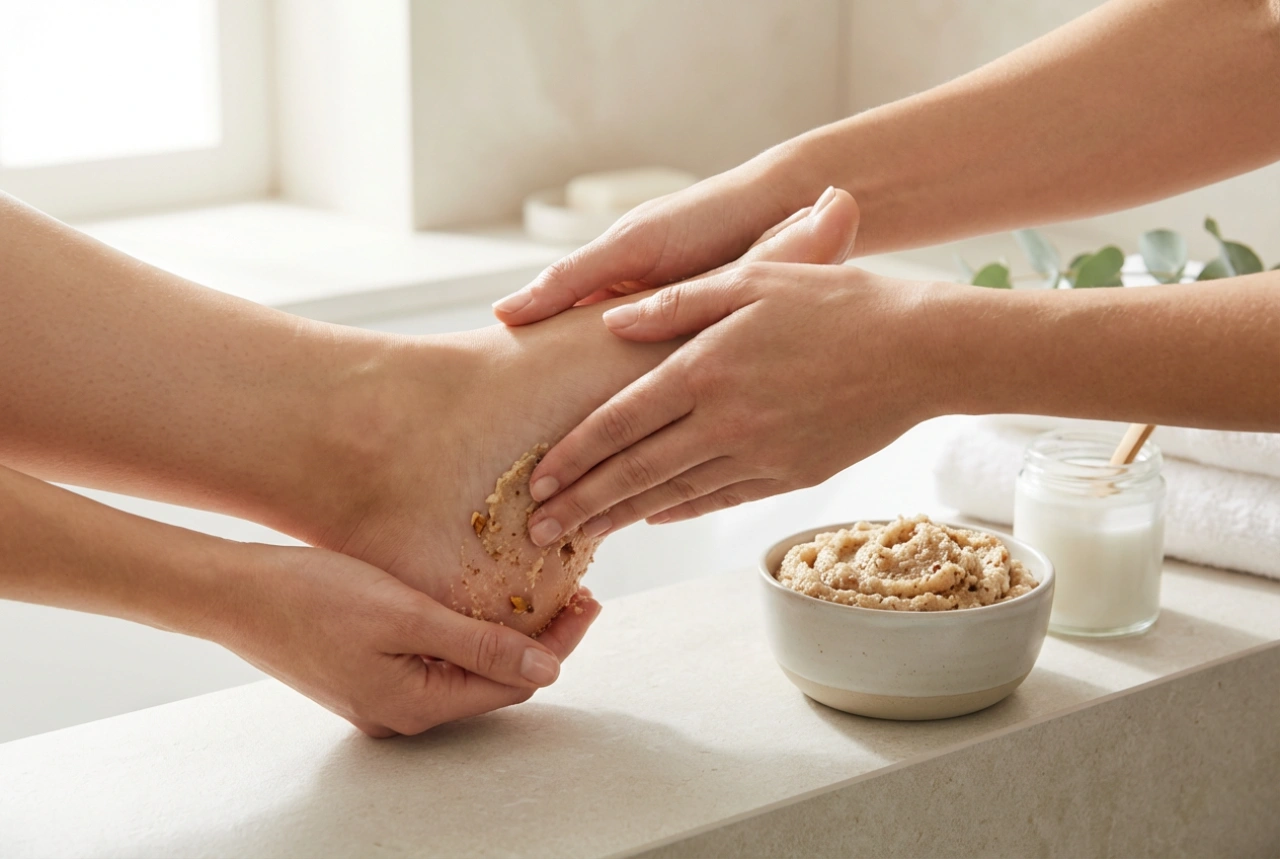
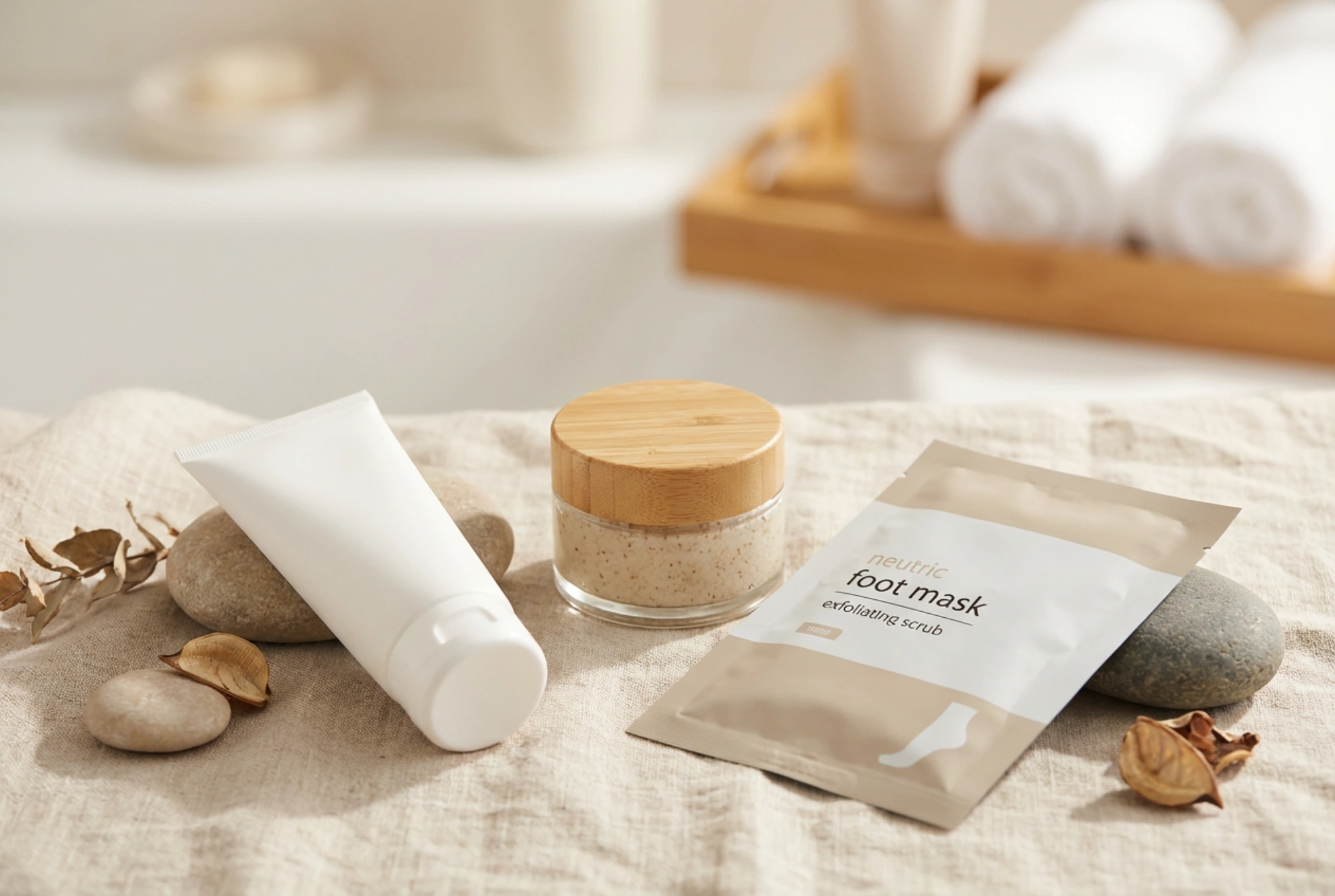
The foundation of any effective foot care routine is the removal of dead skin cells. Without this step, even the most expensive creams and masks cannot penetrate deeply enough to work effectively. A dedicated foot scrub helps to gently smooth the surface without causing irritation.
- Select a scrub with natural exfoliating particles, such as sea salt, ground apricot kernels, or sugar grains.
- Apply the product to damp skin and massage in circular motions, paying extra attention to the heels and the outer edges of the feet.
- Massage for at least three to five minutes to stimulate blood circulation and soften the epidermis.
- Rinse thoroughly with lukewarm water and gently pat the skin dry with a soft towel.
Step 2: Intensive Hydration with a Foot Mask
Once the dead skin is removed, the feet are perfectly prepared to absorb active ingredients. This is the ideal moment to apply a deeply hydrating foot mask. This step provides an intense boost of moisture that penetrates the deeper layers of the epidermis.
How to get the most out of your foot mask:
Apply a generous layer of the mask over the entire foot, focusing on the driest areas. To enhance the absorption of the active ingredients, wrap your feet in reusable foil booties or put on clean, breathable cotton socks. This creates a warm microclimate that helps the skin absorb the nourishing ingredients. Leave the mask on for the time recommended by the manufacturer, then gently massage any excess product into the skin or wipe it away with a soft tissue.
Step 3: Sealing the Moisture with an Occlusive Cream
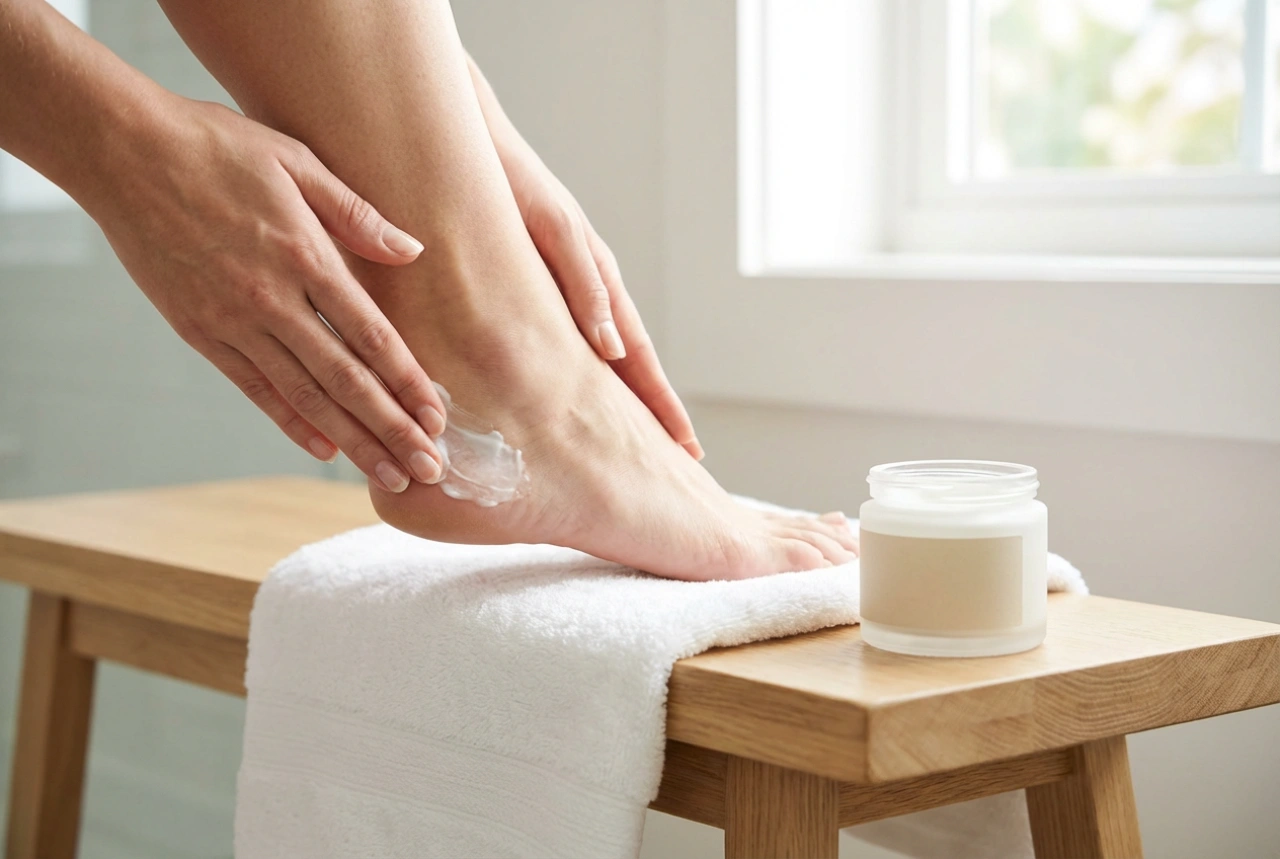
The final and most crucial step in preventing future dryness is the application of an occlusive cream. While hydrating products deliver water to the skin, occlusive cosmetics create a physical barrier on the surface that prevents this moisture from evaporating. This process, known as locking in moisture, is essential for long-lasting softness.
Look for rich creams containing nourishing plant butters, such as shea butter or cocoa butter, and natural oils like jojoba or avocado oil. These ingredients mimic the skin's natural lipid barrier, promoting regeneration and protecting the feet from friction and daily wear. Apply a thick layer of this cream every evening before bed to let it work overnight.
Daily Habits for Healthy Heels
Consistency is key to maintaining the results of your foot care routine. Aside from the weekly three-step ritual, there are simple daily habits that can prevent the skin on your heels from drying out. Avoid taking excessively hot baths, as hot water strips the skin of its natural oils. Always dry your feet thoroughly after washing, especially between the toes, and never skip your daily moisturiser. Wearing comfortable, well-fitting footwear made of breathable materials also reduces friction and pressure on the heels, preventing the buildup of hard, dry skin.