

Beautifully styled eyebrows frame the face and highlight our natural features. While many focus solely on plucking or waxing, trimming is an equally essential part of eyebrow grooming. Using a sharp pair of beauty scissors, a fine-toothed eyebrow comb, and a soft spoolie brush allows you to manage unruly, long hairs without thinning out the natural shape of your brows. This guide explains how to safely and precisely trim your eyebrows at home to achieve a neat, elegant look.
The Essential Tools for Eyebrow Trimming
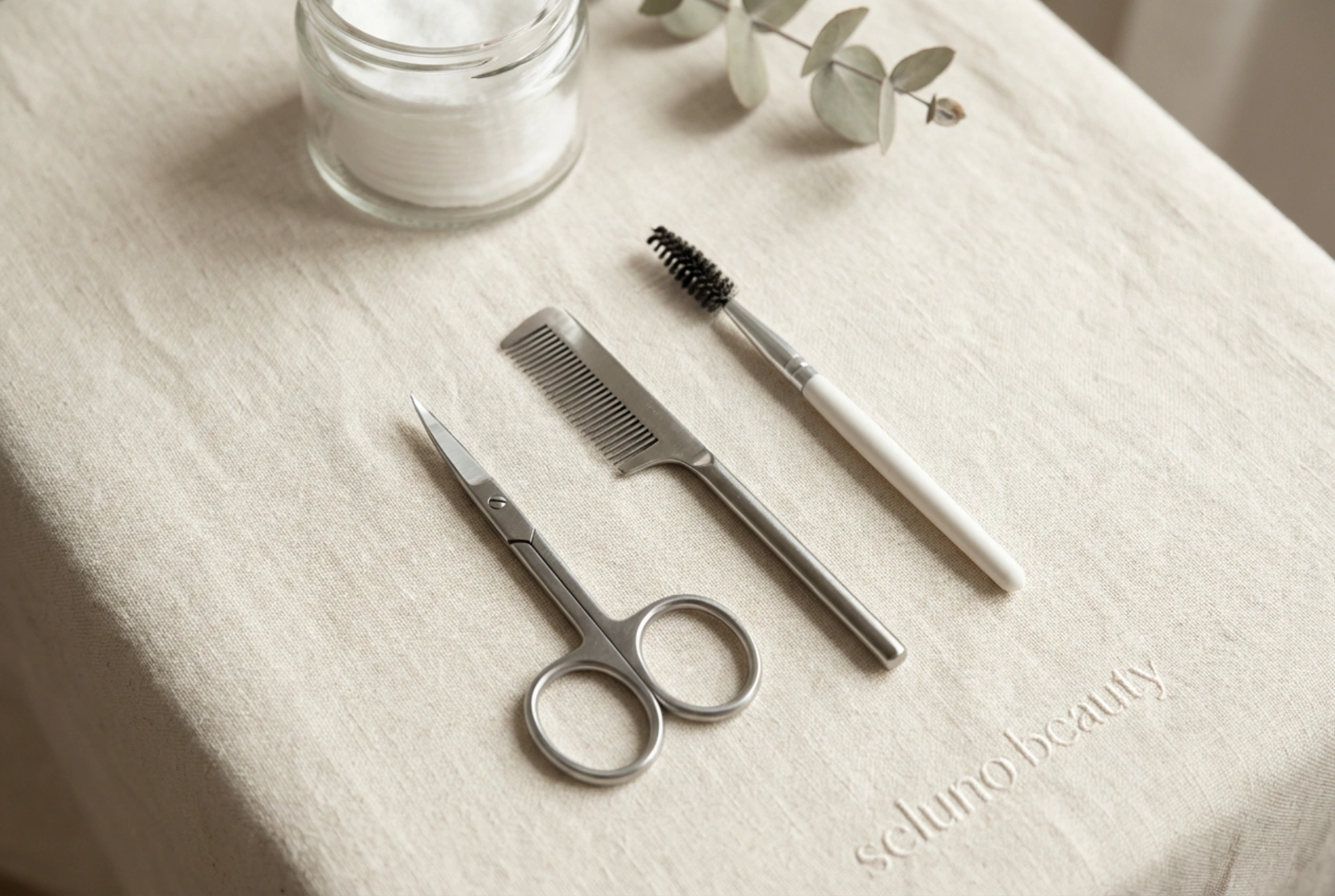
Before you begin, it is vital to gather the correct tools. Precision is key when working on the delicate eye area, and using the wrong equipment can lead to uneven results. Here are the items you should have prepared on a clean surface:
- Precision Beauty Scissors: Choose small, straight, or slightly curved scissors designed specifically for facial hair. They must be sharp to ensure a clean cut rather than bending the hair.
- Fine-Toothed Comb or Spoolie Brush: A spoolie brush or a specialized double-sided eyebrow comb is necessary to lift the hairs and isolate the ones that are too long.
- Tweezers: While trimming focuses on length, you may need tweezers to clean up single stray hairs around the perimeter.
- Good Lighting and a Mirror: Use a well-lit room with natural, diffused light. Avoid magnifying mirrors, as they can distort your perspective and lead to over-trimming.
Step-by-Step Guide to Precise Trimming
Trimming your eyebrows requires patience and a steady hand. Follow these steps to ensure you only remove the excess length without altering the natural fullness of your brows.
Step 1: Prep and Brush the Brows
Begin with a clean, dry face. Ensure there is no makeup, cream, or oil on your eyebrows, as these can make the hairs stick together. Take your spoolie brush and gently comb all your eyebrow hairs upward. This helps identify which hairs are significantly longer than your natural brow shape.
Step 2: Isolate the Long Hairs
Using your fine-toothed comb or spoolie, hold the hairs in an upward position. The tips of the hairs that extend past the upper boundary of your natural brow line are the ones that need trimming. Do not brush the entire brow up and cut in a straight line; instead, focus on individual hairs that stand out.
Step 3: The Precise Cut
Hold your beauty scissors horizontally, parallel to the top of your brow. Carefully snip only the very tips of the hairs that project beyond the natural shape. It is always better to cut too little than too much. Work in small sections, moving from the inner corner near the nose toward the arch.
Step 4: Brush Downwards and Check
Next, brush the outer tail of your eyebrow downwards. Sometimes, the hairs at the outer edge grow downwards and can look messy. If any hairs extend past the lower boundary of the brow, gently trim the tips pointing down. Once finished, brush all the hairs back into their natural position and assess the symmetry.
How to Avoid Common Trimming Mistakes
When trimming at home, it is easy to get carried away. To maintain thick, natural-looking brows, keep these simple rules in mind. Never cut too close to the skin, as this can create gaps or patches that are difficult to hide. Always step back from the mirror frequently to look at your entire face; this ensures both eyebrows remain balanced and symmetrical. Lastly, only trim the hairs that genuinely curl or stick out; most of your brow hair should remain its natural length to preserve volume.