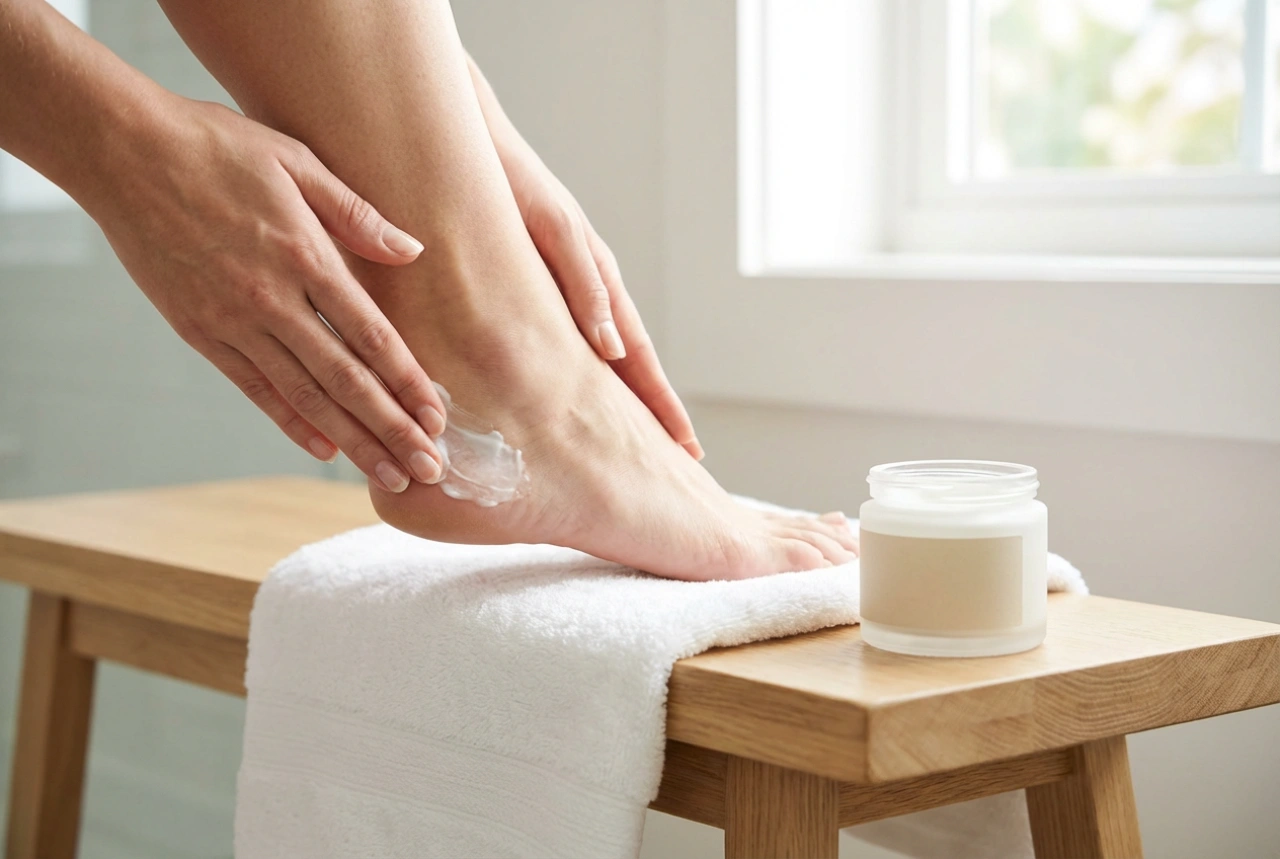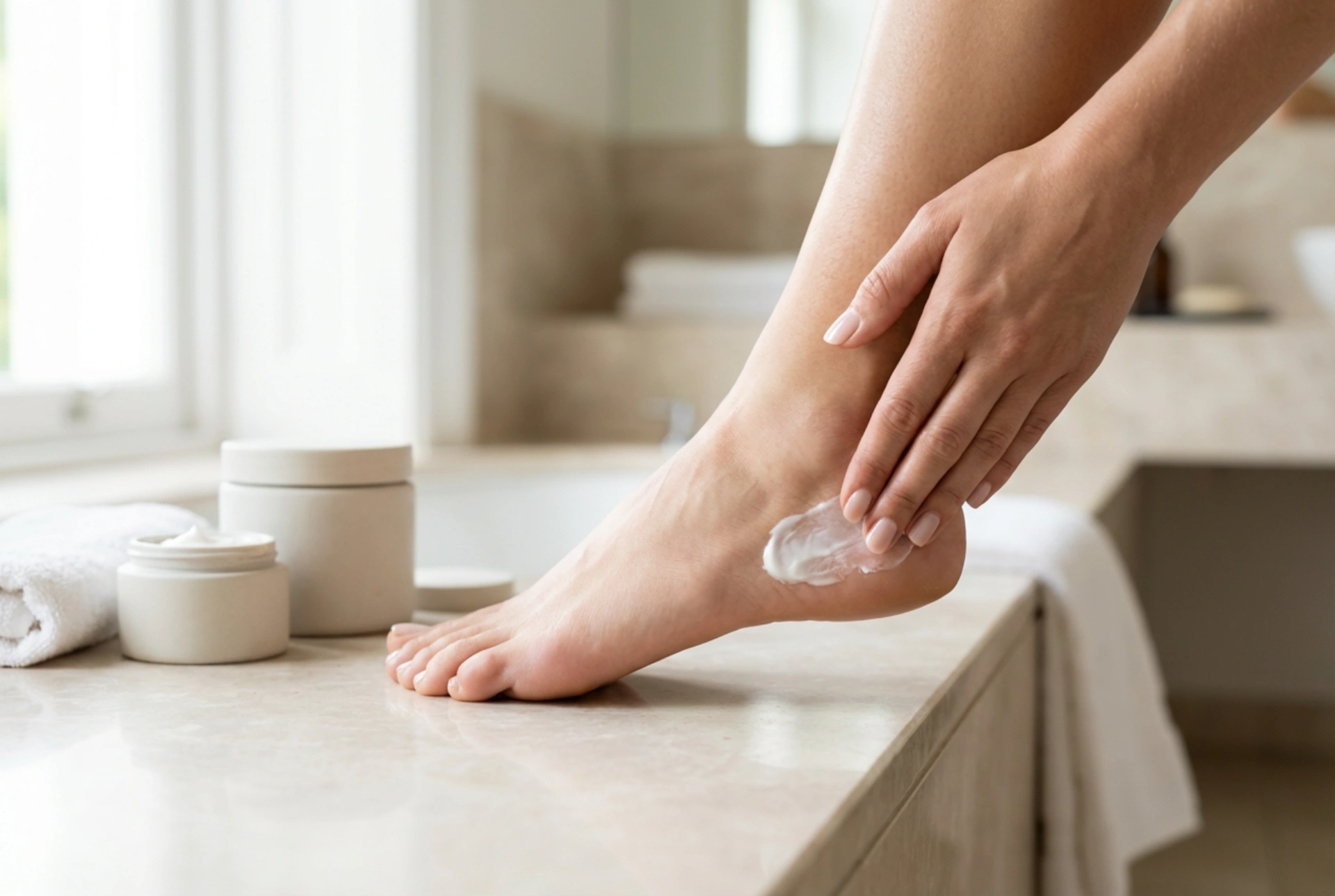


Taking care of our feet is an essential part of a complete beauty routine, yet it is often overlooked until the skin becomes noticeably dry and rough. Many of us experience the discomfort of hardened, dry skin on our heels, which can lose its natural elasticity and begin to crack. Just like a relaxing self-care ritual where you gently massage a rich, hydrating cream into your heels under soft, warm light, establishing a consistent home care routine can transform the texture of your skin. By understanding how to properly soften and support the regeneration of your feet, you can restore their smoothness and maintain healthy-looking skin all year round.
Why Does the Skin on Your Heels Become Hard and Dry?
The skin on our feet is naturally thicker and more resilient than the skin on other parts of our body. It lacks oil glands, which means it relies solely on sweat glands for moisture. Consequently, this area is highly prone to extreme dryness. When the skin on the heels loses its moisture and flexibility, the daily pressure from walking, standing, and carrying our body weight can cause it to split. Wearing open-back footwear, walking barefoot frequently, or spending long hours on hard surfaces can accelerate this process, making the heels look rough and uneven.
The Art of Gentle Exfoliation
To support the regeneration of the skin, it is important to regularly remove the accumulated layers of dead epidermal cells. However, aggressive scraping can actually trigger the skin to defend itself by producing even thicker layers of calluses. Here are some gentle ways to exfoliate your feet at home:
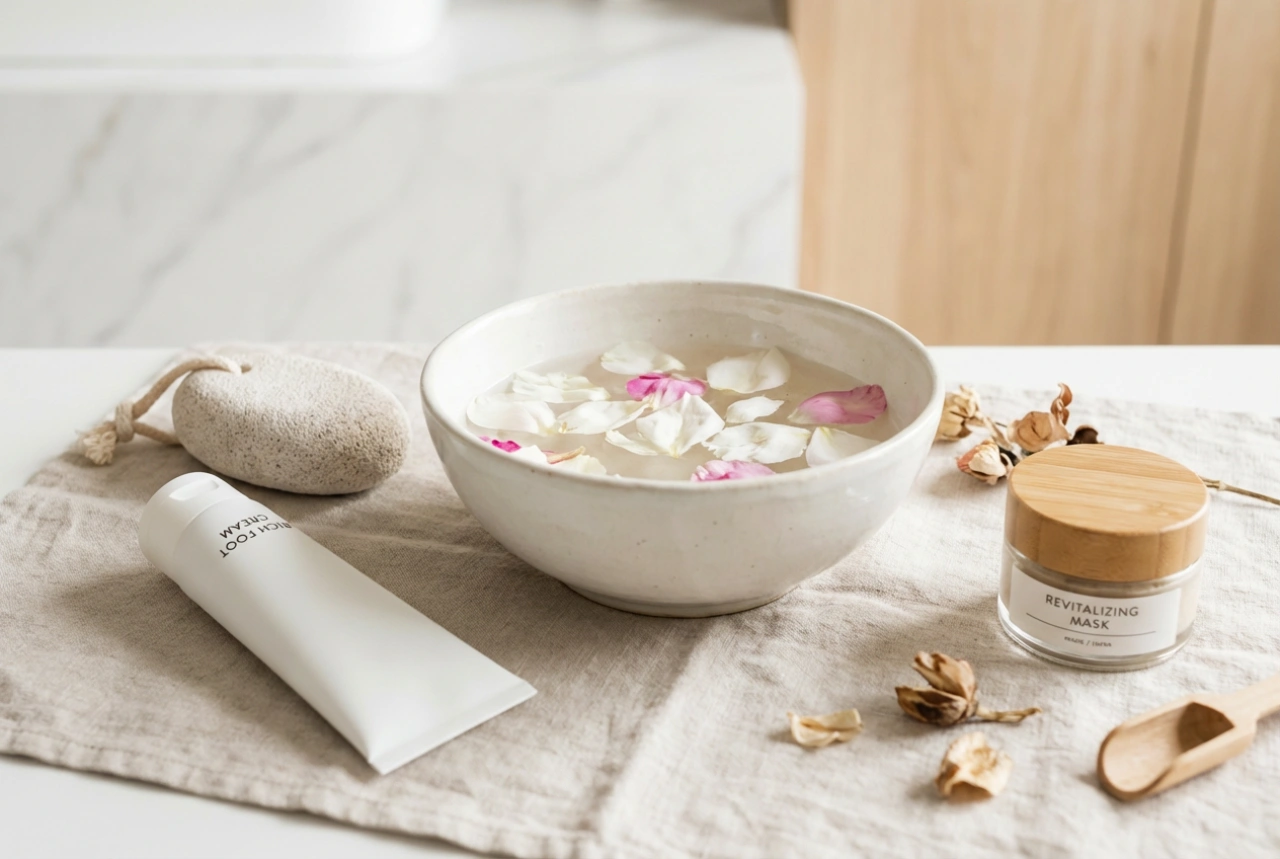
- Warm Foot Soaks: Before attempting any exfoliation, soak your feet in warm water mixed with natural oils or herbal extracts for 10 to 15 minutes. This softens the hardened skin, making it much easier to manage.
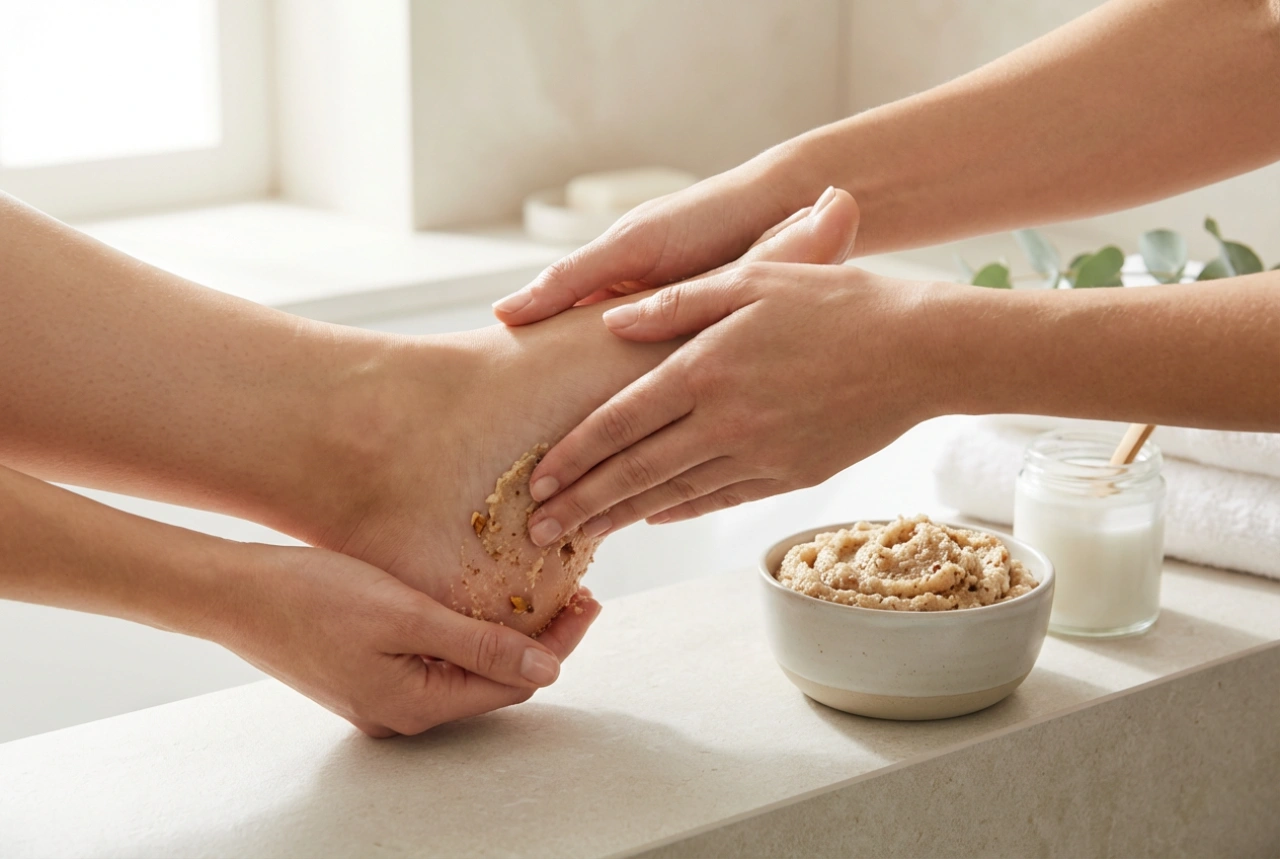
- Gentle Foot Scrubs: Use a sugar or salt-based scrub to massage the heels in circular motions. This stimulates blood circulation while softly removing superficial dead cells.
- Fine-Grained Foot Files: If you use a manual file or a pumice stone, ensure the skin is damp and use light pressure. Avoid sharp metal scrapers, as they can cause micro-injuries that hinder the natural healing process.
Key Ingredients for Softening the Skin
When selecting cosmetic products to support the regeneration of dry heels, look for deeply hydrating and nourishing ingredients. The goal is to bind moisture in the skin and strengthen the natural lipid barrier. Effective ingredients to look for include:
- Urea: A natural moisturising factor that, in lower concentrations, attracts water into the skin layers and deeply hydrates, while in slightly higher concentrations, it gently dissolves dead skin cells.
- Shea Butter and Cocoa Butter: Rich emollients that create a protective layer on the skin surface, preventing moisture loss and leaving the skin feeling incredibly soft.
- Glycerin: A classic humectant that draws moisture from the environment into the deeper layers of the epidermis.
- Natural Oils: Oils such as sweet almond, avocado, or jojoba oil supply essential fatty acids that nourish and restore flexibility to the skin.
An Intensive Overnight Foot Care Routine
The night is the perfect time for intensive skin regeneration. Since your feet are at rest, cosmetic products have ample time to penetrate deeply without being rubbed off by walking. To set up an effective overnight treatment, start by thoroughly cleansing and gently drying your feet. Apply a generous layer of a rich, nourishing foot balm or cream, paying special attention to the heels. Gently massage the product into the skin to boost local circulation. To lock in the moisture and prevent the cream from rubbing off onto your bedsheets, slip on a pair of clean, breathable cotton socks. In the morning, you will notice a significant difference in the softness and texture of your feet.
Simple Habits for Long-Term Smoothness
Consistency is the ultimate key to beautiful, smooth heels. Instead of waiting for the skin to become dry and rough, incorporate daily moisture application into your post-shower routine. Ensure you dry your feet thoroughly, especially between the toes, before applying any cream. Additionally, choose footwear that provides adequate support and cushioning for your heels, reducing the mechanical stress placed on the skin. Drinking plenty of water throughout the day also supports skin hydration from the inside out, helping you maintain soft, resilient feet effortlessly.