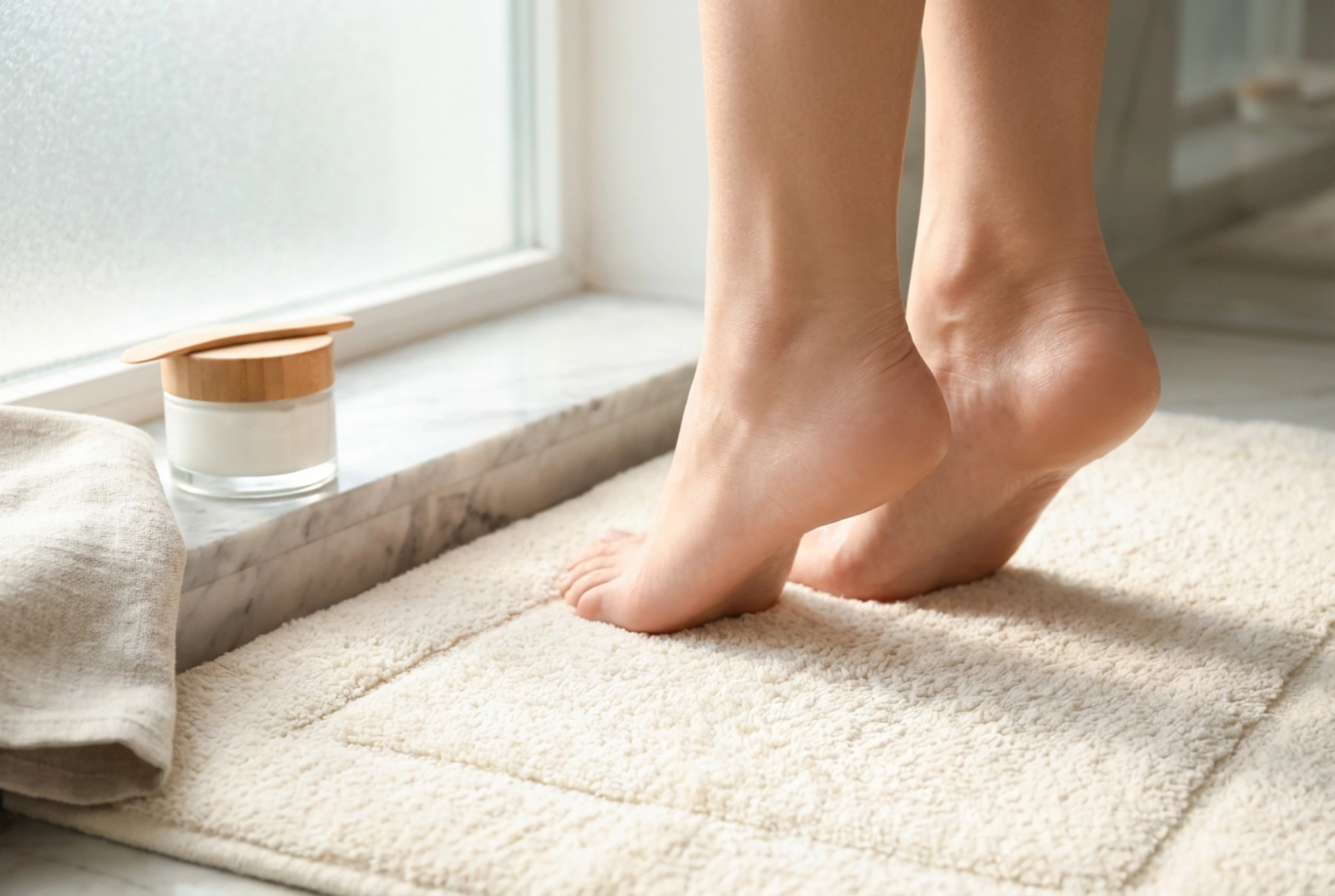


Having soft, beautifully smooth feet is a cornerstone of self-care that brings a sense of comfort and confidence. Walking barefoot on a plush bath mat after a relaxing evening routine is one of life’s simple pleasures, made even better when your heels feel silky and deeply nourished. To achieve this level of smoothness, incorporating a dedicated heel scrub into your routine is highly effective. However, to get the best results without causing irritation, it is vital to understand how to prepare your skin beforehand and how to care for it after the process.
The importance of regular heel exfoliation
The skin on our heels is naturally much thicker than the skin on the rest of our body. It has to withstand constant pressure, friction, and weight daily, which can lead to a rapid build-up of dead skin cells. Over time, if left unattended, this build-up turns into dry, rough patches. Regular exfoliation helps gently remove this outer layer of dead skin, allowing moisturising products to penetrate deeper and work more effectively. By incorporating a gentle scrub into your weekly routine, you can maintain skin elasticity and prevent the heavy build-up that leads to unsightly dryness and discomfort.
How to prepare your skin for a heel scrub
Proper preparation is key to ensuring that the exfoliation process is both safe and effective. Applying a scrub directly to dry, hard skin can sometimes cause unnecessary friction and irritation.
1. Begin with a relaxing foot soak
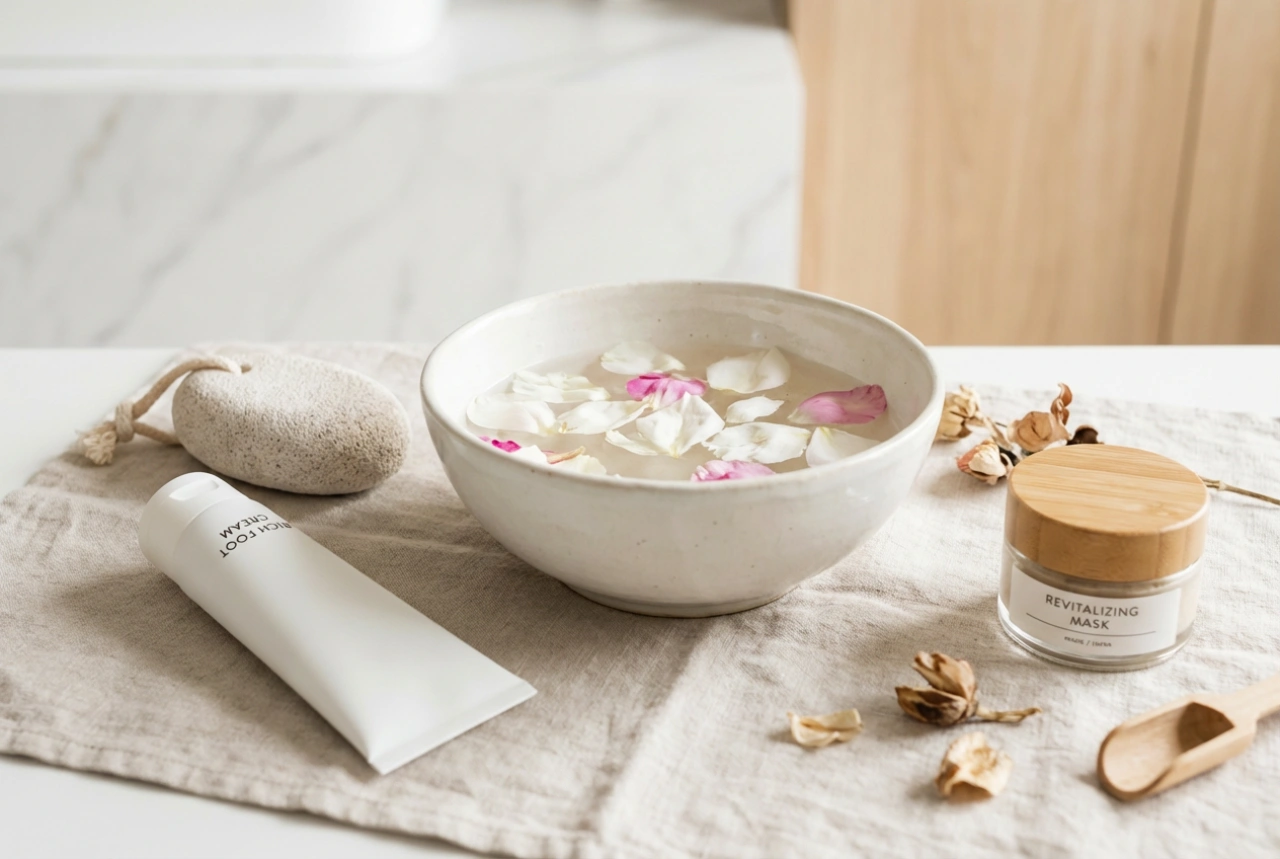
The first and most crucial step is to soften the skin. Soak your feet in a basin of warm water for about 10 to 15 minutes. You can add a few drops of natural oils, such as lavender or almond oil, or a spoonful of herbal infusion to enhance the relaxing experience. The warm water breaks down the tough outer layers of the skin, making it far more receptive to gentle exfoliation.
2. Choose the right exfoliating agent
Opt for scrubs specifically designed for feet, as they usually feature coarser particles like sea salt, sugar, or ground pumice. These are strong enough to tackle thicker skin without being overly abrasive. If you have sensitive skin, a gentler sugar-based scrub with nourishing plant oils is an excellent choice, as it exfoliates while simultaneously conditioning the skin.
How to perform the scrub safely
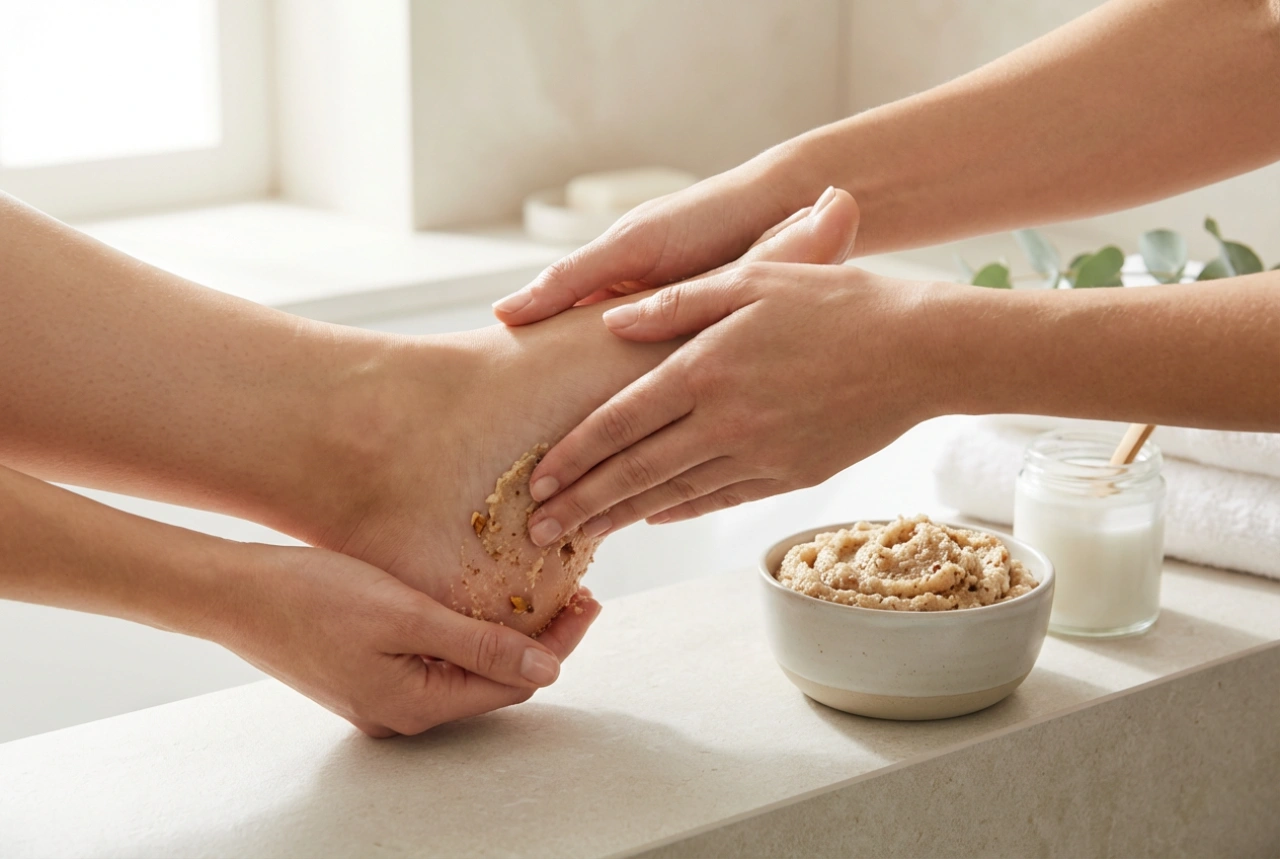
Once your skin is sufficiently softened, gently pat your feet dry with a clean towel, leaving them slightly damp. Apply a generous amount of your chosen scrub to your heels and soles. Massage the product in circular motions using moderate pressure. Focus on the areas most prone to dryness, such as the back of the heels and the outer edges of the feet. Avoid aggressive scrubbing or using sharp tools, as this can trigger the skin's protective mechanism, causing it to produce even thicker skin in response. Rinse thoroughly with lukewarm water and pat dry.
What to avoid after exfoliating your heels
The care you provide after exfoliating is just as important as the treatment itself. Newly exfoliated skin is delicate, fresh, and temporarily more vulnerable. To keep your feet soft and healthy, avoid these common mistakes:
- Walking barefoot on hard surfaces: Immediately after exfoliating, your skin lacks its usual protective barrier. Walking barefoot on hard floors or outdoors can cause micro-damage and quickly re-introduce dirt and dryness.
- Exposing feet to extreme heat: Avoid very hot baths, saunas, or direct heat sources right after the treatment, as high temperatures can strip away essential moisture and cause irritation.
- Using harsh chemicals: Steer clear of heavily fragranced lotions or alcohol-based foot sprays immediately after a scrub. Stick to simple, nourishing creams designed for deep hydration.
- Over-exfoliating: Limit the use of physical scrubs to once or twice a week. Overusing them can thin the skin, leading to increased sensitivity and discomfort.
Post-treatment nourishment and maintenance
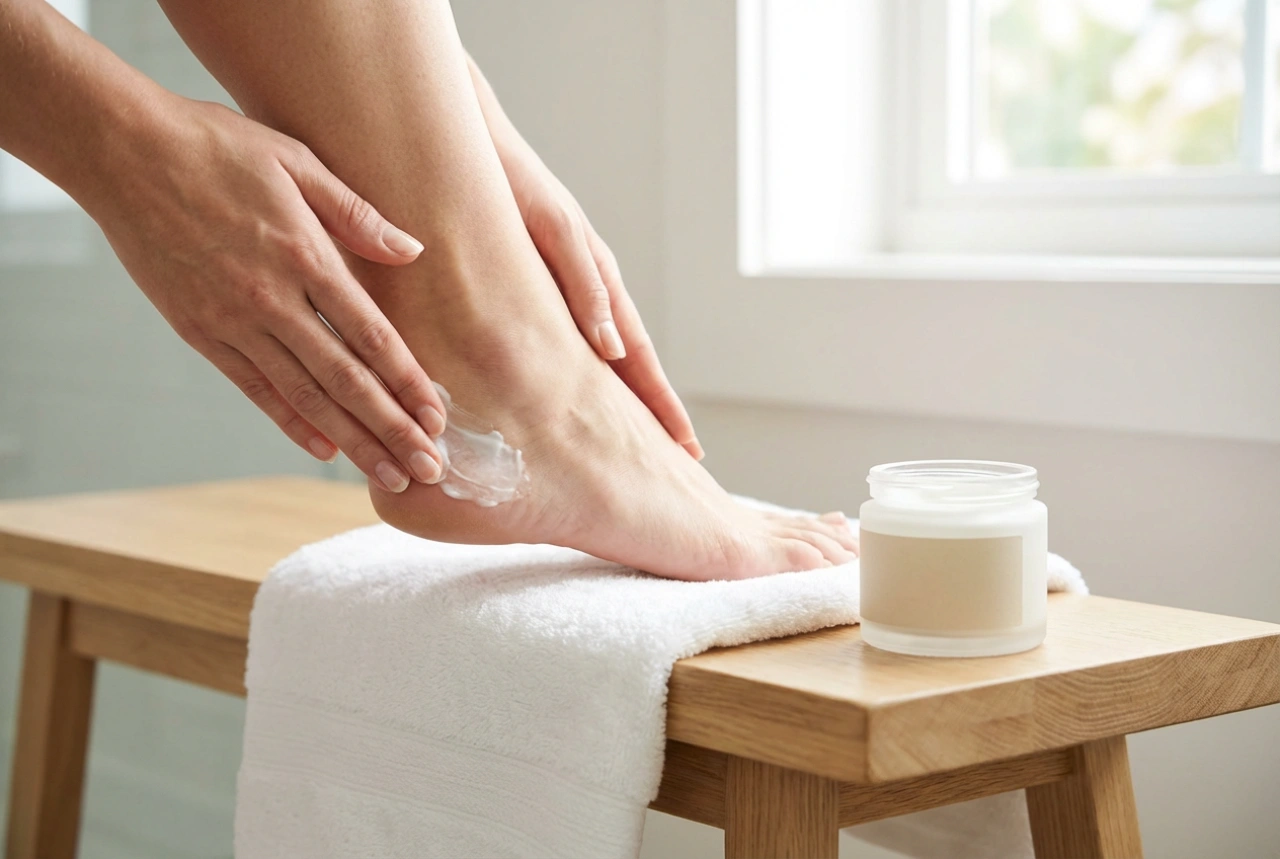
After rinsing off the scrub and gently drying your feet, immediately apply a rich, unbranded moisturising cream or balm. Look for ingredients like shea butter, glycerin, or natural plant oils that help seal in moisture. Massaging the cream into your heels not only hydrates the skin but also improves circulation. To lock in the moisture overnight, you can slip on a pair of clean, breathable cotton socks. This simple practice ensures you wake up with incredibly soft, pampered feet that feel healthy and revitalised.