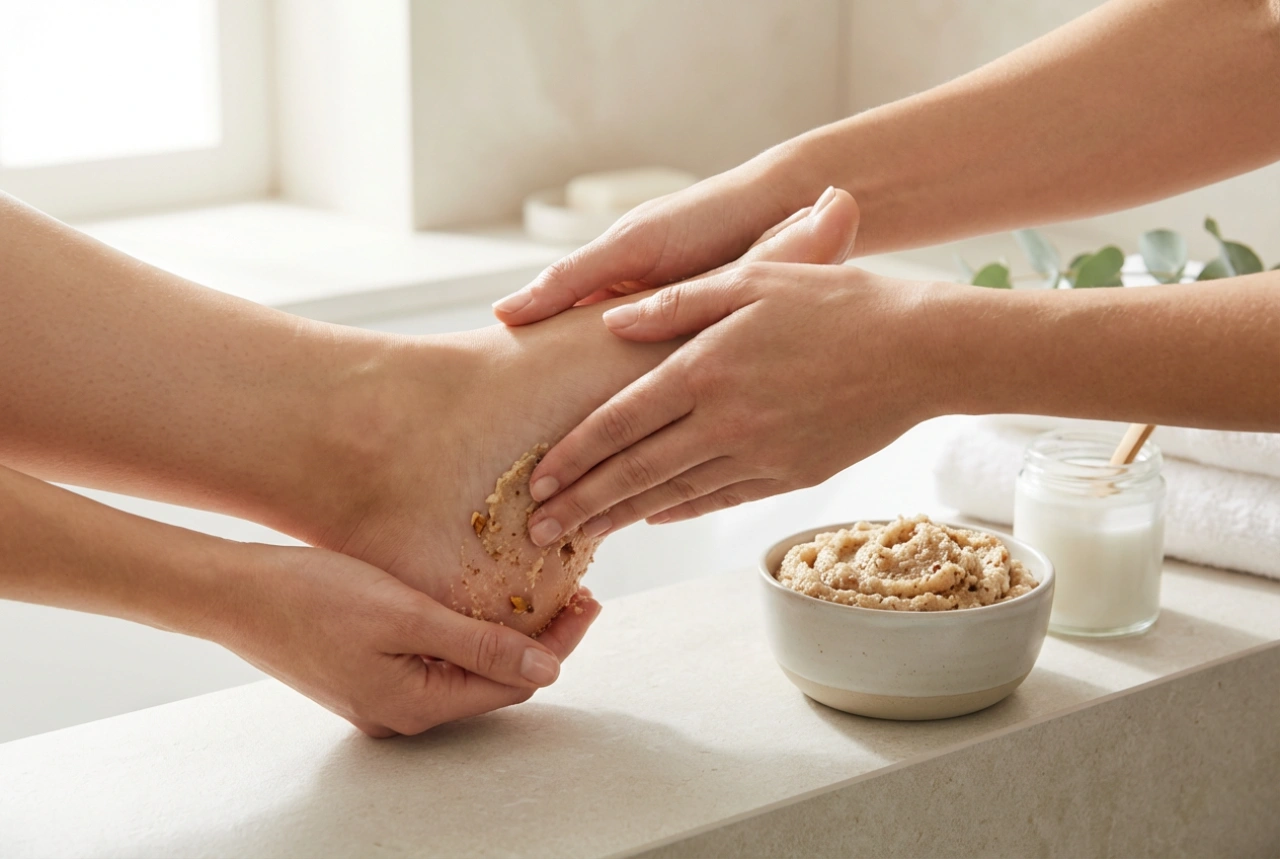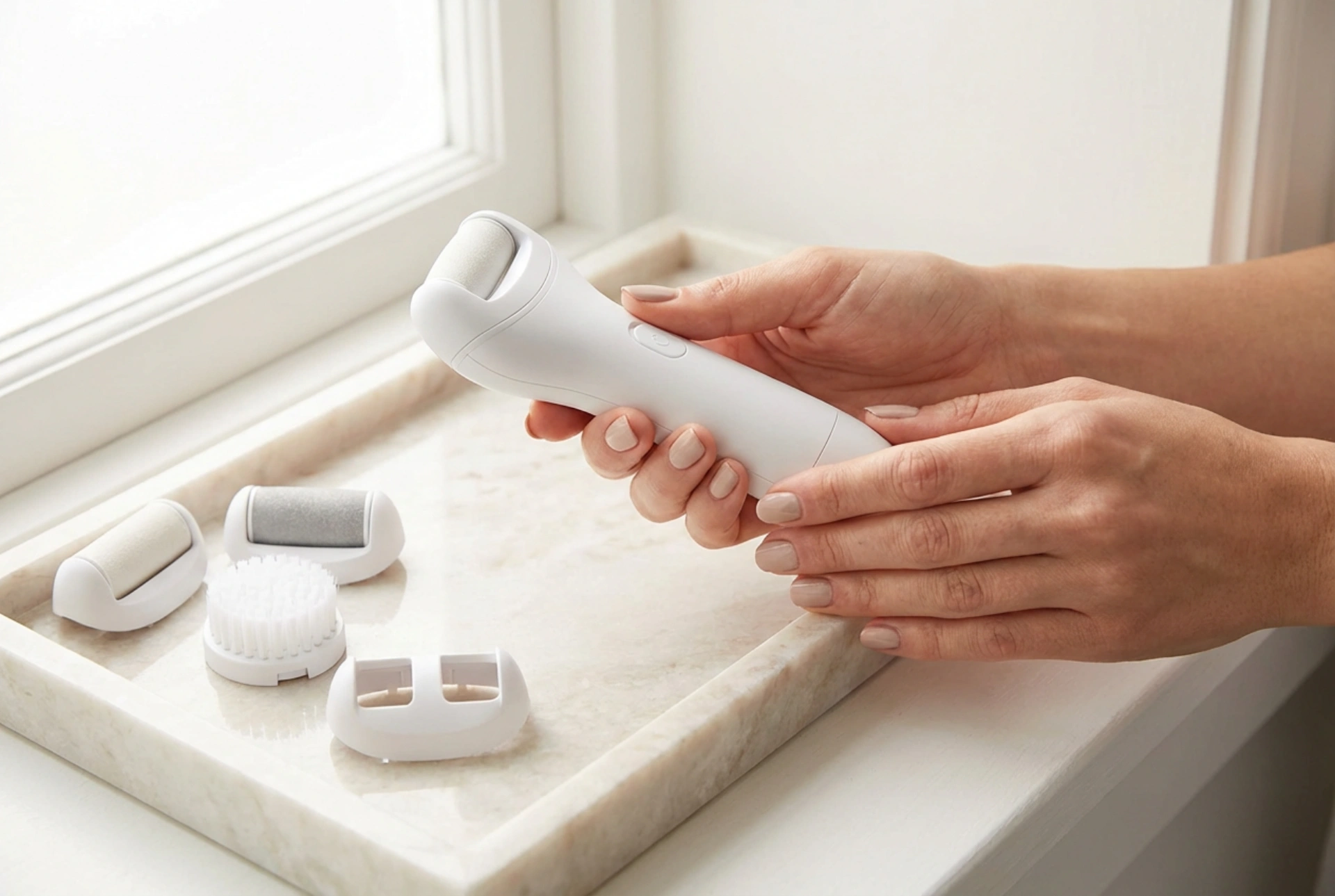


Achieving perfectly smooth, soft heels is a key element of comprehensive foot care. While professional salons offer these services, modern electric foot files and pedicure devices make it possible to enjoy high-quality care in the comfort of your own home. Having a sleek, modern device with various attachments allows you to tailor the treatment to your specific skin needs. However, to achieve beautiful results without irritation, it is essential to understand how to select the right attachments, adjust the rotation speeds, and follow fundamental safety rules.
Selecting the Right Attachments and Grits
The secret to a successful pedicure lies in choosing the correct attachment, often referred to as a cutter or burr. These accessories come in various shapes and roughness levels, each designed for a specific task. Understanding their differences is crucial for a smooth and safe experience:
- Coarse abrasive rollers or caps: Ideal for the initial removal of thickened, dry skin on the heels. They should be used with caution and only on areas that require significant smoothing.
- Medium-grit attachments: Perfect for general smoothing of the sole and refining the skin texture after using coarser tools.
- Fine-grit or polishing buffers: These are used in the final stage of the pedicure to buff the skin, leaving it incredibly soft and preventing the rapid return of roughness.
Using the correct shape is also important. Rounded, wider attachments are best suited for large areas like the heels, while smaller, cylindrical options can help navigate more precise areas around the toes.
Mastering Speed Settings for Perfect Control
Modern electric foot files come equipped with adjustable speed settings. Knowing when to speed up or slow down is vital for both the effectiveness of the treatment and the safety of your skin. As a general rule, lower speeds offer more control, making them ideal for beginners and sensitive areas. High speeds are more efficient but require a confident hand.
When starting your foot care routine, always begin at the lowest speed setting. This allows you to feel how the device interacts with your skin. For thicker areas of dry skin on the heels, you can gradually increase the speed, but remember that higher speeds generate more heat. If you feel any warmth, immediately lower the speed or move to another area.
Essential Rules for Safe Operation
To keep your home pedicure routine completely safe and highly effective, there are several key rules you must follow during operation:
- Keep the device moving: Never hold the spinning attachment in one spot for more than a couple of seconds. Constant, gentle gliding motions prevent heat build-up and uneven skin removal.
- Do not apply heavy pressure: Let the machine do the work. Pressing too hard can stall the motor or, worse, remove too many layers of skin, leading to discomfort and sensitivity.
- Work on completely dry skin: Unless your device is specifically rated for wet use, it is best to perform this treatment on dry feet. Dry skin is easier to exfoliate precisely, allowing you to see exactly how much dry skin you are removing.
- Hygiene is paramount: Always clean and sanitise the attachments after every use. This simple step ensures the longevity of your device and maintains high hygiene standards.
Nurturing Your Feet After the Treatment
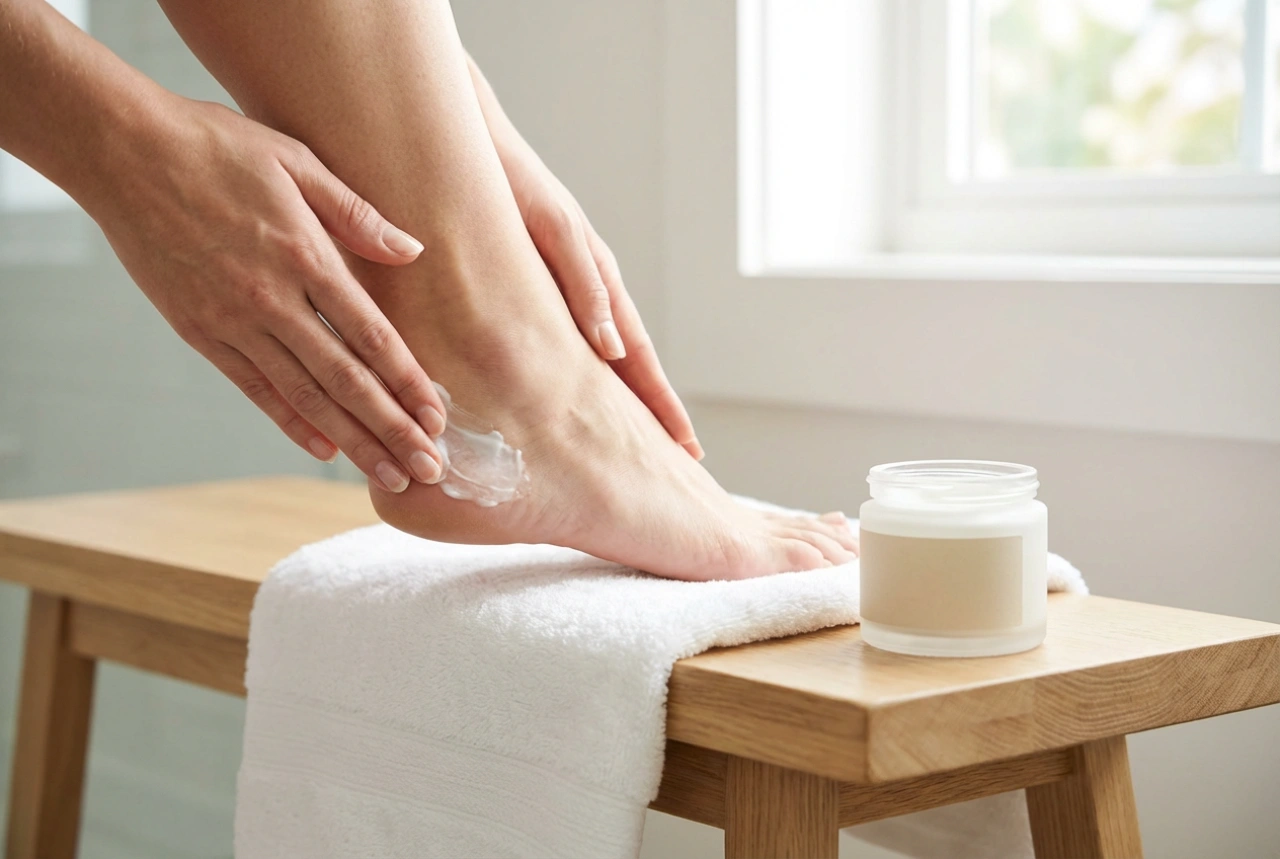
Once you have finished using your electric foot file, the care process is not yet complete. Removing dry skin leaves the underlying layers receptive to hydration. Wash your feet with lukewarm water to remove any dust, pat them dry gently, and immediately apply a rich, nourishing foot cream. Look for products containing ingredients like shea butter, glycerin, or natural oils, which help lock in moisture and keep your heels beautifully smooth for longer.