

Our feet carry us through every single day, yet they are often the most neglected part of our body care routine. A serene evening spent pampering your feet not only provides a moment of deep relaxation but also restores the skin's natural softness and elasticity. When we think of a foot care ritual, applying a luxurious, rich mask is one of the most effective ways to combat dryness and rough patches. To truly unlock the benefits of these nourishing formulas, it is not enough to simply apply the product and wait. Understanding how to properly prepare the skin, master the application technique, and utilise the power of occlusion can elevate a simple home routine into a highly effective, restorative treatment.
Step 1: Preparing the Skin for Maximum Absorption
For any moisturising or nourishing product to work effectively, the skin must be prepared to receive it. Dead skin cells build up quickly on the soles of our feet, creating a barrier that prevents creams and masks from penetrating deeply. Preparing the skin ensures that the active ingredients in your foot mask can work exactly where they are needed most.
The Warm Foot Bath
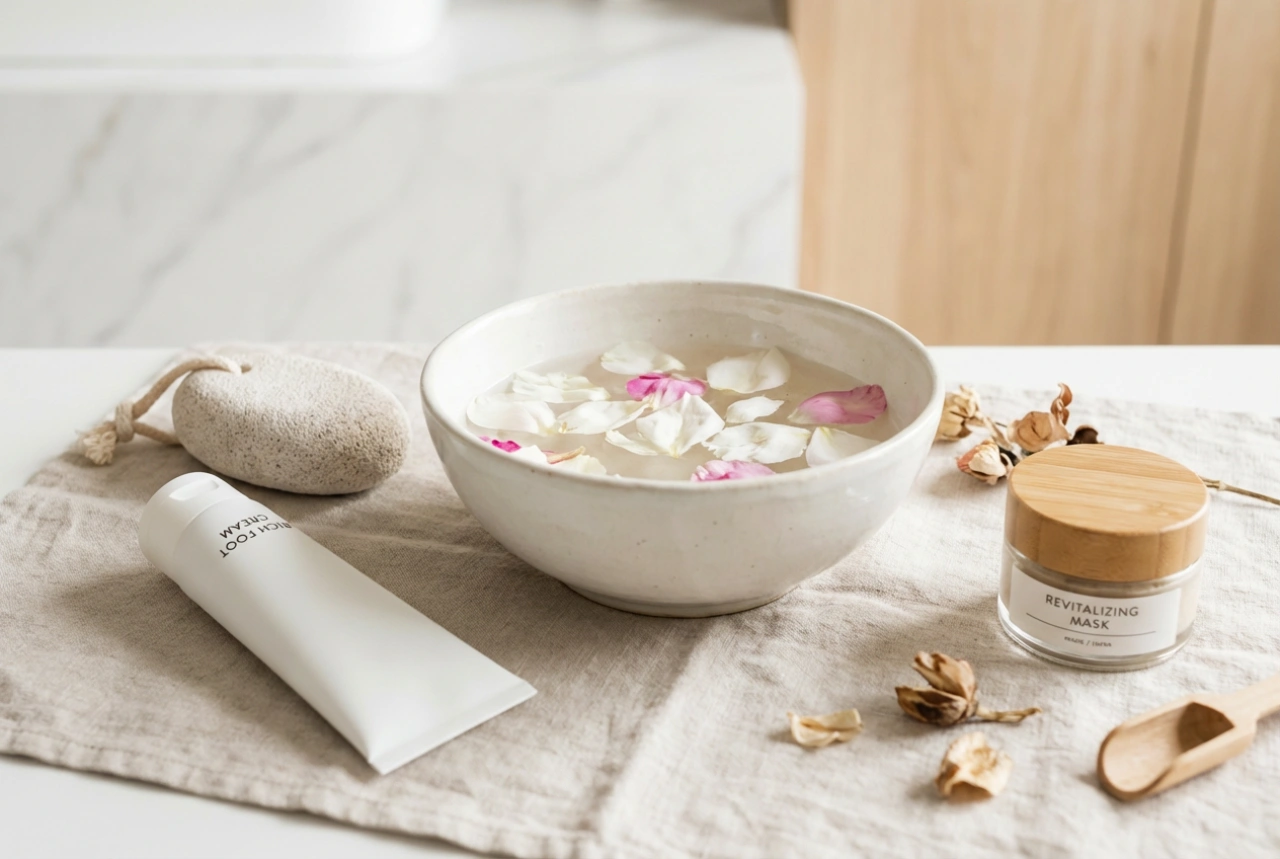
Begin your ritual with a relaxing, warm foot bath. Soak your feet for ten to fifteen minutes in warm water. You can add a few drops of natural essential oils, like lavender or eucalyptus, or some simple bath salts to soften the epidermis. This step is crucial because it softens hard skin, opens the pores, and relaxes the muscles, preparing the feet for the next steps.
Gentle Exfoliation
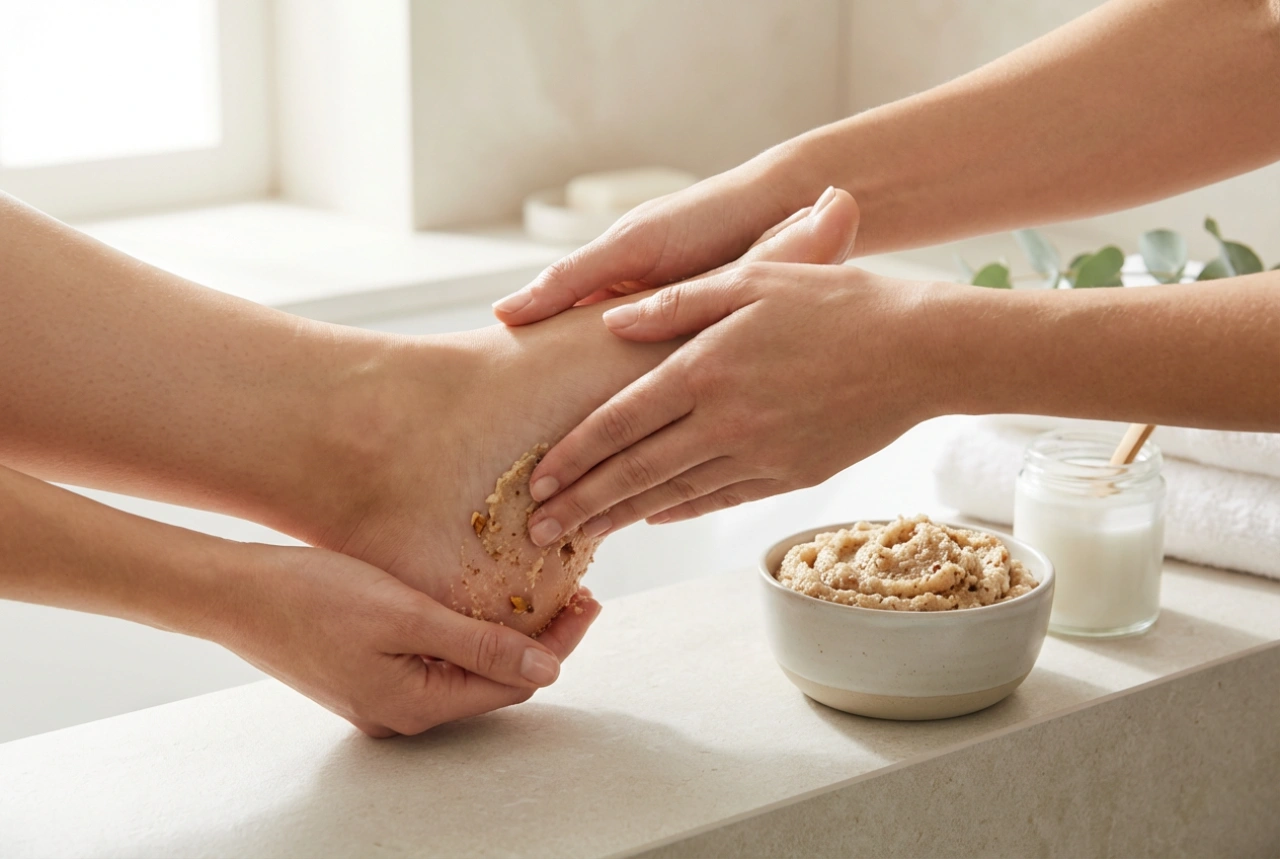
Once the skin is soft, use a gentle foot scrub or a soft pumice stone to buff away rough patches. Focus on the heels, the balls of the feet, and the edges of the toes. Avoid harsh, aggressive scrubbing, as this can irritate the skin and trigger a protective response where the skin grows back even thicker. The goal is to gently smooth the surface, not to strip the skin entirely.
Thorough Drying
After rinsing, dry your feet thoroughly with a soft, clean towel. Pay close attention to the areas between the toes, as trapped moisture there can lead to unwanted irritation. The skin should be completely dry before applying any product, as excess water can dilute the mask and reduce its efficacy.
Applying the Foot Mask: Techniques for Comfort
With your feet freshly cleansed and exfoliated, they are ready for the application of the mask. This step should be approached as a mindful massage, enhancing circulation and promoting a feeling of lightness in the lower limbs.
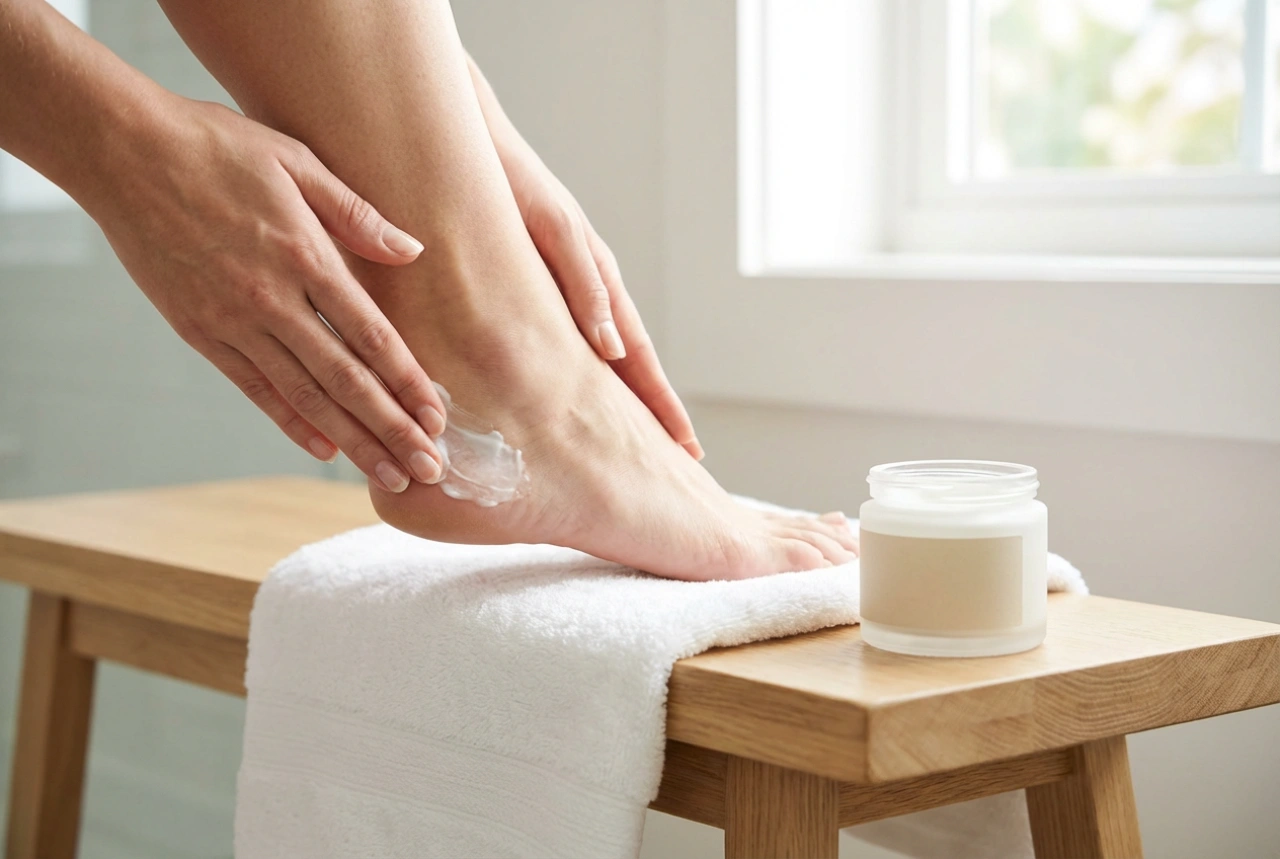
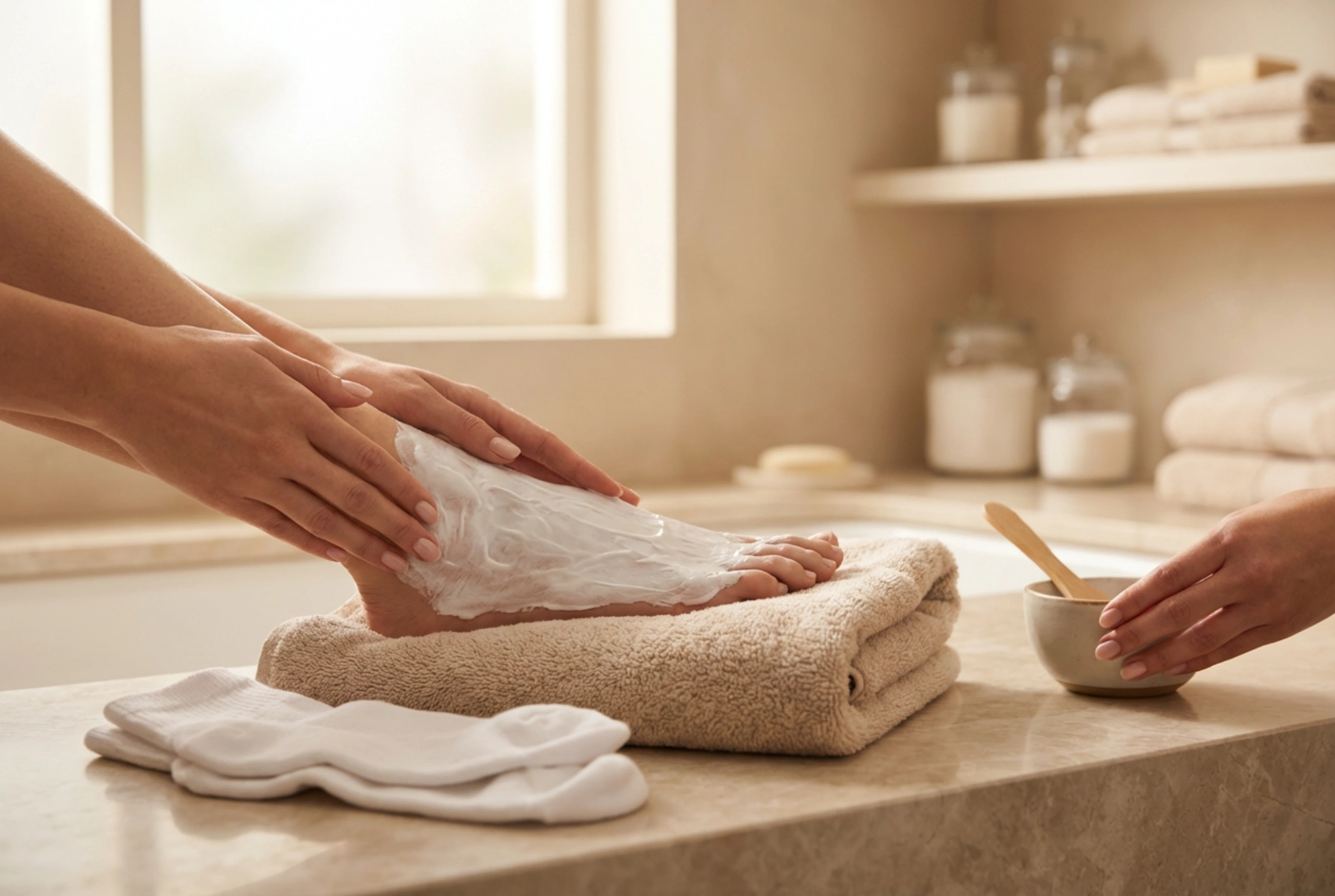
Take a generous amount of the mask and warm it slightly between your hands. Start applying it from the toes, moving upwards towards the ankles. Use firm, circular motions to massage the product into the skin. Pay extra attention to areas prone to extreme dryness, such as the heels and the outer edges of the feet. Massaging not only helps the product absorb but also stimulates blood flow, which supports skin regeneration and brings immediate relief to tired feet.
Make sure to apply an even, thick layer of the mask. Unlike regular daily moisturisers, a mask is designed to sit on the skin in a rich layer, providing continuous hydration over a longer period.
The Power of Occlusion: Why Socks Make a Difference
Once the mask is applied, the next step is to optimise its effects. This is where the concept of occlusion comes into play. In skincare, occlusion refers to creating a barrier on the skin that traps moisture and prevents the active ingredients from evaporating into the air.
By covering the freshly coated foot, you create a warm, moist microclimate. This warmth helps to soften the stratum corneum (the outermost layer of the skin) even further, allowing the nourishing ingredients to penetrate deeper and work more efficiently. It also protects your bed sheets, carpets, and towels from getting stained, allowing you to relax completely during the treatment.
Choosing the Right Material
For the best results, place a pair of soft, clean, white cotton socks gently over your coated feet. Cotton is highly recommended because it is a breathable, natural fibre. It retains warmth and holds the product against the skin without causing excessive sweating, which could lead to irritation. Avoid synthetic materials, as they do not allow the skin to breathe and can trap heat uncomfortably.
Aftercare and Maintaining Softness
The duration of the occlusion phase depends on the specific instructions of the mask you are using, but generally, twenty to thirty minutes is ideal for a standard treatment. Some rich, lipid-based creams can even be left on overnight for an intensive treatment, provided you are using comfortable, breathable cotton socks.
Once the time is up, gently remove the socks. If the mask is a leave-on formula, massage any remaining excess product into the skin of your feet and lower legs. If the product requires rinsing, wash it off gently with lukewarm water and pat dry. Follow up with a light, daily foot cream to lock in the hydration.
To maintain the soft, smooth results, consistency is key. Integrating this complete routine—combining exfoliation, mask application, and occlusion—into your weekly self-care schedule will prevent the build-up of rough skin and keep your feet feeling light and hydrated all year round.
Universal Benefits of Regular Foot Care
- Enhanced Hydration: Deeply nourishes dry, flaky areas that regular lotions cannot fully restore.
- Improved Elasticity: Keeps the skin flexible, preventing the discomfort of tight, dry skin.
- Deep Relaxation: The combination of a warm soak, massage, and quiet resting time reduces stress.
- Protection: Consistent care maintains the skin’s natural barrier, keeping the feet smooth and healthy-looking.