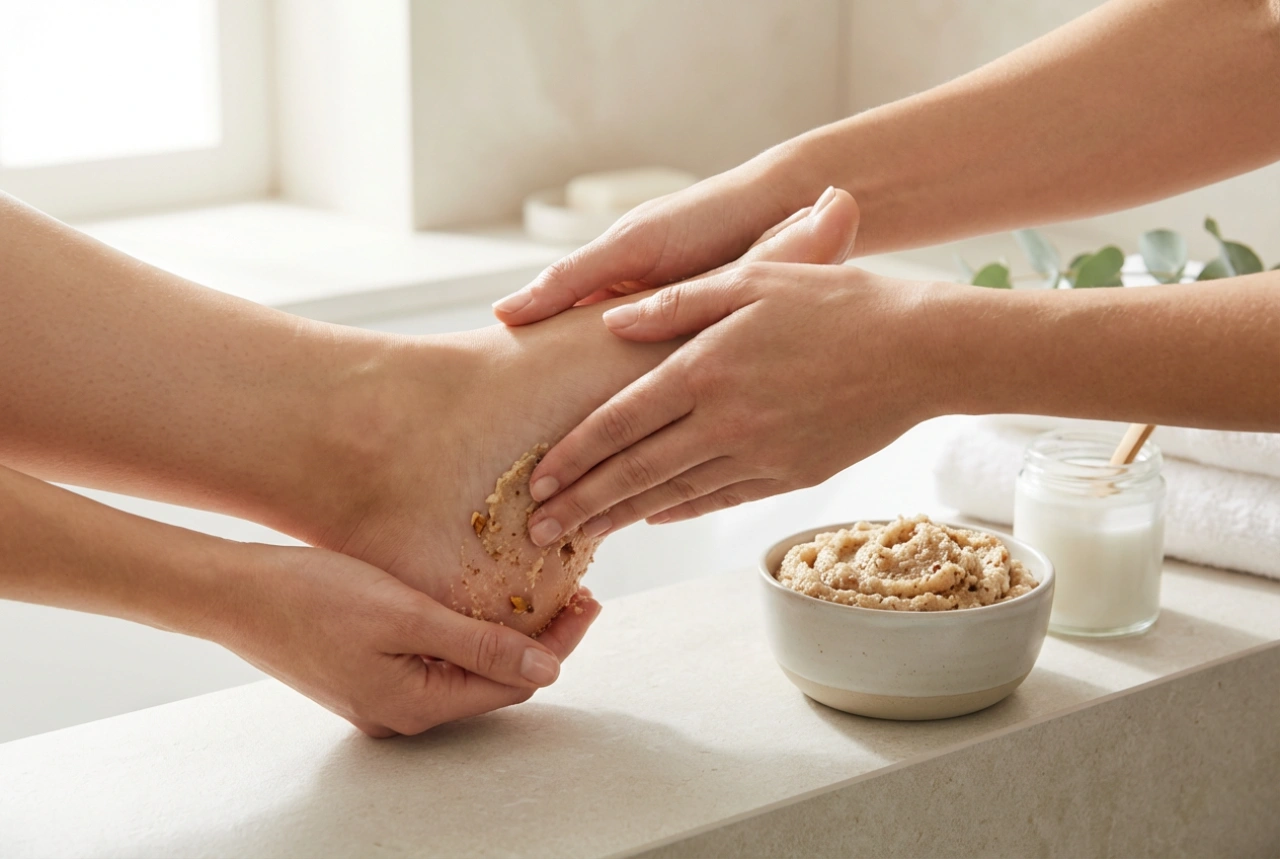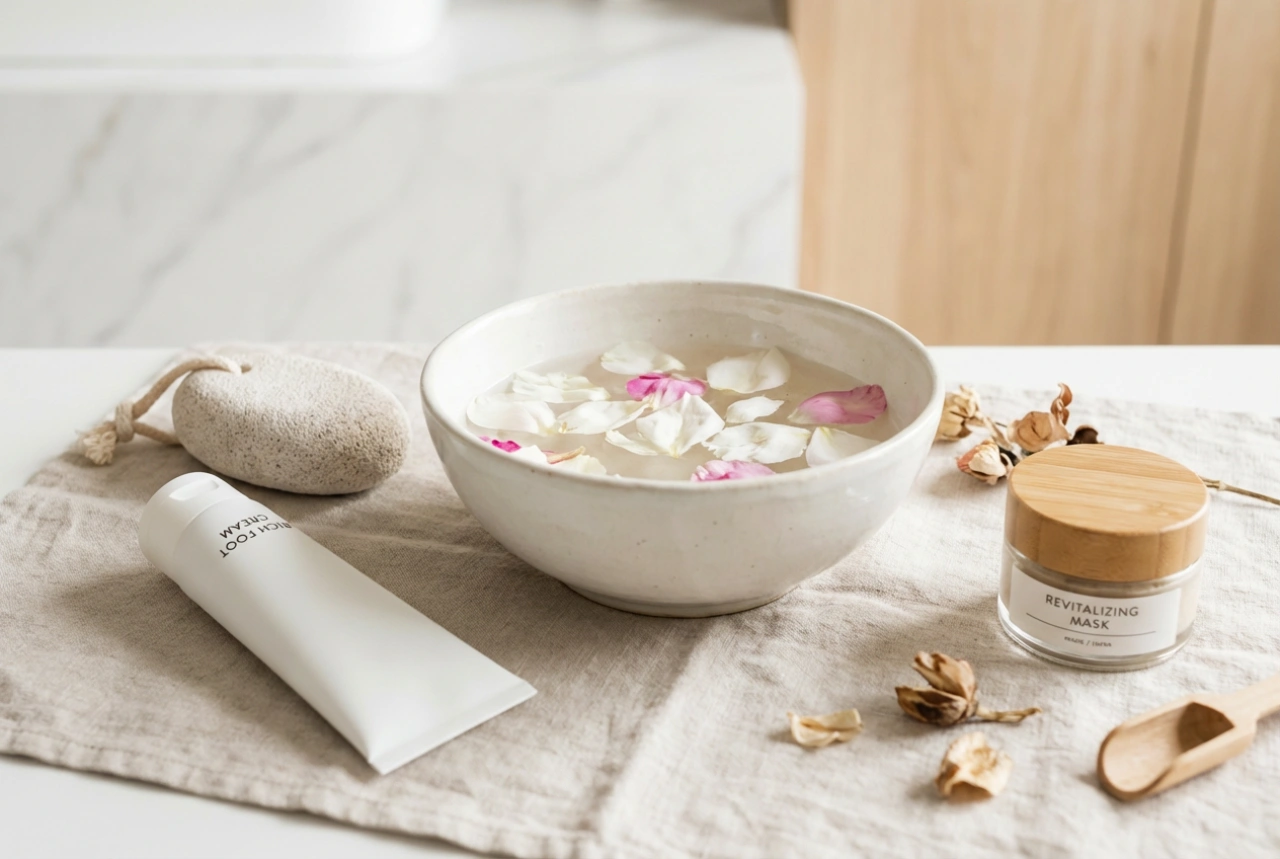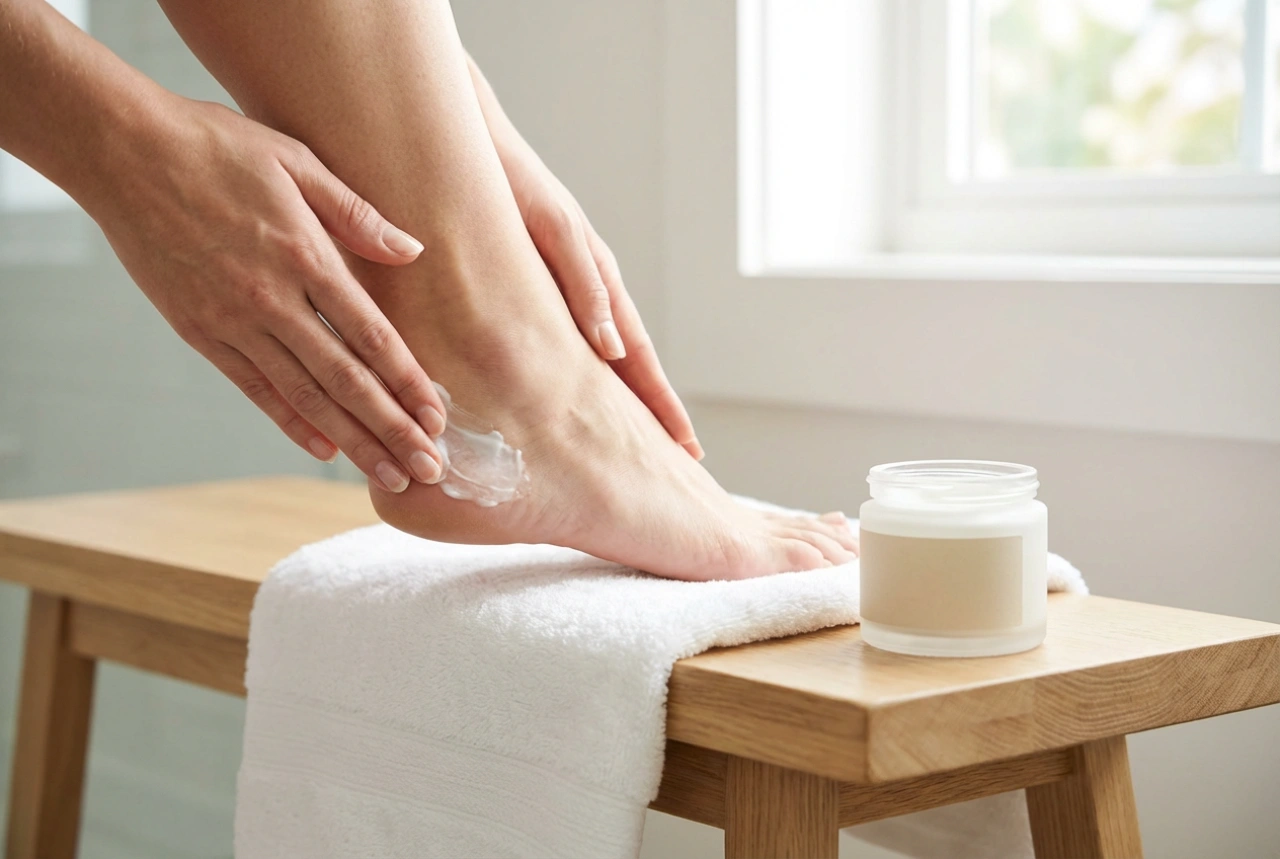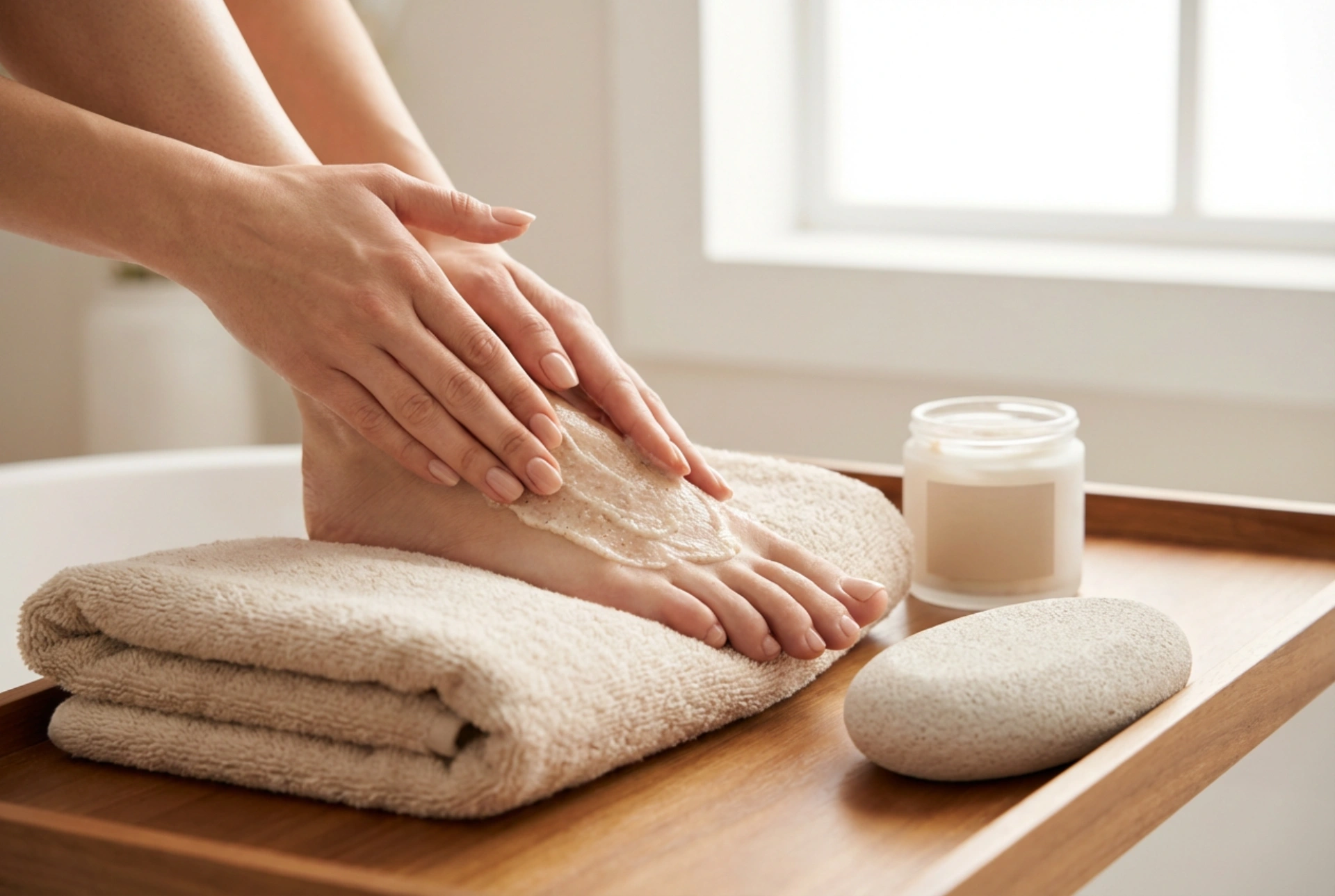


Taking care of our feet is an essential part of a holistic beauty routine, yet it is often overlooked. Creating a serene, at-home self-care moment by gently massaging your feet with a rich exfoliating cream, whilst resting them on a soft, light-coloured towel, can instantly relieve the tension of a long day. Foot scrubs not only smooth the skin but also stimulate circulation and prepare the feet to absorb nourishing moisturisers. By introducing a mindful foot exfoliation routine, you can maintain soft, healthy-looking skin throughout the year without needing complex salon treatments.
Choosing the Right Foot Scrub: Types and Ingredients
When selecting or preparing an exfoliant for your feet, it is important to understand the different types available. Because the skin on our soles is significantly thicker than the skin on the rest of our body, foot scrubs typically require slightly more robust exfoliating agents to work effectively.
- Mechanical Scrubs: These contain physical particles that physically sweep away dead skin cells. Sugar and salt scrubs are highly popular and can easily be prepared at home. Salt particles are generally coarser and excellent for rough heels, while sugar dissolves slightly faster and offers a gentler experience. Other natural alternatives include ground apricot stones, coffee grounds, or silica.
- Enzymatic and Acid-Based Scrubs: For those who prefer a gentler approach without manual scrubbing, mild enzymatic scrubs utilise natural fruit enzymes (such as papaya or pineapple) to dissolve dead skin cells. Gentle alpha-hydroxy acids (AHAs) like lactic acid can also be used in low concentrations to gradually soften dry patches.
Combining these ingredients with nourishing base oils, such as sweet almond oil, shea butter, or coconut oil, ensures that the skin is moisturised simultaneously, preventing dryness immediately after washing the scrub away.
How Often Should You Exfoliate Your Feet?
Consistency is key when it comes to foot care, but over-exfoliating can lead to irritation and sensitivity. The skin on our feet needs time to regenerate naturally. For most skin types, performing a foot scrub once or twice a week is highly sufficient to maintain a smooth texture.
If your feet are particularly prone to dry patches or rough heels, you might start with twice a week, gradually reducing the frequency to once a week as the condition of your skin improves. During the warmer summer months, when feet are more exposed to dry air, dust, and open-toed shoes, you might feel the need for more frequent care. Conversely, in the winter, a weekly nourishing scrub combined with a heavy balm is ideal for keeping dryness at bay. Remember to always listen to your skin and avoid exfoliation if there are any open cuts or severe irritations.
Step-by-Step Foot Massage and Scrubbing Technique
To turn a simple beauty step into a deeply relaxing ritual, incorporating a proper massaging technique is highly beneficial. A gentle massage during exfoliation helps the active ingredients penetrate better while providing a soothing sensation. Here is how to perform a relaxing at-home foot massage:
1. Prepare with a Warm Soak
Start by soaking your feet in warm water for about five to ten minutes. This softens the keratin layer, making the exfoliation process much more effective and gentle on the skin.
2. Apply the Scrub in Circular Motions
Take a generous amount of your chosen foot scrub and warm it between your hands. Support your foot with one hand and use the other to apply the scrub. Begin at the toes, moving gently towards the ankles. Use firm, circular motions with your thumbs, paying extra attention to the heels and the balls of your feet, where the skin tends to be thickest.
3. Mindful Pressure Points
While massaging, use your thumbs to apply gentle, steady pressure along the arch of your foot in long, sweeping upward strokes. This helps relieve accumulated tension. Gently wiggle and stretch each toe individually to promote flexibility and relaxation.
4. Rinse and Dry Thoroughly
Once you have massaged both feet for a few minutes, rinse them thoroughly with lukewarm water. Pat them dry gently with a soft towel, ensuring the areas between the toes are completely dry to maintain optimal foot hygiene.
Post-Scrub Care: Nourishing and Locking in Moisture
The exfoliation process removes the outer layer of dead cells, leaving the fresh skin underneath highly receptive to hydration. To maximise the benefits of your scrub, it is essential to follow up immediately with a deeply hydrating foot cream or butter.
Look for creams containing rich emollients like shea butter, avocado oil, or urea in cosmetic concentrations to help lock in moisture. For an intensive overnight treatment, apply a generous layer of cream to your feet immediately after your scrub, and slip on a pair of clean, breathable cotton socks. This creates a gentle barrier that helps the cream absorb deeply while you sleep, revealing incredibly soft and smooth feet by the morning.