

Achieving the perfect balance of hydration and volume is often a delicate art, especially for those with fine hair. When stepping into a beautifully minimalist bathroom, we often seek a routine that mirrors that clean, airy aesthetic—effortless, light, and natural. Fine hair requires a specific approach to conditioning. Standard formulas can quickly leave delicate strands looking flat, heavy, or greasy. To maintain natural movement and a healthy bounce, understanding how to select and apply lightweight conditioners is essential.
Understanding the Structure of Fine Hair
Fine hair possesses a smaller diameter than medium or coarse hair types, which makes it inherently delicate and prone to limpness. Because each individual strand is thin, the overall volume can easily be compromised by heavy cosmetic residues. The scalp naturally produces oils that travel down the hair shaft; on fine hair, this process happens quickly, causing the hair to lose its lift at the roots. Consequently, the primary goal of a fine hair care routine is to provide moisture to the mid-lengths and ends without leaving any heavy coating that pulls the hair down.
Why Traditional Conditioners Can Weigh Fine Hair Down
Many traditional conditioning products are designed to coat the hair cuticles with rich oils, heavy silicones, and deep nourishing agents. While these are excellent for thick, dry, or damaged hair, they can be overwhelming for fine strands. Instead of absorbing, these heavy ingredients sit on the surface, attracting dust and additional oils, which ultimately leads to flat, lifeless hair. Lightweight care, therefore, focuses on surface protection and internal hydration that rinses away cleanly.
Key Ingredients for Weightless Hydration
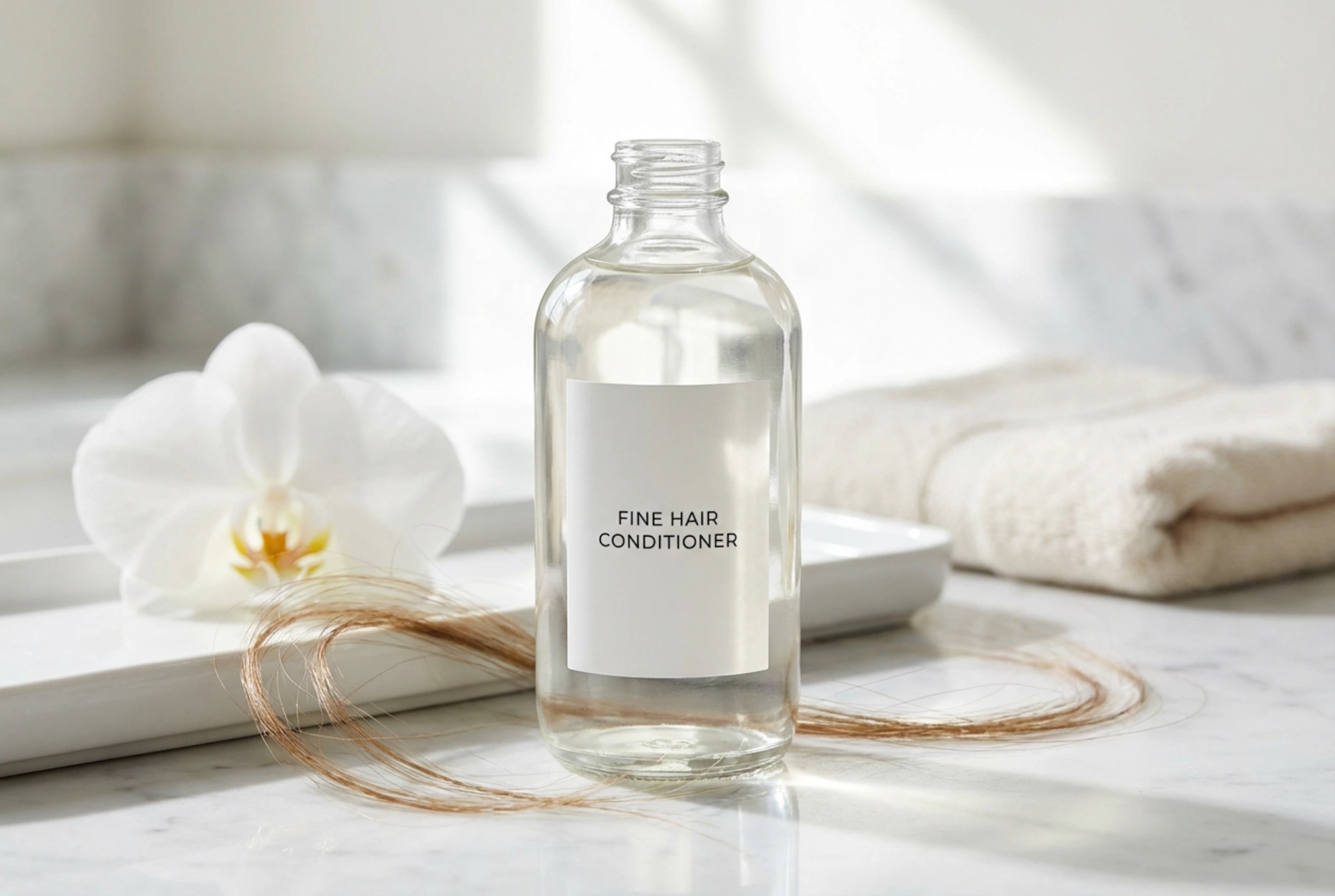
When selecting a conditioner for fine hair, looking at the type of ingredients is highly beneficial. The ideal product should offer hydration that absorbs quickly and rinses out effortlessly. Here are some key elements to look for in lightweight formulas:
- Hydrating Plant Extracts: Ingredients like aloe vera juice, green tea extract, and chamomile provide moisture without oily residues.
- Hydrolysed Proteins: Rice, wheat, or silk proteins help to temporarily strengthen the hair structure, providing a subtle boost of volume and thickness to individual strands.
- Panthenol (Provitamin B5): Known for its ability to penetrate the hair shaft, panthenol helps retain moisture and improve elasticity without adding weight.
- Lightweight Natural Oils: If oils are present, they should be extremely light, such as jojoba or grape seed oil, used in very small quantities.
The Correct Application Technique
Even the best lightweight conditioner can weigh hair down if applied incorrectly. Fine hair requires a targeted application method to ensure the roots remain lifted while the older, drier ends receive the nourishment they need.
Focus on the Ends
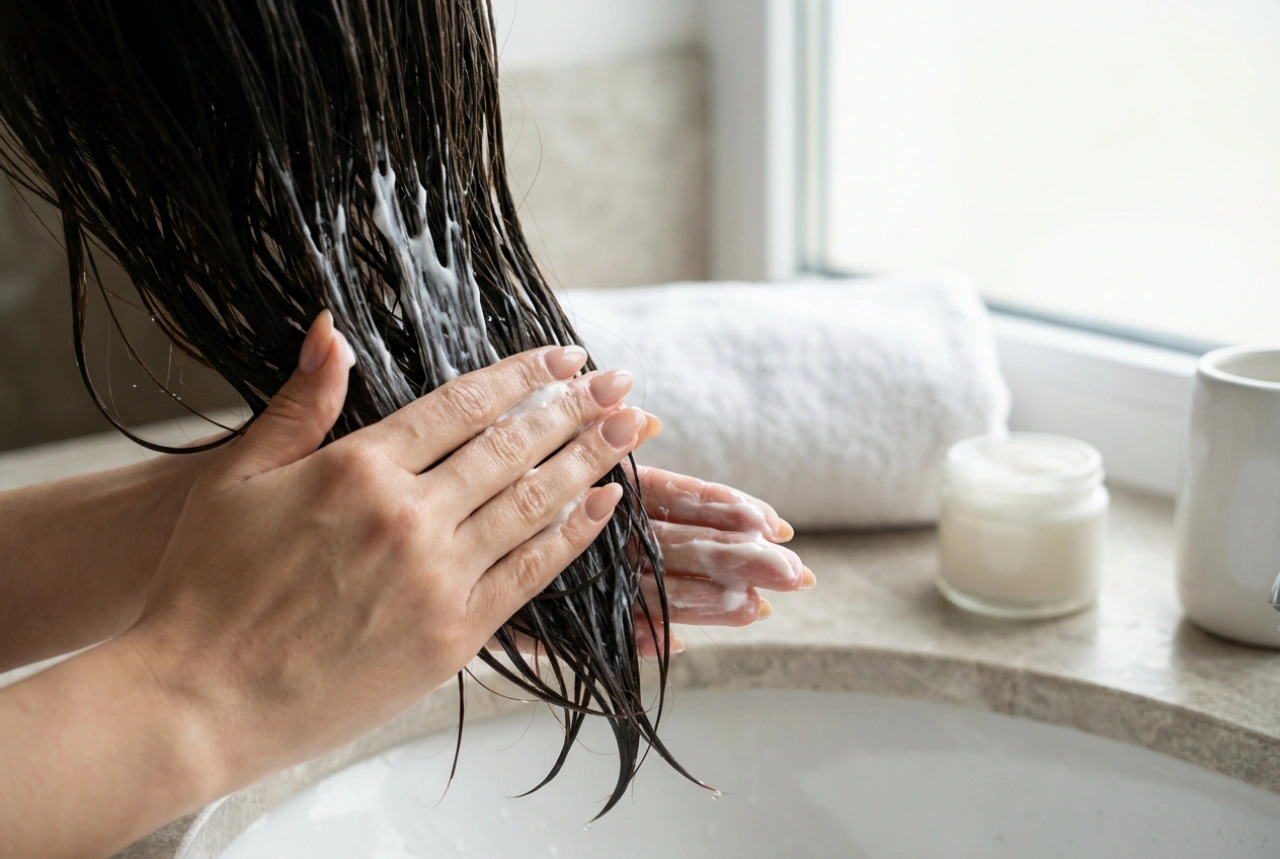
Always apply conditioner starting from the mid-lengths down to the very tips of the hair. Avoid applying any product directly to the scalp or the first few inches of hair near the roots. The scalp naturally moisturises this area, so adding conditioner there only accelerates greasiness and loss of volume.
The Power of Thorough Rinsing
Rinsing is one of the most critical steps in a fine hair routine. Spend extra time ensuring that every trace of conditioner is washed away. Using lukewarm or cool water for the final rinse can also help seal the hair cuticle, promoting natural shine and a smoother texture without compromising on body.
Alternative Conditioning Methods for Fine Hair
For those who struggle with even the lightest standard conditioners, alternative methods can offer excellent results. One popular approach is 'reverse washing'. This technique involves applying conditioner to the dry or damp mid-lengths of the hair before entering the shower, leaving it on for a few minutes, and then washing it out with shampoo. This ensures the strands receive hydration, but any excess residue is thoroughly cleansed away during the shampooing process, leaving the hair exceptionally light and bouncy.
Daily Practices to Enhance Volume
Beyond conditioning, daily handling plays a major role in preserving the airy feel of fine hair. After washing, gently squeeze excess water out with a microfibre towel instead of rubbing, which can cause friction and damage delicate strands. Avoid heavy styling creams or waxes; instead, choose lightweight sprays or mousses designed to lift the roots. Keeping your hair care routine simple and minimalist—focusing on quality ingredients and precise application—will ensure your fine hair remains healthy, hydrated, and full of natural life.