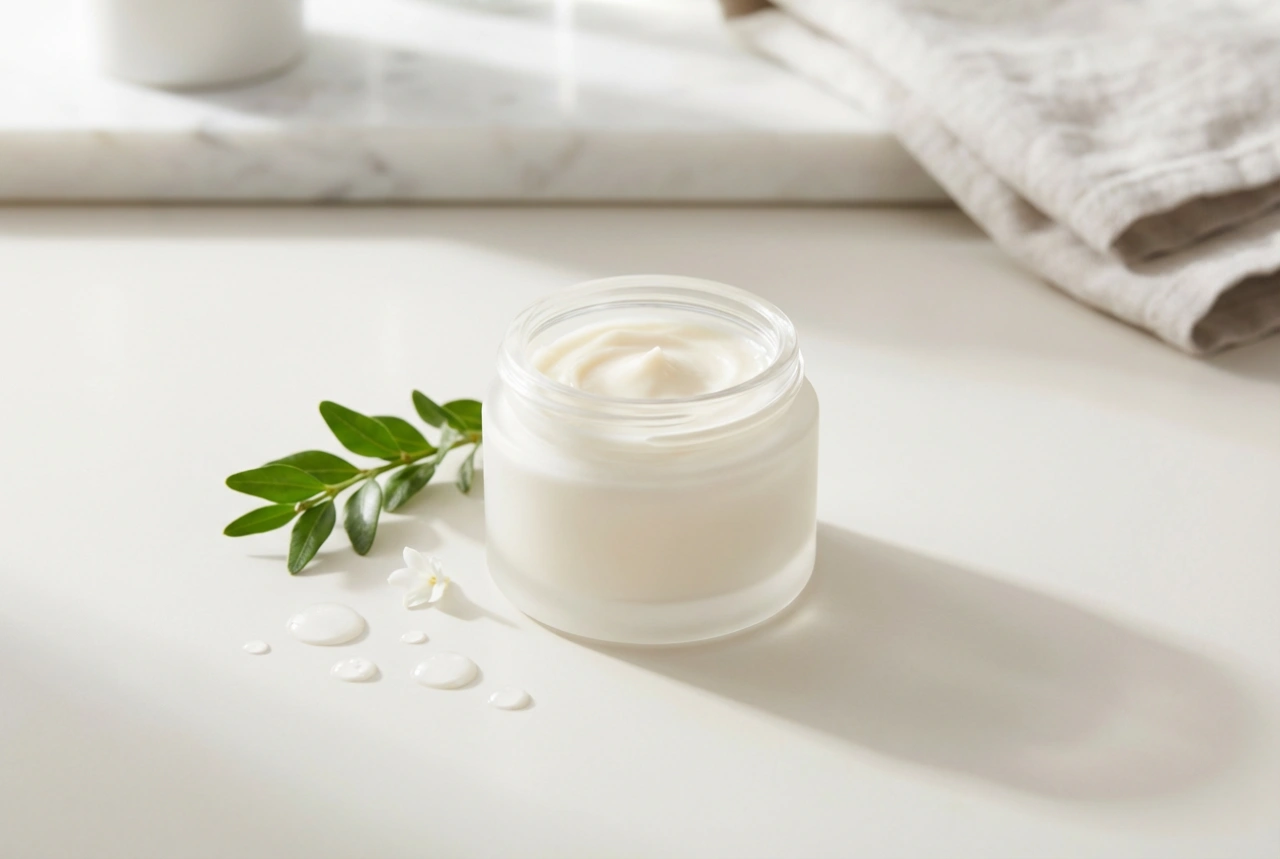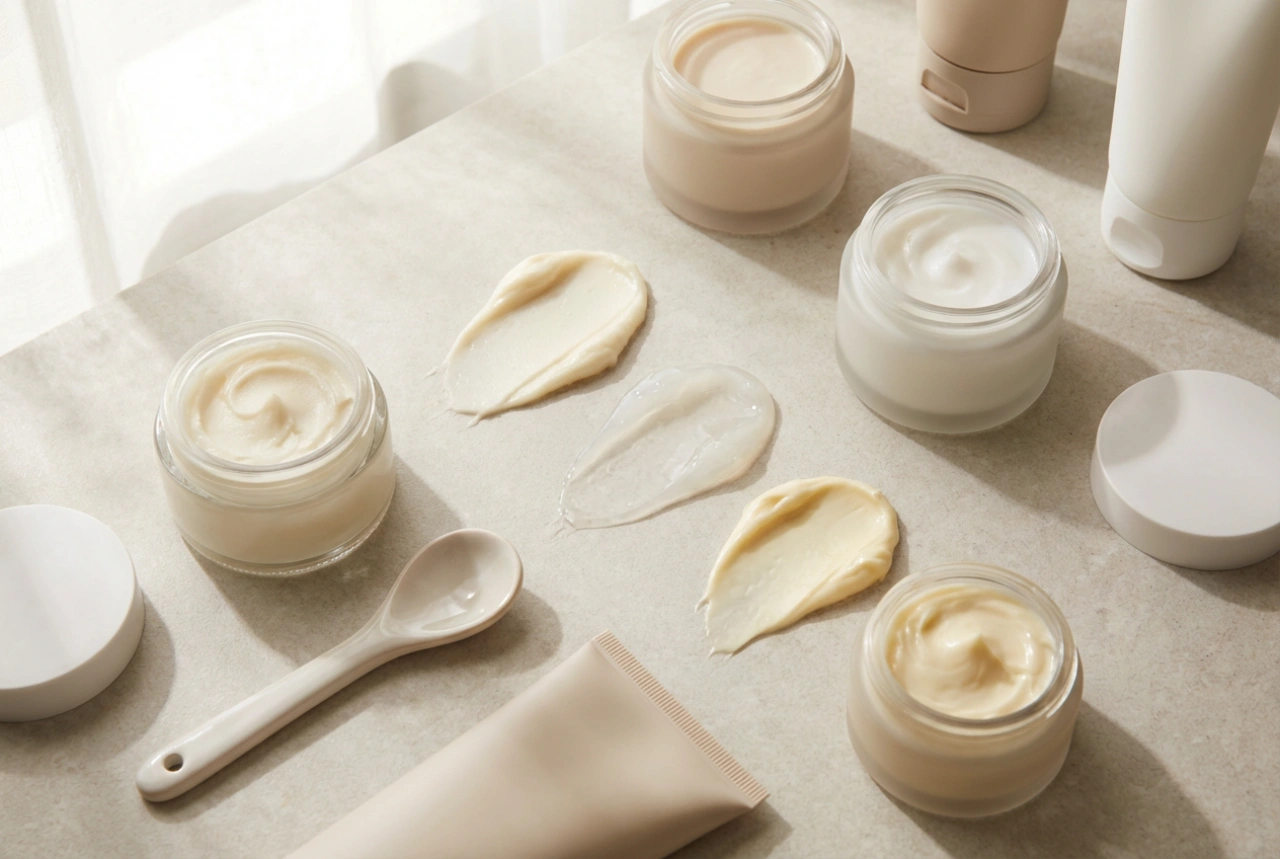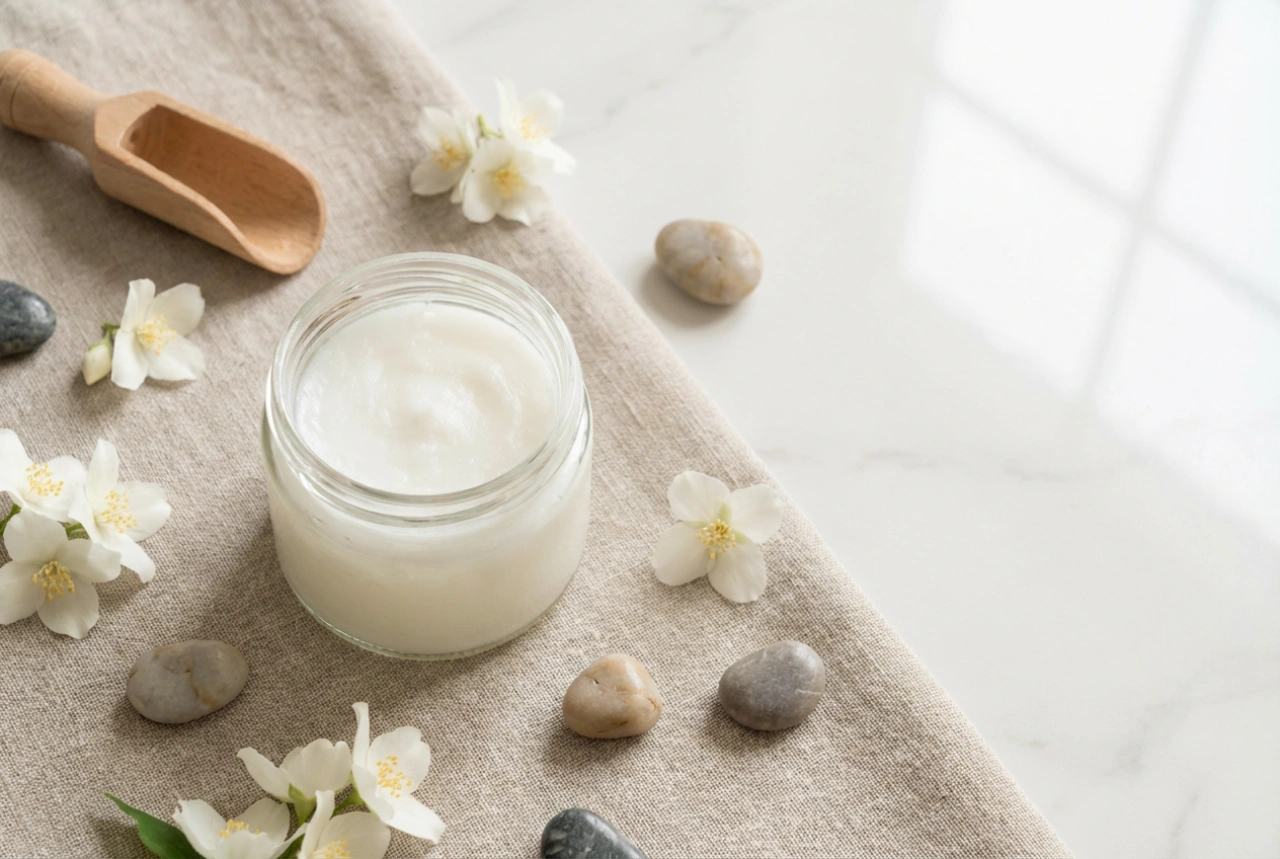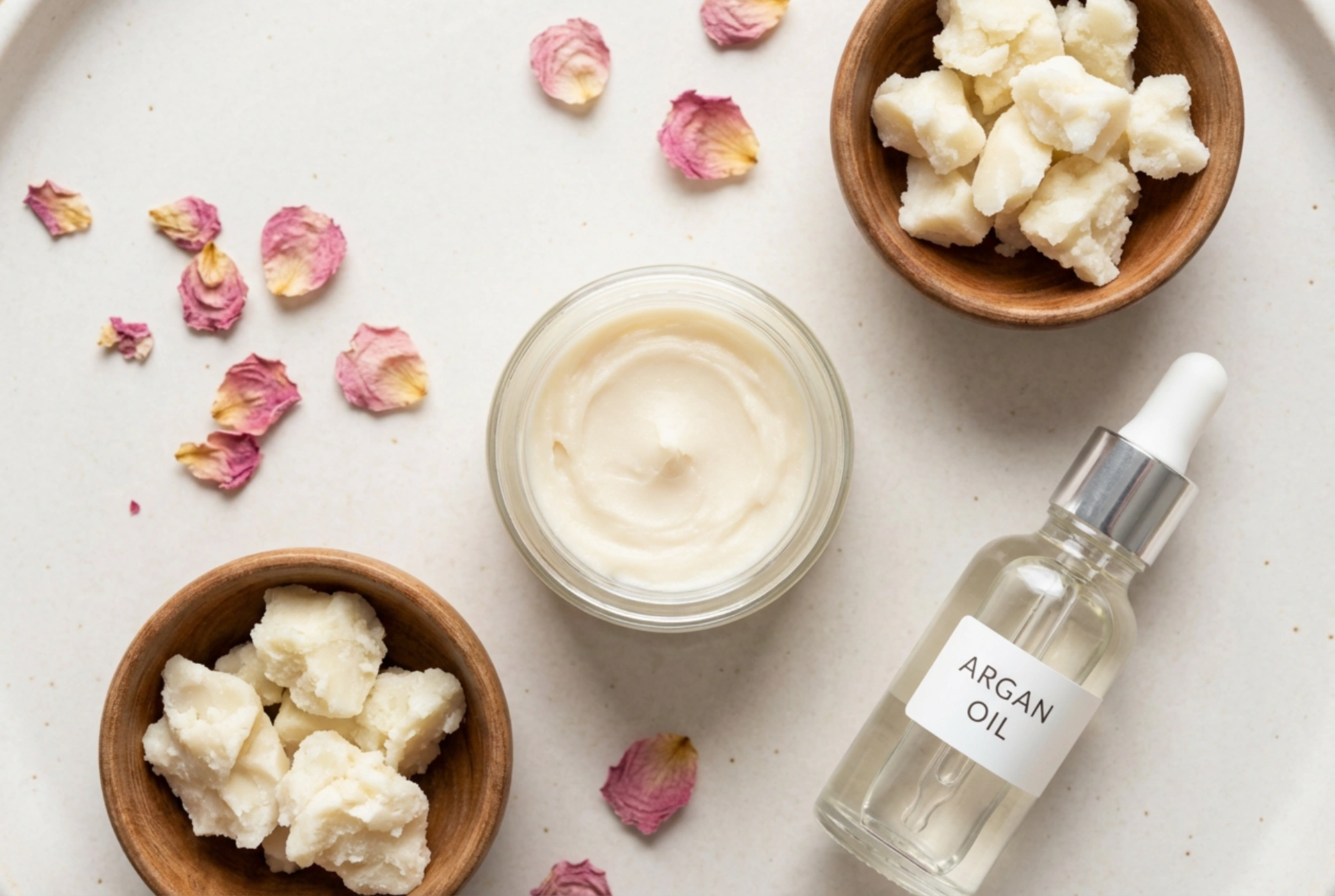


Natural body care is more than a routine; it is an act of mindfulness and a return to the simplicity of raw, organic ingredients. When we look at a jar of natural body balm, surrounded by raw shea, golden oils, and delicate dried rose petals, we see the potential of pure botanical power. Crafting or choosing a natural body balm allows us to feed our skin directly with nutrients, free from synthetic fillers and artificial fragrances. Understanding how to select the right plant-derived butters and liquid oils is the first step toward achieving a radiant, deeply hydrated complexion that feels comfortable all day long.
The Solid Foundation: Plant Butters in Body Balms
Plant-based butters form the solid base of any natural body balm. They provide the rich, protective barrier that locks in moisture and prevents dehydration throughout the day. By choosing the right butter, you set the core texture of your product.
Shea Butter
Extracted from the nuts of the shea tree, raw shea butter is celebrated for its exceptional emollient properties. It is rich in vitamins A and E, making it perfect for dry, flaky areas like elbows and knees. Its creamy consistency melts at body temperature, allowing for smooth application.
Cocoa Butter
With its distinct, warm chocolate aroma, cocoa butter is highly stable and solid at room temperature. It contains natural antioxidants and acts as an excellent occlusive layer, making it ideal for maintaining skin elasticity and suppleness.
Mango Butter
If you prefer a lighter feel, mango butter is an excellent alternative. It offers a similar level of nourishment to shea butter but absorbs more quickly without leaving a heavy or greasy residue on the skin.
Choosing the Ideal Liquid Oils for Balanced Hydration
While butters provide structure and intense protection, liquid botanical oils add fluidity, ease of application, and targeted skin benefits. The combination of solid butters and liquid oils determines the final texture and absorption rate of your balm.
- Jojoba Oil: Technically a liquid wax, jojoba oil closely mimics the natural sebum produced by human skin. It is extremely well-tolerated, lightweight, and helps to balance moisture levels without clogging pores.
- Argan Oil: Often referred to as liquid gold, argan oil is packed with fatty acids and vitamin E. It helps to soften the skin texture, improve elasticity, and restore a youthful radiance.
- Sweet Almond Oil: Extremely gentle and hypoallergenic, sweet almond oil is a classic choice for sensitive skin types. It spreads easily and acts as an excellent carrier oil for other botanical extracts.
- Avocado Oil: For intensely dehydrated or mature skin, rich avocado oil provides deep nourishment, reaching the deeper layers of the epidermis to soothe and comfort.
Practical Tips for Formulating and Blending at Home
Creating your own handcrafted body balm is a rewarding process that allows for complete customization. To achieve the perfect balance of firmness and spreadability, follow these fundamental ratios and guidelines:
The Golden Ratio
A standard starting point for a soft body balm is a ratio of sixty percent solid butters to forty percent liquid oils. If you prefer a firmer balm, especially during warmer summer months, you can increase the butter content or introduce a small percentage of natural wax, such as candelilla or soy wax.
Gentle Melting
Always melt your ingredients using a double boiler on low heat. High temperatures can degrade the beneficial vitamins and fatty acids present in raw, cold-pressed oils and butters. Melt the solid butters first, then stir in the liquid oils just before removing the mixture from the heat.
The Whipping Technique
For a luxurious, airy texture similar to whipped cream, let the melted mixture cool in the refrigerator until it becomes semi-solid. Use a hand mixer to whip the blend for several minutes until it doubles in volume and forms soft peaks.
Enhancing Your Balm and Storage Best Practices
To elevate your body balm experience, you can incorporate natural botanical infusions. Infusing your liquid oils with dried rose petals, lavender buds, or calendula flowers beforehand adds a subtle, completely natural fragrance and additional soothing properties to the finished product.
Because homemade natural balms do not contain water, they do not strictly require chemical preservatives. However, they are sensitive to temperature and contamination. Store your balm in a clean, sterilized glass jar with an airtight lid. Keep it in a cool, dry place away from direct sunlight to prevent the ingredients from melting or oxidizing. Always use clean, dry hands or a cosmetic spatula to scoop out the product to ensure its longevity.