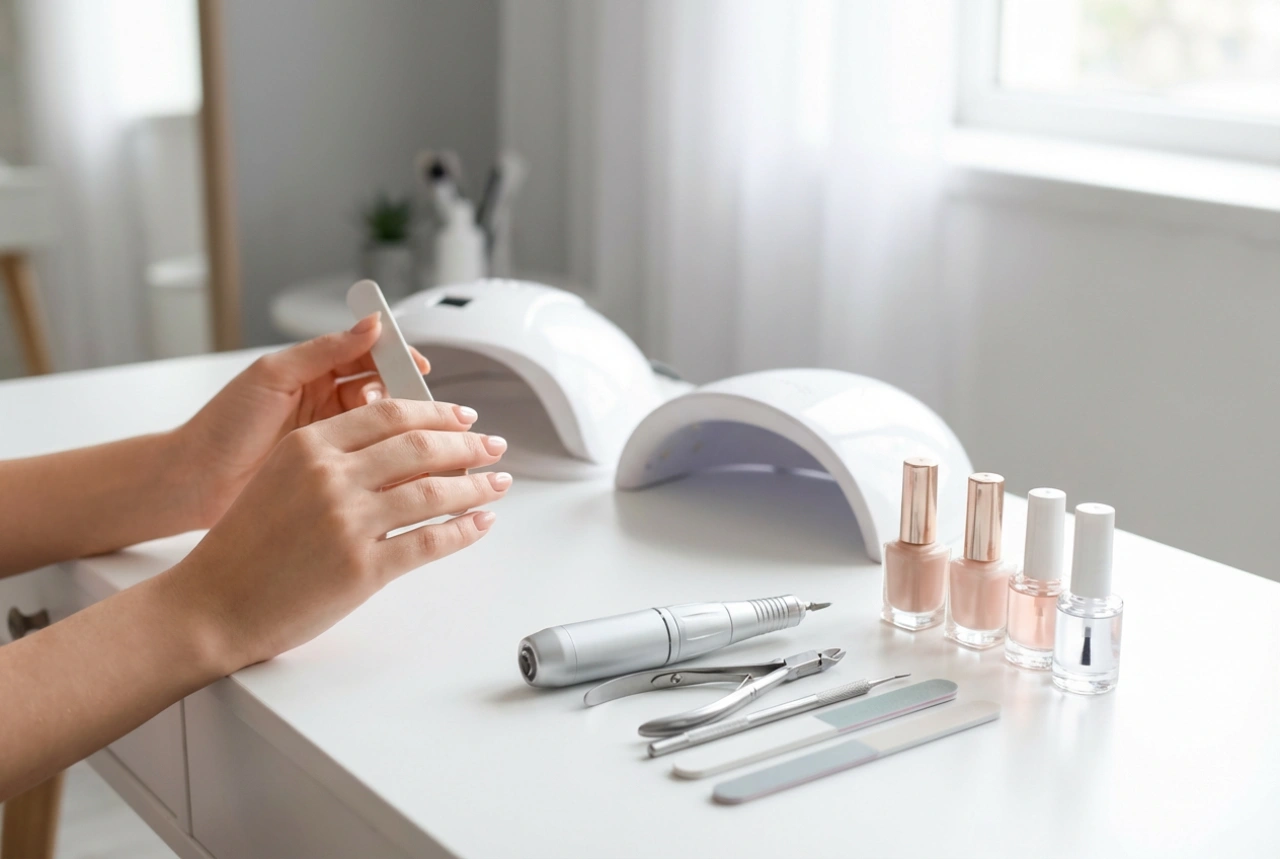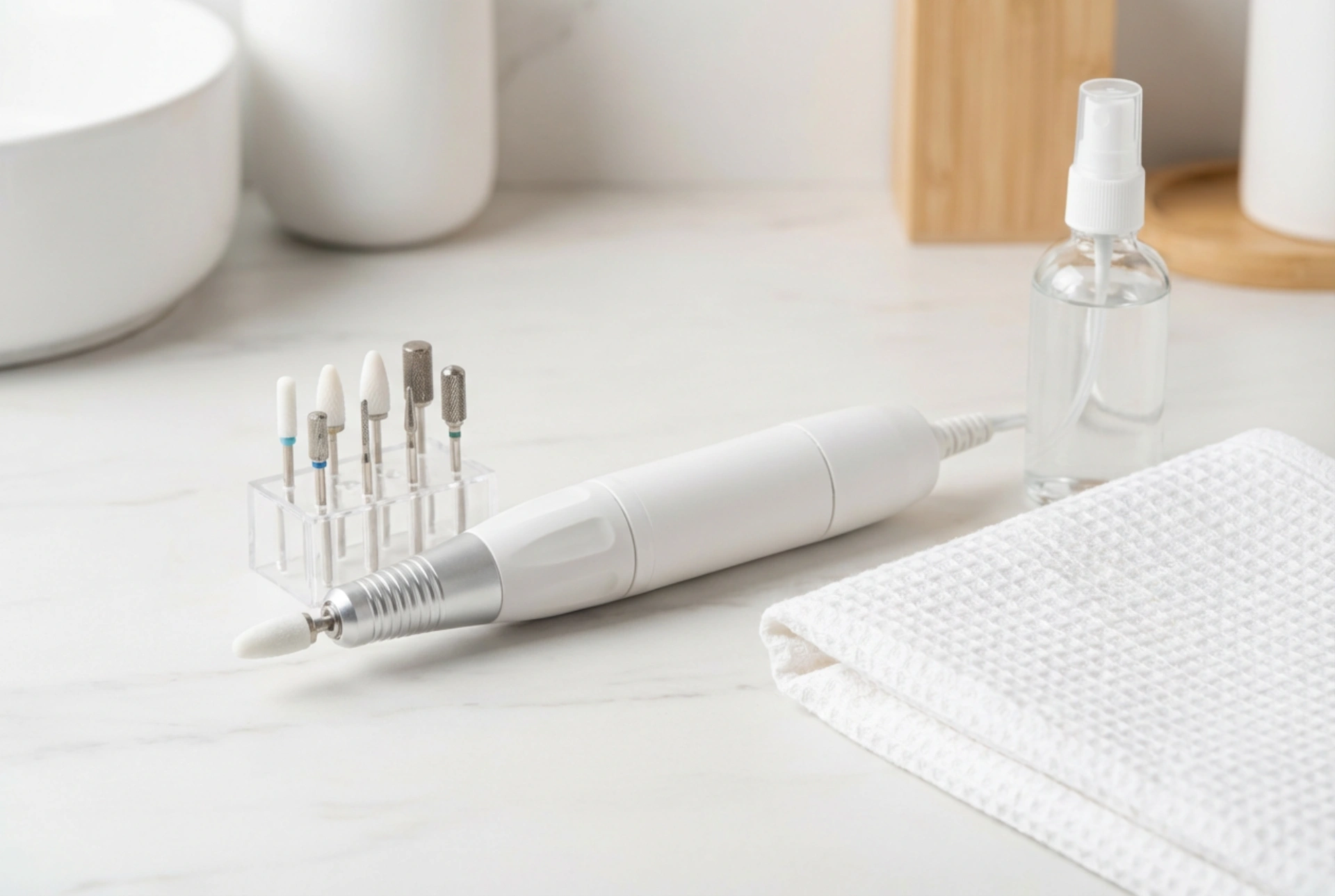


An electric nail file, often called a nail drill, is a versatile tool that can elevate your at-home manicure and pedicure routine. When used correctly, it allows for precise shaping of nails, gentle cuticle care, and effective smoothing of rough skin on your heels. Understanding its components, particularly the different bits and speed settings, is key to achieving beautiful results safely. This guide will walk you through the essentials of selecting the right attachments, managing the device's speed, and maintaining crucial hygiene standards for your tool.
Understanding Your Drill Bits
The effectiveness of an electric file lies in its interchangeable bits, each designed for a specific purpose. They come in various materials, shapes, and grits. Knowing which one to use is the first step towards mastering the tool.
Common Materials and Their Uses
- Diamond Bits: These are made with fine diamond particles and are excellent for delicate work. They are ideal for gently pushing back and cleaning up cuticles, filing natural nails, and prepping the nail plate. They are durable and can be thoroughly sanitised.
- Carbide Bits: Made from a hard metal, carbide bits have flute-like cuts that shave off material rather than grinding it. They are very efficient for shortening or shaping artificial nails, but should be used with extreme caution and at low speeds on natural nails, if at all.
- Ceramic Bits: These bits are known for producing less heat than their metal counterparts, making them more comfortable for sensitive users. They are suitable for surface work, shaping, and cuticle care, and come in various grits for different tasks.
- Sanding Bands: These are single-use paper cylinders that fit over a metal or rubber attachment called a mandrel. They are perfect for surface filing, shaping, and removing calluses. As they are disposable, they are a very hygienic option. They come in coarse, medium, and fine grits.
Popular Shapes and Their Functions
- Barrel/Cylinder Bits: Used for shortening the nail and shaping the surface. A smaller barrel is good for cuticle area work.
- Cone Bits: A versatile shape ideal for cleaning under the nail, shaping the cuticle area, and addressing sidewalls.
- Flame/Needle Bits: Perfect for precise cuticle work, lifting non-living tissue from the nail plate, and cleaning tight corners.
- Ball Bits: Used to gently clean up excess skin around the nail fold after the main cuticle work is done.
Choosing the Right Speed and Rotation
Most electric files have adjustable speed settings, measured in rotations per minute (RPM). Using the correct speed is crucial for safety and effectiveness.
- Low Speeds (2,000-6,000 RPM): This range is best for working on natural nails, performing delicate cuticle work, and for beginners getting comfortable with the tool. Always start at the lowest speed and increase gradually only if necessary.
- Medium Speeds (7,000-15,000 RPM): Suitable for filing and shaping artificial nails and for removing calluses on the feet. Use with a light touch.
- High Speeds (15,000+ RPM): Generally reserved for experienced users working on acrylics or other nail enhancements. This speed is typically not needed for natural nails or basic pedicures.
Your device will also have a forward and reverse setting. This allows you to change the direction of the bit's spin, which is useful for working comfortably on both your left and right hands, and for moving towards or away from the cuticle area smoothly.
A Step-by-Step Guide for Nail Care
Before you begin, ensure your hands and nails are clean and completely dry. Working on wet nails can cause damage.
- Cuticle Preparation: Select a fine-grit flame or cone bit. Set the drill to its lowest speed. Gently trace the bit around your cuticle line to lift and exfoliate any non-living tissue from the nail plate. Never apply pressure; let the bit do the work.
- Shaping and Shortening: Use a fine or medium sanding band or a fine barrel bit on a low to medium speed. Hold the file parallel to the nail's sidewall and gently move it from the side to the centre to shape. To shorten the length, gently run the bit across the free edge. Always keep the tool moving to avoid creating heat or friction.
- Surface Buffing: If you need to smooth ridges on the nail surface, use a soft buffer bit or a very fine sanding band on the lowest speed. Lightly skim over the surface of the nail, keeping the bit flat and constantly in motion.
Caring for Heels and Calluses
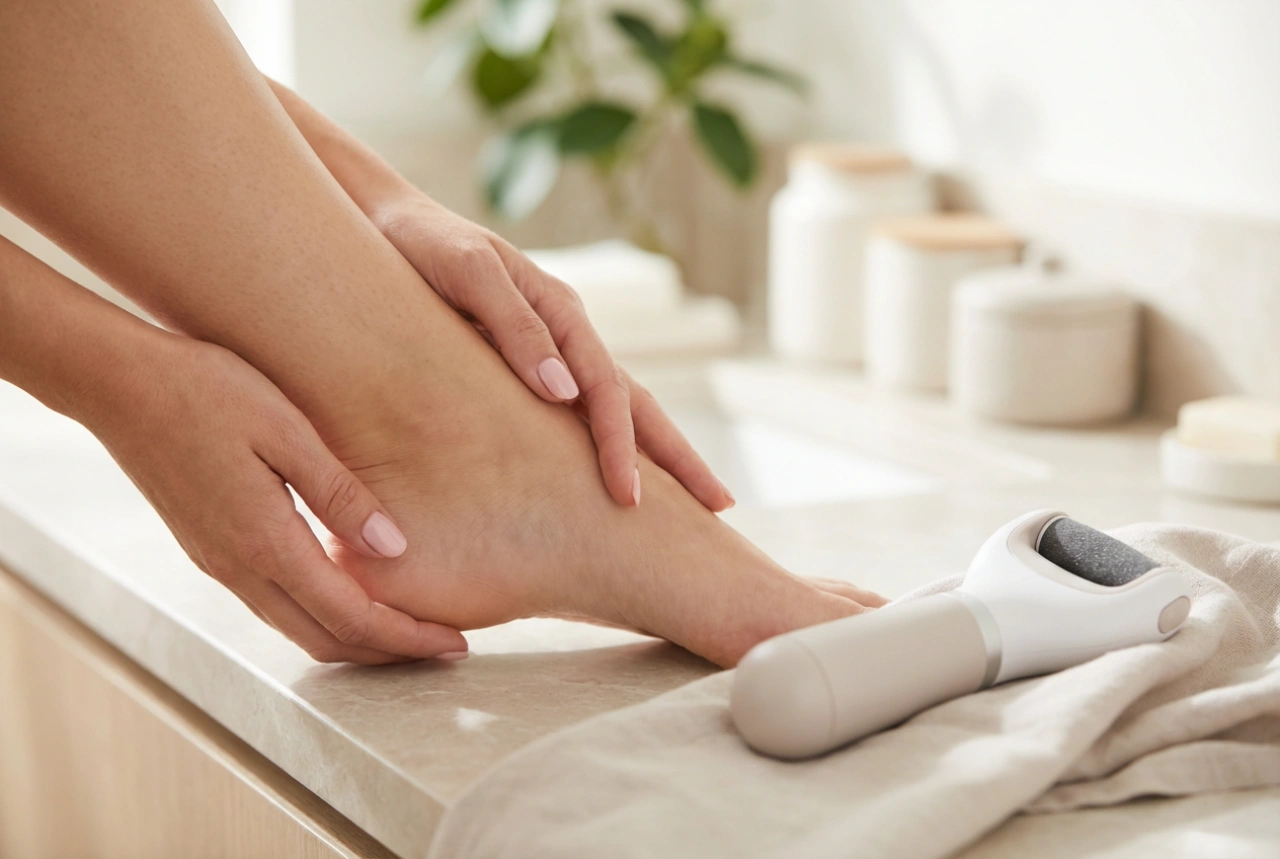
An electric file can be very effective for smoothing callused skin on the feet, but must be used on dry skin only.
- Select a Coarse Bit: A coarse sanding band or a large carbide bit is typically used for this purpose.
- Start on Low Speed: Begin on a low-to-medium speed setting. You can increase it slightly for tougher areas, but proceed with caution.
- Use Light, Sweeping Motions: Gently sweep the bit across the callused area on your heel or the ball of your foot. Do not hold it in one spot for more than a second or two, as this can generate heat and cause discomfort or skin irritation.
- Check Your Progress: Work in short intervals and stop frequently to check the skin. The goal is to remove the hard, dead layer of skin, not the healthy tissue underneath. Over-filing can lead to sensitivity and soreness.
- Moisturise: After filing, wash your feet and apply a generous amount of a rich foot cream or moisturiser.
Essential Hygiene and Maintenance
Proper cleaning of your electric file and its bits is non-negotiable for safe use. This prevents the transfer of dirt and impurities and prolongs the life of your tool.
- After Every Use: Unplug the device. Use a small, stiff brush to remove all dust and debris from the handpiece and the bits.
- Sanitise Your Bits: Metal, diamond, and ceramic bits should be sanitised after cleaning. You can wash them with soap and water, then submerge them in a cosmetic tool disinfectant solution for the time recommended by the manufacturer.
- Dry and Store Properly: After sanitising, allow the bits to air dry completely on a clean towel. Store the file and its attachments in a clean, dry case or box to protect them from dust and moisture.
- Replace Worn Bits: Sanding bands are for single use only and must be discarded after each pedicure or manicure. Reusable bits will wear out over time. If you notice a bit is less effective or appears damaged, replace it immediately.