

The delicate skin under our eyes requires special attention, and an intensely hydrating eye cream is often a go-to solution for maintaining a plump, smooth appearance. However, applying makeup, particularly concealer, over a rich cream can sometimes lead to undesirable results like pilling, creasing, or a heavy, cakey feeling. Achieving a flawless, hydrated under-eye area that serves as a perfect canvas for makeup is possible with the right product choice and application technique. This guide will walk you through how to use an intensely hydrating eye cream without compromising your concealer's finish.
Understanding Why Concealer Pills or Looks Heavy
Before finding a solution, it's important to understand the cause. 'Pilling' occurs when products on the skin's surface clump together into tiny balls instead of absorbing. This, along with a heavy or creased finish, can happen for several reasons:
- Applying too much product: The skin under the eyes is very thin and can only absorb a certain amount of cream. Excess product sits on the surface and interferes with makeup.
- Insufficient absorption time: Applying concealer immediately after your eye cream doesn't give the cream enough time to sink in. You end up mixing the two products on your skin's surface, leading to a messy application.
- Formula incompatibility: Not all skincare and makeup formulas are designed to work together. For instance, applying a water-based concealer over a very heavy, oil-based eye cream can cause separation and pilling.
- Rubbing instead of patting: Aggressive rubbing during application can disturb the layers of product underneath, causing them to roll up.
Choosing the Right Hydrating Formula for Daytime
The term 'intensely hydrating' doesn't have to mean 'heavy and greasy'. For daytime use under makeup, the texture of your eye cream is crucial. Look for formulas that provide powerful hydration in a lightweight package.
What to Look For
Opt for gel, serum, or gel-cream textures. These formulas are often water-based and absorb quickly, delivering hydration without leaving a thick film on the skin. Seek out products containing effective humectants and barrier-supporting ingredients that are known for their lightweight feel, such as:
- Hyaluronic Acid: A powerhouse humectant that can hold many times its weight in water, providing deep hydration without feeling heavy.
- Glycerin: Another effective humectant that draws moisture into the skin, helping to keep it soft and supple.
- Ceramides: These lipids help to reinforce the skin's natural barrier, locking in moisture and protecting the delicate under-eye area.
It can be beneficial to have two different eye creams: a lighter one for the day under makeup and a richer, more emollient one for your nighttime routine when absorption time is not a concern.
The Art of Application: Technique is Everything
How you apply your eye cream is just as important as the product you choose. Following a few simple steps can make all the difference in preventing pilling and ensuring a smooth base for concealer.
Use a Minimal Amount
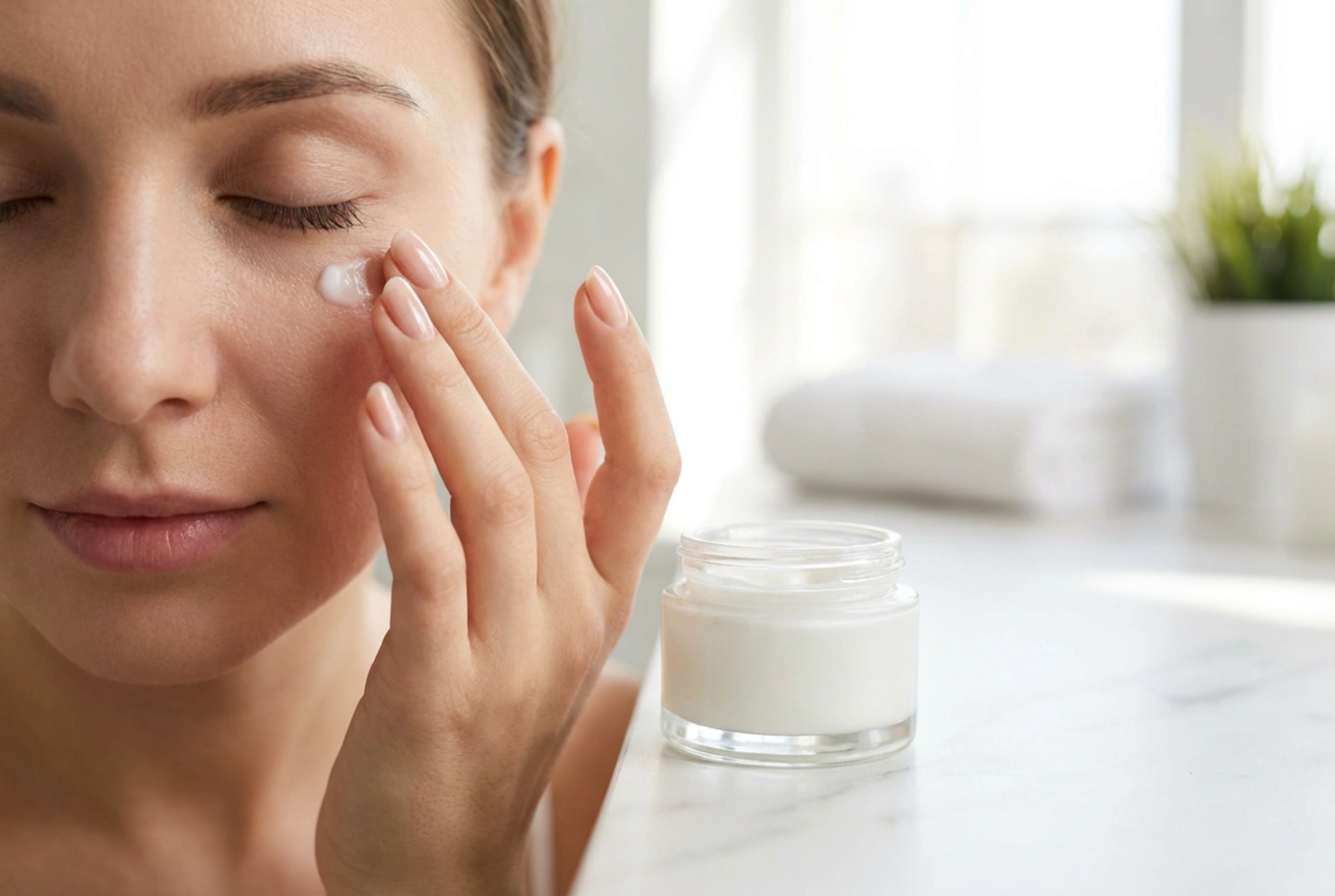
A common mistake is using too much product. For both eyes, you only need an amount equivalent to a single grain of rice. Dot this small amount under each eye along the orbital bone.
Pat, Don't Rub
Use your ring finger, as it applies the least amount of pressure, to gently pat the cream into the skin. Start from the inner corner and move outwards along the orbital bone. This gentle tapping motion stimulates circulation and aids absorption without pulling or tugging on the delicate skin.
Allow for Absorption Time
This is arguably the most critical step. After patting in your eye cream, wait at least one to five minutes before applying any makeup. The skin should feel hydrated and plump, but not wet or sticky to the touch. You can use this time to style your hair, choose your outfit, or apply makeup to other areas of your face.
Pairing Your Eye Cream with Concealer
Once your under-eye area is perfectly prepped, it's time for concealer. To maintain a smooth finish, consider both your concealer's formula and your application method. A hydrating concealer formula often works best on a hydrated base. Apply a few small dots of concealer only where needed—typically in the inner corner and over any discolouration—and blend it by gently patting with your ring finger, a small brush, or a damp micro-sponge. This reinforces the patting motion used for your eye cream and prevents any disturbance of the skincare layer beneath. By following these steps, you can enjoy the benefits of an intensely hydrating eye cream and a perfectly smooth, long-lasting concealer application every day.