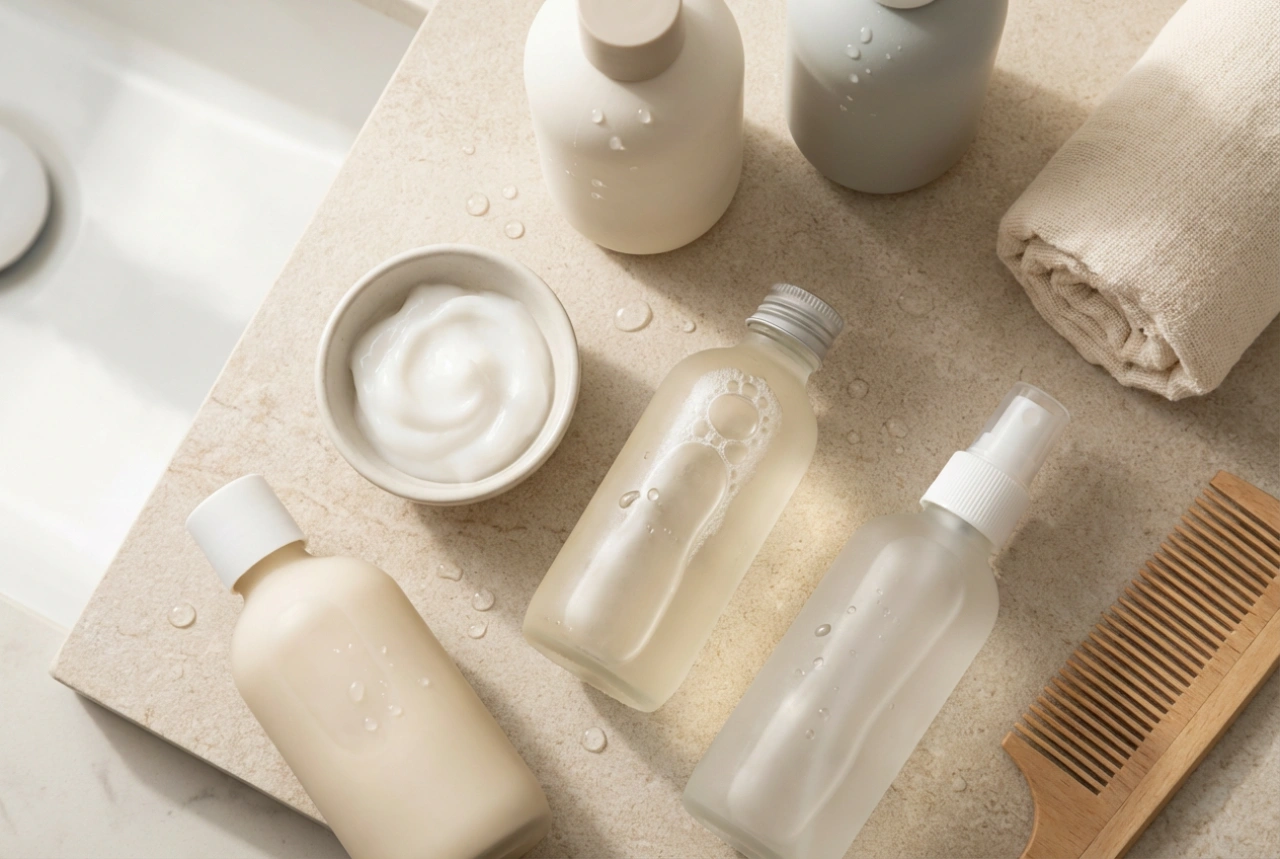


In the pursuit of healthy, glossy locks, our daily hair care rituals often require a more bespoke approach. When we look at a neat arrangement of minimalist hair care bottles, offering a variety of creamy and gel textures, it becomes clear that selecting the right formulas is an art in itself. One of the most effective and gentle techniques that has revolutionised home hair care is the OMO method. This three-step routine, which stands for Conditioner-Wash-Conditioner, is designed to protect the delicate lengths of the hair from the drying effects of cleansing agents while delivering intense nourishment. Understanding how to select and combine different types of conditioners is the key to mastering this technique and achieving beautifully balanced, resilient hair.
Understanding the Principles of the OMO Method
The OMO method is particularly beneficial for those with dry, frizzy, curly, or high-porosity hair that is prone to damage. Traditional washing can sometimes strip the hair of its natural oils, leaving the ends dry and brittle. By applying a protective layer of conditioner to the wet lengths of your hair before shampooing, you create a barrier that shields the hair cuticle from the harsh detergents found in cleansers. The shampoo is then applied primarily to the scalp, and as it is rinsed away, it gently cleanses the lengths without stripping them.
The final step involves applying a second, often richer conditioner or mask to replenish moisture and seal the hair cuticle. This ensures that the hair remains hydrated, soft, and easy to detangle. To get the most out of this method, it is essential to understand the roles of different ingredients—specifically proteins, emollient elements, and humectants—and how they interact to maintain the perfect hair balance.
Choosing the First Conditioner (The First 'O')
The primary role of the first conditioner in the OMO sequence is protection and light hydration. Since this product will be applied to wet hair before washing, it should have a lightweight consistency that easily spreads through the strands without weighing them down. Gel-like textures or light, creamy formulas are ideal for this step.
- Humectant-based conditioners: These are excellent for the first step as they draw moisture into the hair shaft. Ingredients such as aloe vera, glycerin, and hyaluronic acid help to hydrate dry hair from within.
- Protein-rich conditioners: If your hair is damaged or lacking elasticity, a light protein conditioner containing hydrolysed wheat or silk proteins can be used as the first step to temporarily patch up micro-damages in the hair structure before cleansing.
- Emollient-light formulas: Light oils or fatty alcohols can provide a protective slip, making it easier to detangle the hair gently before the wash step.
When applying the first conditioner, focus on the mid-lengths to the ends of the hair, avoiding the scalp. Leave it on for a few minutes to allow the ingredients to penetrate the hair fiber before proceeding to the washing step.
The Washing Step (The 'M')
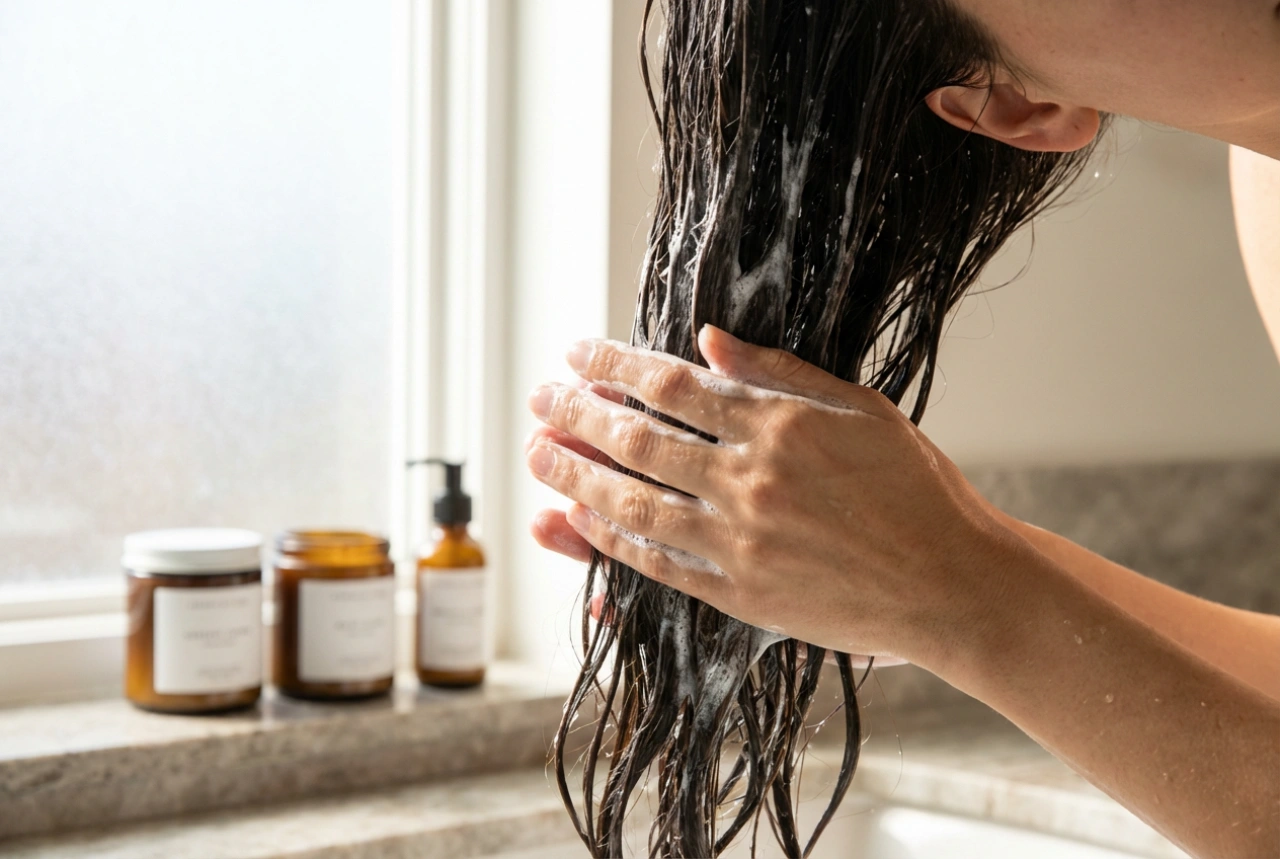
The middle step of the OMO method is the actual wash. For this step, a gentle, sulfate-free shampoo is typically recommended to maintain the natural moisture barrier of the scalp. The key is to apply the shampoo exclusively to the scalp and roots, where sebum, sweat, and styling products accumulate.
As you massage the shampoo into your scalp, the lather will naturally flow down the lengths of your hair during the rinsing process. This gentle runoff is more than enough to cleanse the hair lengths, especially since they are already coated and protected by the first conditioner. This prevents the shampoo from drying out the delicate ends of your hair, keeping the cuticle smooth and intact.
Selecting the Second Conditioner (The Second 'O')
The final step of the OMO method is designed to lock in moisture, smooth the hair cuticle, and provide lasting protection. The second conditioner should be a richer, more concentrated formula than the first one. Creams, rich balms, and intensive masks work beautifully here.
This step is dominated by emollients. Emollients, such as natural plant oils (shea butter, argan oil, or jojoba oil) and fatty alcohols, form a microscopic protective film over the hair shaft. This film seals in the hydration provided by the previous steps, prevents moisture loss throughout the day, and gives the hair a healthy, reflective shine. You can leave the second conditioner on for three to ten minutes before rinsing it out thoroughly with lukewarm water.
How to Combine Conditioners: Popular Schemes
Achieving the best results with the OMO method relies on balancing three main categories of nutrients: proteins (P), emollients (E), and humectants (H). Depending on your hair's current needs, you can combine these in several ways:
- The Hydration and Seal Scheme (Humectant + Emollient): Apply a light humectant conditioner as the first step to deeply hydrate the hair, wash the scalp, and follow with a rich emollient conditioner to seal that moisture inside. This is perfect for dry, frizzy, and dull hair.
- The Strength and Smoothness Scheme (Protein + Emollient): Use a light protein-based conditioner first to strengthen the hair structure, wash, and finish with a rich emollient product. This combination works wonders for damaged, color-treated, or lifeless hair.
- The Ultimate Balance Scheme (Humectant/Protein + Emollient): If your hair needs a complete overhaul, you can use a conditioner containing both humectants and proteins for the first step, and seal it all with a pure emollient mask at the end.
It is important to observe how your hair responds to these combinations. If your hair feels limp or greasy, the products may be too heavy or you may need to reduce the frequency of protein applications. If it feels dry and rough, increase the humectant and emollient steps.